Insights into Nodal T-Follicular Helper Cell lymphomas and Peripheral T-Cell Lymphomas, Not Otherwise Specified, in Slovenian Patients: Mutational Landscape, Clinicopathological Characteristics, and Outcomes
Eva Erzar, Vanesa Sindi-Ivanova, Stefan Dirnhofer, Lučka Boltežar, Janja Ocvirk, Veronika Kloboves Prevodnik, Alexandar Tzankov, Gorana Gašljević

TL;DR
This study explores genetic mutations and clinical outcomes in T-cell lymphomas among Slovenian patients, highlighting key genes and the importance of stem cell transplantation for better survival.
Contribution
The study provides a detailed mutational landscape and survival analysis of nodal T-follicular helper cell lymphomas in a large Slovenian cohort.
Findings
TET2, RHOA, IDH2, PLCG1, and DNMT3A were the most commonly mutated genes in nodal T-cell lymphomas.
Multiple mutations, high International Prognostic Index, and lack of stem cell transplantation were linked to shorter survival.
Nodal T-follicular helper cell lymphomas outnumbered peripheral T-cell lymphomas, not otherwise specified, in the cohort.
Abstract
Nodal T-follicular helper (TFH) cell lymphomas (nTFHLs) are the most common mature nodal T-cell lymphomas (nTCL) in Europe, characterized by an aggressive course, poor prognosis, and recurrent expression of TFH markers. Their mutational landscape and the impact of these mutations on survival outcomes remain underexplored. In this study, we characterized nTCL features in a Slovenian cohort, comprising 91 nTFHL, 9 peripheral TCL, not otherwise specified (PTCL-NOS), and 8 composite lymphomas [co-occurrence of nTFHL, angioimmunoblastic type (nTFHL-AI) with monoclonal B-cell proliferation], with a median follow up of 23 months. Using immunohistochemistry, clonality testing, and high-throughput sequencing with a lymphoma panel targeting 172 genes, we analyzed their mutational landscape and examined the mutational impact on survival outcomes. The mutational analysis uncovered TET2 (43%), RHOA…
Genes, proteins, chemicals, diseases, species, mutations and cell lines named across the full text — each resolved to its canonical identifier and authoritative record.
Click any figure to enlarge with its caption.
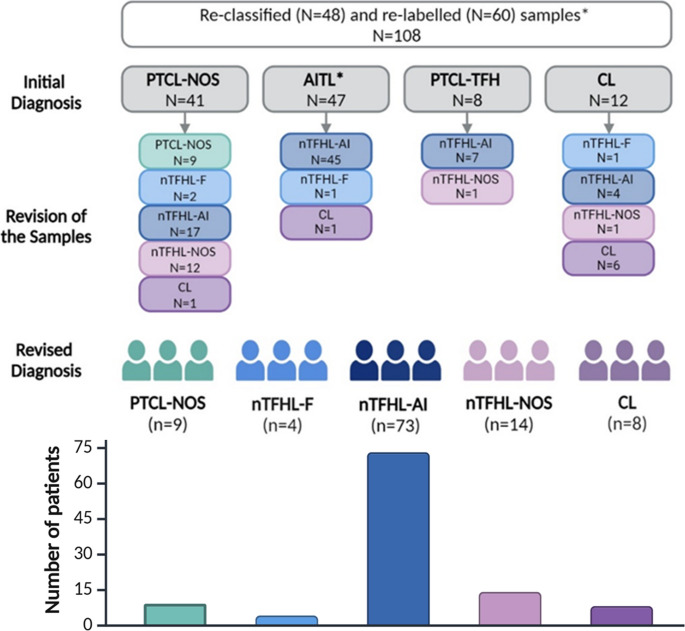 Figure 1
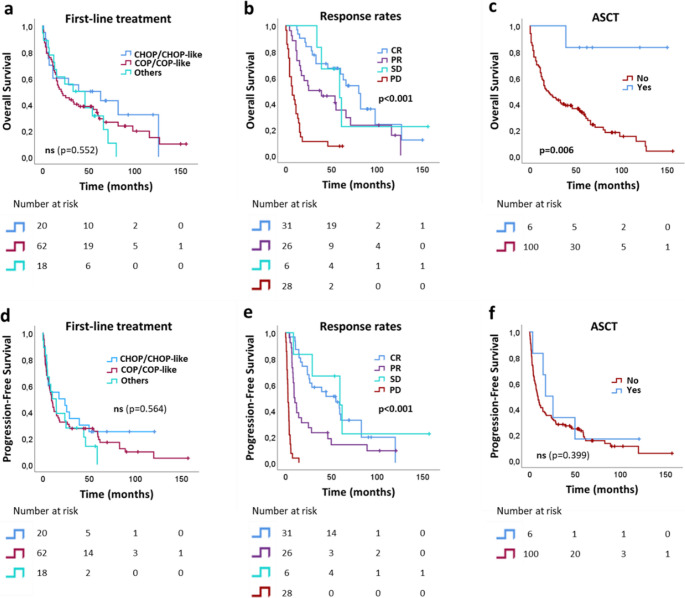 Figure 2
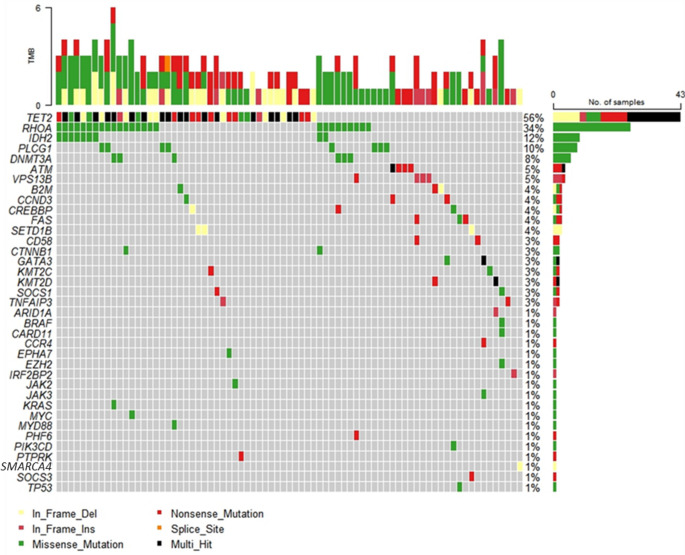 Figure 3
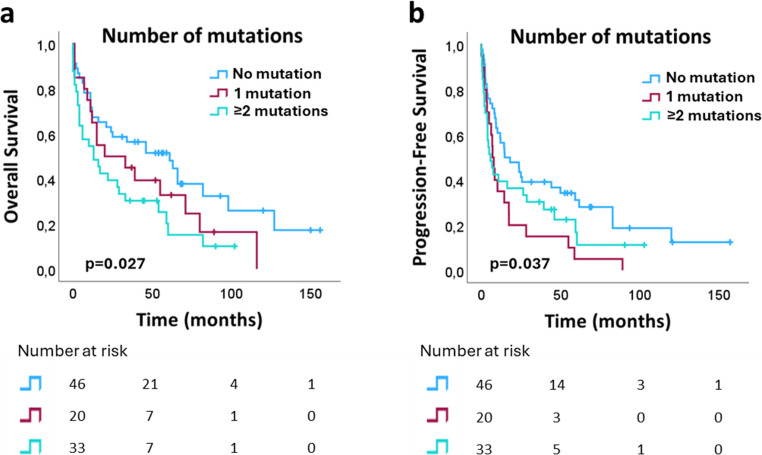 Figure 4
Peer Reviews
No public reviews on file for this paper yet. If you reviewed it on a platform where reviews are public (OpenReview, ICLR, NeurIPS, ICML), you can paste yours below so the community can read it here.
Videos
No videos yet. Explain this paper in a talk, walkthrough, or lecture? Add one.
Taxonomy
TopicsLymphoma Diagnosis and Treatment · Cutaneous lymphoproliferative disorders research · T-cell and Retrovirus Studies