Wormian bones: expanded differential diagnosis and implications for abnormal head shape in infancy
Noah E. Alter, James L. Rogers, Marcelina Puc, Anthony Hoang, Izabela Galdyn, Christopher M. Bonfield, Matthew Pontell, Michael Golinko

TL;DR
Wormian bones are extra skull bones that are more common than craniosynostosis and should be considered in diagnosing abnormal head shapes in infants.
Contribution
The study provides a large-scale analysis of Wormian bones in pediatric patients and their clinical associations.
Findings
Wormian bones were found in 0.57% of institutional CT scans and 2.1% of clinic patients.
The lambdoid suture was the most common location for Wormian bones.
Wormian bones often co-occurred with craniosynostosis or other skeletal conditions.
Abstract
Wormian bones (WB) are accessory ossicles that develop within cranial sutures. While typically benign, their presence in large numbers has been associated with various genetic and developmental disorders. This study aims to characterize the prevalence, anatomical distribution, and clinical associations of WB in a pediatric population undergoing cranial CT imaging. A retrospective review was conducted at Monroe Carell Jr. Children’s Hospital at Vanderbilt. Pediatric patients aged 0 to 18 years who underwent cranial CT imaging for any clinical indication were included. WB were radiologically confirmed, and demographic data, cephalic index, and comorbidities were collected and analyzed. Among the 13,519 patients who underwent cranial CT imaging, 77 (0.57%) had radiologically confirmed WB, totaling 476 ossicles. The prevalence increased to 2.1% when examining our clinic cohort over a…
Genes, proteins, chemicals, diseases, species, mutations and cell lines named across the full text — each resolved to its canonical identifier and authoritative record.
Click any figure to enlarge with its caption.
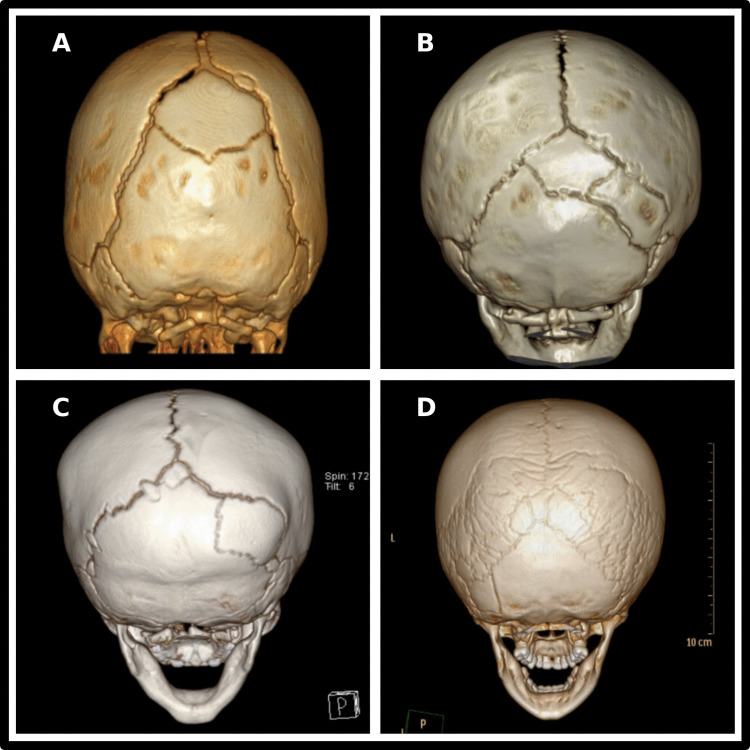 Figure 1
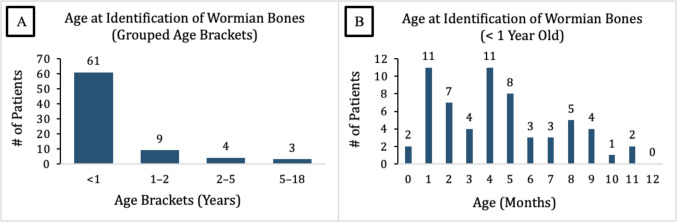 Figure 2
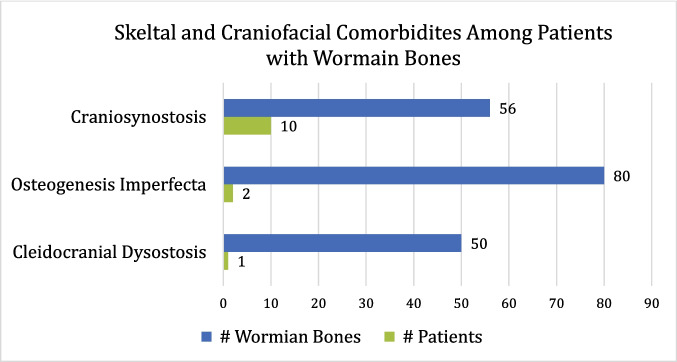 Figure 3
Peer Reviews
No public reviews on file for this paper yet. If you reviewed it on a platform where reviews are public (OpenReview, ICLR, NeurIPS, ICML), you can paste yours below so the community can read it here.
Videos
No videos yet. Explain this paper in a talk, walkthrough, or lecture? Add one.
Taxonomy
TopicsCraniofacial Disorders and Treatments · dental development and anomalies · Orthodontics and Dentofacial Orthopedics