Beyond peak accuracy: a stability-centric framework for reliable multimodal student engagement assessment
Ismail Said Almuniri, Hitham Alhussian, Norshakirah Aziz, Sallam O. F. Khairy, AlWaleed Sulaiman AlAbri, Zaid Fawaz Jarallah, Saidu Yahaya, Shamsuddeen Adamu

TL;DR
This paper introduces a new framework for assessing student engagement using multimodal data, focusing on stability and interpretability to improve reliability.
Contribution
The novel contribution is a stability-centric framework combining class-aware loss, temporal augmentation, and SHAP-based interpretability for multimodal student engagement assessment.
Findings
The framework achieved a mean accuracy of 0.901 and mean macro F1 of 0.847, outperforming existing models.
Temporal augmentation and ensemble diversity were identified as key contributors to model stability.
SHAP-based analysis provided reliable interpretability, linking predictions to behavioral and cognitive cues.
Abstract
Accurate assessment of student engagement is central to technology-enhanced learning, yet existing models remain constrained by class imbalance, instability across data splits, and limited interpretability. This study introduces a multimodal engagement assessment framework that addresses these issues through three complementary strategies: (1) class-aware loss functions to alleviate class imbalance, (2) temporal data augmentation and heterogeneous ensembling to enhance model stability, and (3) SHAP-based analysis of the most stable component for reliable interpretability. Reliability was established through repeated cross-validation with multiple seeds across seven deep learning architectures and the proposed ensemble. The framework established a mean accuracy of 0.901 ± 0.043 and a mean macro F1 of 0.847 ± 0.068, surpassing baselines such as ResNet (Accuracy = 0.917), Inception (Macro…
Genes, proteins, chemicals, diseases, species, mutations and cell lines named across the full text — each resolved to its canonical identifier and authoritative record.
Click any figure to enlarge with its caption.
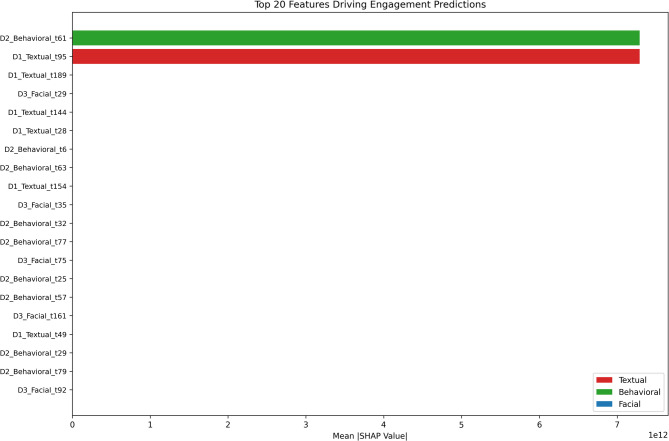 Figure 10
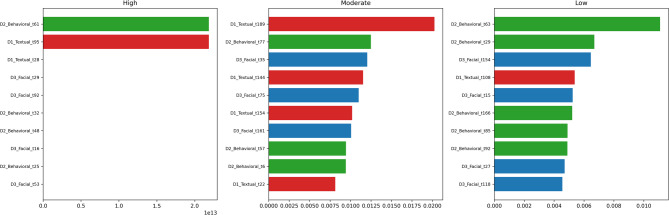 Figure 11
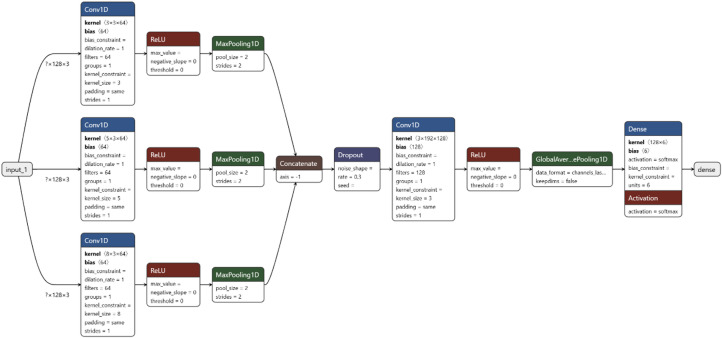 Figure 1
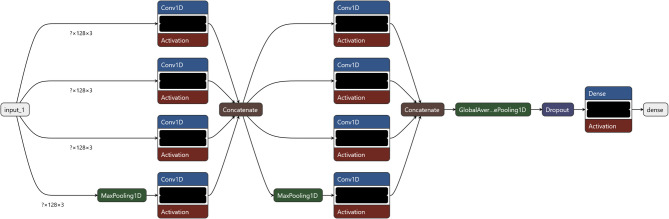 Figure 2
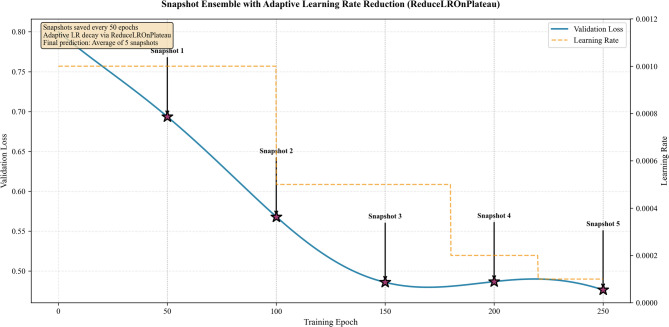 Figure 3
 Figure 4
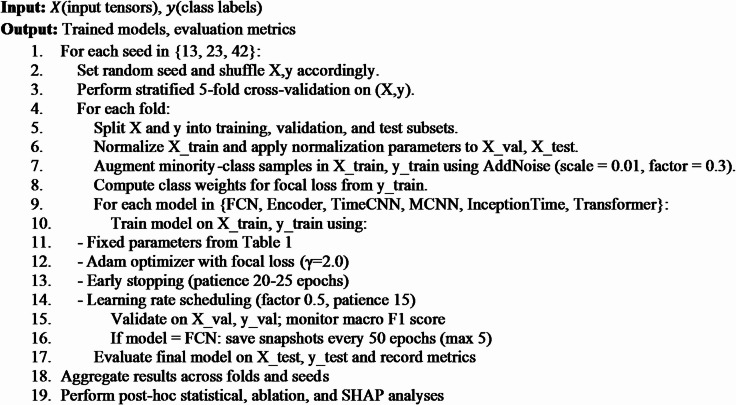 Figure 5
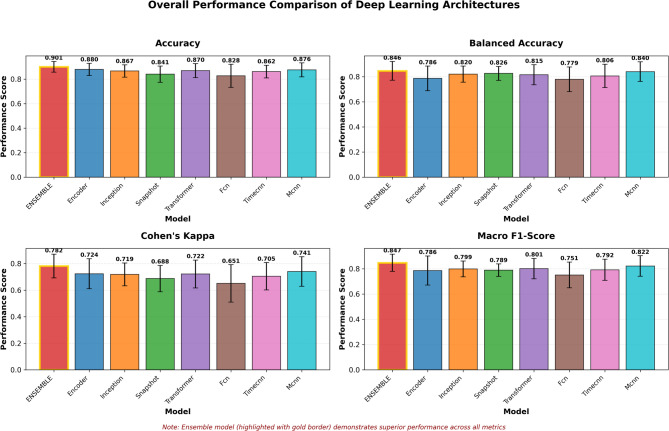 Figure 6
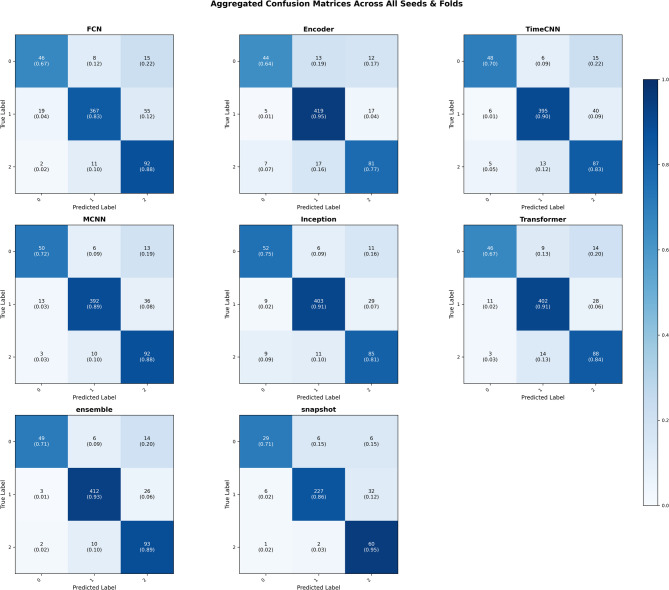 Figure 7
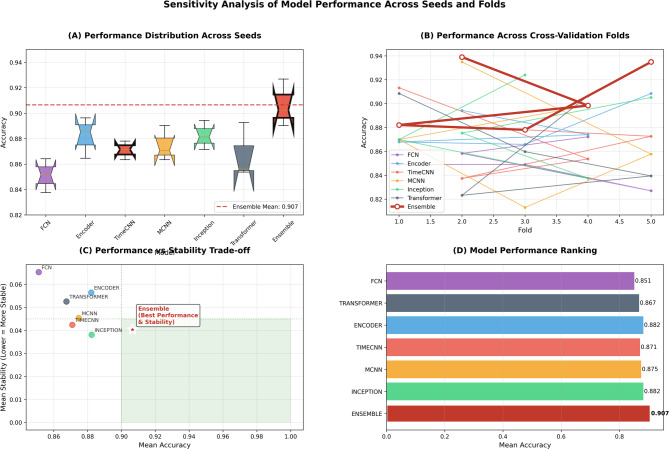 Figure 8
 Figure 9
Peer Reviews
No public reviews on file for this paper yet. If you reviewed it on a platform where reviews are public (OpenReview, ICLR, NeurIPS, ICML), you can paste yours below so the community can read it here.
Videos
No videos yet. Explain this paper in a talk, walkthrough, or lecture? Add one.
Taxonomy
TopicsIntelligent Tutoring Systems and Adaptive Learning · Online Learning and Analytics · Emotion and Mood Recognition