“After a long day of play, I get tired and forget to unfurl my bed net”: a qualitative study exploring factors affecting insecticide-treated bed net use among school-aged children in eastern Uganda
Deborah Ekusai Sebatta, Sarah Alexander, John Rek, Maato Zedi, Emmanuel Arinaitwe, Mallory O. Johnson, Joaniter I. Nankabirwa, Moses R. Kamya, Grant Dorsey, Paul J. Krezanoski

TL;DR
This study explores why school-aged children in Uganda inconsistently use bed nets, finding that fatigue, shared sleeping, and parental influence are key factors.
Contribution
The study uniquely captures children's perspectives on bed net use, identifying behavioral and contextual factors specific to school-aged children in malaria-endemic regions.
Findings
Fatigue and shared sleeping spaces contribute to inconsistent bed net use among children.
Parental involvement, especially from mothers, is critical in ensuring bed nets are used consistently.
Children suggest strategies like early net deployment and caregiver reinforcement to improve usage.
Abstract
Despite widespread access to long-lasting insecticidal nets, infection with malaria parasites remains prevalent among African school-aged children. Though this group contributes significantly to malaria transmission, few studies have explored why their bed net use is inconsistent especially from the perspective of the children themselves. This qualitative study sought to understand the behavioral and contextual factors influencing bed net use among school-aged children in Eastern Uganda. A cross-sectional qualitative study was conducted among children aged 8–17 years from 12 households participating in a cohort study with electronic bed net monitoring. Thirteen children (mean age 12.5 years) completed in-depth interviews, which were conducted in English, Dhopadhola, Luganda, and Ateso as appropriate. All interviews were recorded, transcribed, and translated into English. An…
Genes, proteins, chemicals, diseases, species, mutations and cell lines named across the full text — each resolved to its canonical identifier and authoritative record.
Click any figure to enlarge with its caption.
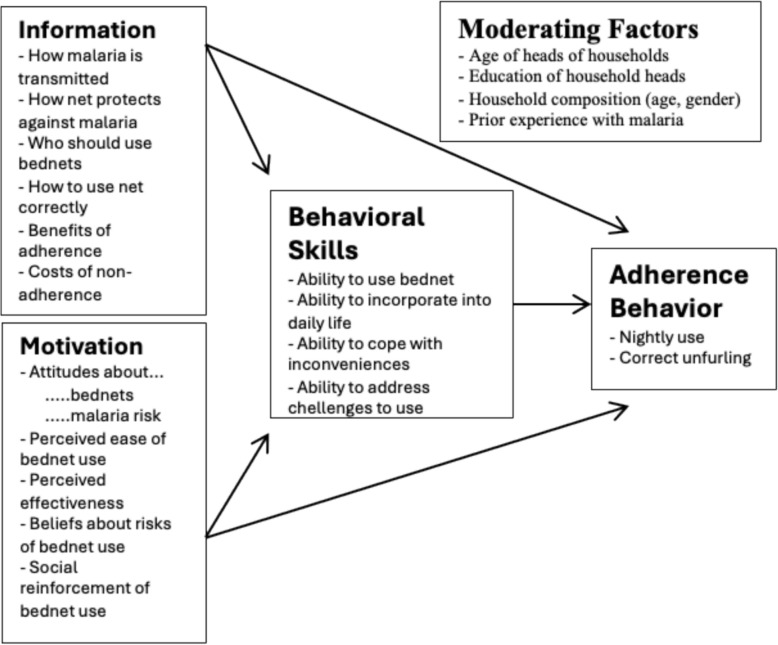 Figure 1
- —NIH
Peer Reviews
No public reviews on file for this paper yet. If you reviewed it on a platform where reviews are public (OpenReview, ICLR, NeurIPS, ICML), you can paste yours below so the community can read it here.
Videos
No videos yet. Explain this paper in a talk, walkthrough, or lecture? Add one.
Taxonomy
TopicsMalaria Research and Control · Mosquito-borne diseases and control · Child Nutrition and Water Access
Introduction
Long-lasting insecticidal nets (LLINs) are the most widely used tool for preventing malaria. Since 2007, the World Health Organization (WHO) has recommended that all people at risk of malaria have access to LLINs, over 2 billion people world-wide [1]. Hundreds of millions of LLINs are distributed every year, typically through universal free distribution programmes. These programmes have increased ownership of LLINs in African households, which account for 95% of the world’s malaria cases and deaths, from 5% in 2000 to 68% in 2021.
Despite this progress, children in Africa continue to make up more than 75% of the malaria burden in cases and deaths, and access and reported use of bed nets among children has stagnated since 2015 [2]. In addition, the spread of pyrethroid resistance among malaria vectors has led to the deployment of next generation nets that are significantly more expensive than standard pyrethroid LLINs [3, 4]. As the cost of deploying new nets rises, it is increasingly important to understand the factors that affect their use to most cost-efficiently utilize scarce malaria prevention resources.
Among the many factors that have been associated with individual bed net use, age is the most well-studied [5–7]. In general, younger children and adults have better reported bed net use than older, school-aged children. Lower bed net use among school-aged children is significant because this age group may act as a reservoir of infection in the community, due to their partial immunity and lack of symptoms from malaria infection, which can contribute to onward transmission [8, 9]. Despite their suboptimal bed net use habits and their importance to malaria transmission in the community, there are only limited studies exploring why school-aged children use their bed nets less than other members in the household. The studies that exist typically focus on factors such as access to bed nets and sleeping arrangements in the household, highlighting lower prioritization of use among individuals deemed to be less at risk [10, 11]. Much less is known about what factors affect use when a bed net is available. The evidence that exists, thus far collected exclusively from adults, suggests that ideational factors such as motivation and habits become increasingly important once access to bed nets is adequate [12]. Very little is known about the ideational factors that affect the use of bed nets in this age group and no study has been identified that has performed in-depth interviews with school-aged children themselves about their bed net use.
Although most malaria prevention studies focus on caregivers, children are the primary users of bed nets in many households. Their comfort, perceptions and experiences influence whether nets are used consistently and correctly, making their views essential for designing effective interventions. Theoretically, these perspectives provide unique insights into decision-making and age-specific factors that influence health behaviours, thereby enriching understanding of malaria prevention dynamics and opening up new avenues for potential interventions to improve the health of the community.
This qualitative study was designed to address this gap in our understanding of factors associated with bed net use to prevent malaria. In-depth qualitative interviews were performed about facilitators of and barriers to bed net use with school-aged children whose households were enrolled in a cohort-based study in a high transmission setting in eastern Uganda. This study focuses on themes that arose from those interviews with the goal of developing a deeper understanding of the ways that this crucial group interact with bed nets used for the prevention of malaria.
Methods
Sampling strategy
A cross-sectional qualitative study was performed with an exploratory research design. Individuals were recruited from households enrolled in a parent cohort study. Details of the cohort have been previously described, but briefly, 80 randomly selected households located in a setting with high transmission of malaria in the Tororo and Busia Districts in Eastern Uganda were enrolled in the cohort and all members of the household were actively followed up every four weeks to monitor for changes in malaria burden [13]. Interviews for this study were performed in a sub-sample of households from the parent study (12 households). These household were enrolled in a sub-study evaluating the use of remote electronic monitors to assess bed net use. The 12 households were purposively sampled from the parent study based on being regular users of bed nets. All bed nets in the sub-study households were equipped with small watch-sized electronic bed net monitors. Households had access to free clinical care at a study clinic and were visited every 2 weeks for entomological collections and collection of remote bed net monitoring data. The parent study also provided participating households with enough bed nets to achieve a ratio of 1 bed net per 2 household inhabitants.
Recruitment and in-depth interview procedures
Qualitative data were collected between March and April 2023 through in-depth interviews (IDI). Individuals aged 8 years through 17 years from the target households were identified for participation. Participants were recruited for interviews at monthly scheduled clinic visits that were part of the parent study. The clinic team participated in the screening process, referring participants identified to be from the target households to the social scientist who independently performed the consenting process and interviews. The interviews were conducted immediately after the clinic visit and lasted for about 30 to 45 min. The children were interviewed in the presence of an adult caretaker or parent. An interview guide was developed using a behavioral model of bed net use based on an Information-Motivation-Behavioral (IMB) framework (Fig. 1) [14]. The interview guide drew upon facilitators and barriers identified in the literature that might affect bed net use, but the structure of the interview guide also allowed for broader exploration of the context around the decision to use bed nets. A simplified version of the interview guide was used for children aged 8 through 14 years. In-depth interviews were conducted in English, Dhopadhola, Luganda, and Ateso, as appropriate. Translation into Dhopadhola, Luganda, or Ateso was supported by three community members experienced in translating health research. Their involvement helped ensure contextual accuracy and preserve the culturally appropriate meaning of concepts related to malaria and bed net use. Participants were asked questions such as “What is your understanding of malaria risks?”, “What can you tell me about malaria prevention?”, “How does age and sleeping arrangement affect LLIN use?” “How many rooms do you have at home?”.Fig. 1. Adapted Information-Motivation-Behavioral model of bed net use
Reflexivity
The team employed a physician to participate in the screening process. This physician regularly provided clinical care for the participants as part of their enrollment in the parent study. This physician was stationed at Tororo District Hospital and he referred the patients to the social scientist following their scheduled clinic visits. His role in the parent study may have influenced the willingness of participants to participate. The social scientist was a female Ugandan with first-hand experience with the use of bed nets and the burden of malaria in Uganda. The social scientist did not participate in any other study activities as part of the longitudinal cohort and did not know the participants. She conducted the IDIs independently with the help of a translator as necessary and the participants were encouraged to freely express themselves and were reminded that their identity would be kept confidential.
Data management and analysis
Interviews were transcribed verbatim by a team with experience in transcription. Those conducted in local languages were translated into English. The social scientist read through the transcripts to ensure they were a true reflection of the recordings. Data were entered into NVivo software version 14 to aid in organization and data management [15, 16]. The transcripts and discussion notes were reviewed for themes and reorganized according to discussion topics. Thematic analysis was carried out guided by the IMB framework. A team-based approach was utilized, with the first author (DES) working in consultation with the senior author (PJK). Data and recurring ideas were coded, and codes were aggregated into themes. This process involved carrying out multiple readings of the field scripts to understand the data and subsequent coding of the data. Coded data extracts were developed into themes presented as sub-topics in this paper. The process was open to identifying new themes from the data, which were then integrated into the pre-existing themes [17]. The consolidated criteria for reporting qualitative research (COREQ) checklist for qualitative studies was applied to the presentation of findings [18, 19].
Results
Eighteen children, aged 8 to 17 years, were identified in the 12 households. Ultimately, 5 of the 18 were excluded because of an inability to complete the interview. These 5 participants were excluded due to an inability to understand the questions or an inability to express themselves due to fear or impairment. Therefore, a total of 13 children were interviewed. This included 4 boys and 9 girls, with a mean age of 12.5 years (Standard Deviation: 2.8).
The qualitative data elicited four main themes: barriers to bed net use, facilitators of bed net use, factors that moderate these and potential resolutions for difficulties encountered in consistently using bed nets (Table 1). Table 1. Summary of qualitative resultsThemesSub-themesBarriers to the use of bed net useInadequate Knowledge/MisinformationFatigueNegative attitude towards bed net useDependence on parents to unfurl the netsExcessive heatSharing bedsInappropriate knowledgeInconsistency in the availability of netsOvernight travelFacilitators of the use of bed netsMalaria knowledgeWillingness to use the bed netThe influence of the electronic monitoring devicesParental support by mothersModerating factorsAgeEducation levelNightly movementsStructural factorsResolutionsHave available extra netsMake time for drawing the netProvide nets for those who lackPut the net down earlyWilling to wash the net early and hang it to dry so it is available for use
Theme 1: Barriers to the use of bed nets
Several children reported non-use of the bed nets when asked about regular use. This was generally attributed to fatigue, forgetting to use the bed nets, parents taking the children's nets, negative attitudes about net use, inconsistent availability of bed nets, parents coming back late and forgetting to check if the children had used the nets and information barriers.
Fatigue/forgetting to use
Children who did not use their bed nets attributed this fatigue from school, multiple household chores and those who played a lot during the day. Fatigued children occasionally forgot to use the bed nets.R: It was last week on Thursday. I over played at school. We played netball at school. On reaching home, I had to do some more work [to help out] at home and at around 8:00pm, I just fell on the bed and slept. Only to wake up in the night and I was not using the net, that’s when I remembered to lower the net. (Child 407)
Parents don’t give the children their nets
Children reported that parents had a tendency of keeping the nets that were meant for the children. The parents sometimes kept the nets, used them personally or gave them to their other children in the household.R. It’s with my mother, she is the one keeping it. (I. So, who is using your net?) No one is using my net; it is with my mother. (Child 406)
Negative attitude toward using the net
Children reported that they had negative experiences using the net. Some children reported that they found net use bothersome and those that did were less likely to prioritize their use. Other children reported having negative experiences making them less likely to use the bed net such as physical symptoms like developing a rash on the face which they attributed to bed net use. Others noted having been bitten by mosquitoes despite their use of the bed nets and didn’t see the need to continue using the bed net.R. When the nets are still new, it causes itching and rash in our faces because of the medicine that has been used for treating the nets. (Child 217)
Excessive heat
Reflections from the data indicated that excessive heat negatively affected bed net use. Some children reported not wanting anything to cover them or be on top of them when the temperature was high and this negatively affected their use of the nets.R*: We sleep in the girls’ room and I share a net with my young sister. Sometimes my sister does not want to use a net when it is hot, so she sometimes sleeps aside and I sleep alone. But when it is hot, sometimes we just sleep [under the net but] without covering ourselves.* (Child 408)
Overnight travel
Several children reported not using bed nets during recent overnight travel. The overnight trips were usually with their parents to funerals or when they went for holidays to other homes during the festive seasons. Children reported that it was hard to carry the nets on these trips and so they were less likely to use bed nets when travelling.
Inconsistency availability of the bed nets
When queried about possible reasons for inconsistency in the use of bed nets, children listed washing the net and discovering it had not dried in time for use. Most of the time, the nets were washed by the parents. Other reported reasons were reluctance to hang up the nets, ignorance about the importance of bed net use, and difficulties with changing sleeping spaces leading to a lack of regular sleeping space over which to tie up a net.
Inappropriate knowledge
Some of the children appeared ignorant about the importance of bed nets in the prevention of malaria. Information barriers that decreased the likelihood of regularly using bed nets included myths about the causes of malaria, a lack of information about the importance of preventing malaria and decreased understanding of adequate prevention methods.
Theme 2: facilitators of the use of bed nets
A summary of the factors that tended to increase the use of bed nets included proper knowledge about the causes of malaria and means of prevention, the importance of parental support, adequate supplies of bed nets for use and generally positive attitudes about the value of bed nets leading to a willingness to use them.
Awareness of malaria
Knowledge about causes of malaria, such as being caused by mosquito bites and related to stagnant water, tended to increase the likelihood of children using their nets. Understanding that malaria was preventable by sleeping under mosquito nets and being versed in the benefits of nets in reducing costs spent on treating of malaria among the older children was associated with more bed net use. Children who appeared to be knowledgeable about malaria indicated that the source of this information was from school and their parents.
Parental support
The findings showed that children who were supported by their parents by checking on them daily, unfurling their nets and washing their nets early so that they dried in time for use were tended to use nets more than those who didn’t receive similar support.R: When I come back then my mother puts it [down] for me, sometimes I don’t even know what time she puts it down but me I just find it. (Child 407)
Consistency in the use of bed nets
Consistency in bed net use was attributed to the fact that participants had more than one net each. Both the government and the study were reported to be the sources of the nets. The adequate supply and ownership of bed nets helped in ensuring consistency in use so that when one was washed, they replaced it with another.R: The government gave us and even [the study team] also gave us. Actually, we got four from government and also this project gave us four nets, so in total we have eight nets at home. (Child 408)
Willingness to use the nets
The children indicated that their willingness to use the nets was attributed to the availability of the nets, health workers helping to tie them up and the way that bed nets were left hanging during the day so the children wouldn’t forget to unfurl them. Those who thought nets were safe to use were more positive about bed net use. Some children reported the importance of leaving new nets out in the sun before first use to reduce physical reactions/rashes. Additionally, those who found the nets easy to use were more positive about their use than those who found them burdensome. Furthermore, children reported understanding that children and pregnant women should be prioritized during the distribution of nets.
The influence of the electronic monitoring device
Reflections from the children’s data indicated that the electronic monitoring device created a heightened sense of being observed, which influenced their bed net use. This awareness led some participants to consciously or unconsciously adjust their behaviour. In the in-depth interviews, children described the device as small, attractive, and resembling a watch. Several reported using the nets more consistently because they knew they were being monitored. As a result, some made greater efforts to position the nets correctly each night and to replace them promptly after washing. These behaviours were further reinforced by health workers, who regularly visited homes to manage the monitoring device and ensured nets were left hanging down before departing. Some children also indicated that they looked at it as a form of pride because not everyone had the device.
One participant highlighted how the device which looked like a watch motivated their bed net useR: [The device] looks nice for me. It’s very small, not very big. It’s like a watch. Even if it’s hot, I use the net because this machine will know. I can’t miss. The moment you miss, this machine is going to show there that you have not slept in the net maybe for three days or one day, like that. (Child 316).
Theme 3: moderating factors
Moderating factors that affected the use of bed nets included age, education, behaviors related to moving around the household at night and structural household factors such as the number of rooms and members in the house.
Age
The age of the children had an influence on bed net use. In this study of 8- to 17-year-olds, older children responded more positively to using bed nets than the younger children. This appears to be related to the way younger children mainly depended on their parents for support with unfurling the net. Older children also reported being more likely to remember to use nets compared to the younger ones who occasionally got tired after a long day of play or household chores. One of the older children noted regarding bed net use while sharing a bed with a younger child:R: If she doesn’t want to sleep under the net, I leave her out. I will not allow to get malaria because of her. (Child 596)
Education
In general, both the uneducated and educated groups of children seemed to have understood the importance of using bed nets. Those who were better educated appreciated the benefits of prevention more and reported more reminders to help them remember. This seemed to be attributed to the information they gained from school and their parents about the importance of malaria prevention.
Nighty movements
Several children reported occasions when they exited bed nets during the night to use the toilet. Multiple of these narratives indicated that they routinely returned to find that they had left the net open, allowing mosquitoes to enter the net. This left them vulnerable to disturbance and bites after these interruptions in use occurred:R: Most times, when I go to the toilet in the night, I try to cover, but when I come back I hear the sound of mosquitoes inside the net. (Child 219)
Household factors
Household factors appear to have an influence on bed net use. Participants from homes with more rooms seemed more likely to use bed nets consistently than those with few rooms. Participants with fewer rooms indicated that the use of bed nets was made more challenging because they often had to sleep in non-standard sleeping spaces, such as the sitting room, where hanging up permanent nets was more difficult. Limited sleeping spaces relative to the number of household inhabitants was therefore correlated with participants being less likely to regularly use bed nets. Those with more rooms and with permanent sleeping positions indicated that they found it easy to use the bed nets. In addition, sharing beds with other individuals, primarily with other children, sometimes causes difficulties when there is a discrepancy in wanting to use the net.
Theme 4: resolutions
Children were engaged in a discussion about ways to resolve the barriers to bed net use that they reported during their interviews. Potential resolutions were most often discussed by the children in the context of parental support as a key first step in enacting changes. A summary of some of these potential resolutions included children identifying the value of additional nets so that one is available for their use and to avoid interruptions after washing. Children also noted the importance of allowing sufficient time in their days to unfurl the net and for making this a habit that was guided by their typical daily routine. The children indicated the importance of putting the nets down early and some noted that leaving the nets down all of the time, instead of folding them up during the day, might be a way to help avoid forgetting. The older children identified the need to wash nets and hang them to dry early to ensure they are dried and ready to be put back before the night.
Discussion
This study explored factors that affect bed net use among school-aged children living in a high transmission setting in Uganda by interviewing them directly about their knowledge, practices and beliefs. In this study of 13 children, aged 8 to 17 years, multiple facilitators of bed net use and barriers to their regular use were identified. Some findings have been reported previously among adults, such as heat being a barrier to use and concerns about new nets causing skin irritation. This study is novel by exclusively focusing on children. Unlike most previous studies that rely on caregiver reports, it captures children’s own voices, offering fresh perspectives on the circumstances surrounding bed net use. By highlighting children’s lived experiences often overlooked in research, our findings provide unique insights that enrich understanding and can inform more child-centered interventions. Some of the most interesting findings for understanding how children experience bed net use, and the prevention of malaria more generally, include the key role of parents, how the daily activities and routines of children affect use, and challenges specific to children related to sharing sleeping spaces with others, limited availability of nets and lack of dedicated sleeping spaces. These findings can help inform public health campaigns and policy makers seeking to improve the uptake of bed net use in malaria endemic settings.
Children within the 8 to 17 age range are in a developmental stage marked by increased independence and a growing sense of agency and have been found to be the least likely to use bed nets. Studies conducted in Africa support the findings, showing that school-aged children are generally less likely to use bed nets. Studies in Uganda have shown that bed net use was consistently lowest among school-aged children (5 to 17 years) [20, 21]. This may be related to findings that children over 5 years of age are perceived to be at less risk for malaria because they tend to have fewer clinical episodes due to partial immunity [8, 22, 23]. Nonetheless, very few studies have explored bed net use practices by children over 5 years of age and none of any studies had assessed this with direct interviews with children.
An important finding in this study is the influence of parents as gatekeepers for bed net use. Mothers of younger children were more likely to be responsible for unfurling and washing the nets compared to older children who take on the responsibilities themselves. The attitude of parents and caretakers towards bed nets therefore directly affects use of bed nets of school-aged children, particularly among the younger ages. It seems possible that parents with a positive attitude toward bed net use might be more likely to prioritize and ensure bed net use among their children. This is born out in the literature, with caretakers who perceived malaria as a less serious disease being less likely to ensure bed net use for their children compared to those who perceived malaria as deadly with significant economic implications [24]. In many cultures, the care and distribution of bed nets in a home, ensuring they are washed and used are considered the role of women in the home [25]. These societal expectations of mothers regarding bed net use for children create the possibility that they are key gatekeepers to their use. When mothers get overwhelmed or forget to unfurl the bed nets for their children, those children appear to be at increased risk of malaria as a result.
School-aged children as a group are typically characterized by high energy levels and a strong leaning towards physical activity. It is plausible that they get tired after a long day of play and that this may contribute to their forgetfulness regarding bed net use. The findings on the influence of play align with studies by which were conducted in Tanzania [26, 27]. In addition, children are involved in routine domestic activities which may affect their malaria exposure, such as fetching water, washing kitchen utensils and cooking, and walking to and from school. Watching television and studying late at night have also been reported as activities that keep school-aged children outdoors in the early evening and night hours, thus increasing their exposure to malaria.
Access to bed nets is another important theme that arose from our study. Research has shown that this age group is often perceived as being lower risk and therefore has lower priority in the household allocation of bed nets for the prevention of malaria. This age group bears an underappreciated burden of malaria and there are few targeted interventions towards this age category [28]. The permanence of sleeping spaces arose as a key factor affecting bed net use in our study. Children who had to share beds and bed nets and those who did not have permanent sleeping positions reported more barriers to bed net use compared to those with permanent dedicated sleeping spaces. The results align with a study in Malawi, which showed that seasonal bed net use especially when several people shared a single net and without permanent sleeping positions increases children’s risk of malaria [24].
In addition, there were several barriers and facilitators of bed net use which we elicited from our school-aged child participants that confirm what is known about bed net use in general. Some of the these include logistical matters such as bed nets not having dried after being washed and bed nets being torn. These findings are consistent with other findings from Uganda where the most common reason cited for non-usage of bed nets the previous night was that the net was not hung [29]. Temperature also has an effect on bed net use in Uganda, with prior reports that during excessive heat and in the dry season bed nets are rarely used [30]. In addition, some people in Uganda use bed nets only during the rainy season and put it away during the dry season[31]. Overnight travel of children with their parents for social events is another factor found to affect consistent bed net use in Uganda and this also was revealed in our study [17, 32].
Among the limitations of this study is the reliance on the experiences of the children, which may have left under-explored the perceptions of their parents and other household members. Future work could also explore how perspectives of bed net use among children differ across other well-known factors associated with bed net use, such as gender or socioeconomic status. In addition, correlating interviews with children in home settings with findings from school-based interventions providing malaria prevention education or tools could provide broader insights into bed net use in children. Furthermore, these interviews were retrospective, potentially introducing recall bias into responses and the study may be subject to sampling bias, as participants included regular bed net users. Their perspectives and practices may not fully represent households with inconsistent or non-use, potentially limiting the generalisability of the findings. Children were also interviewed in the presence of their parents, and their responses may have been influenced by social desirability bias. This could have limited their willingness to disclose poor bed net use or to speak candidly about issues, especially those related to their parents. Furthermore, social desirability bias may also have occurred, as participants could have consciously or unconsciously adjusted their behaviour and in this case, increasing net use because they were aware that their actions were being monitored. Finally, the households available for these interviews were purposively sampled for their regular bed net use. It is possible that there would be differences if interviews were conducted with children who were randomly sampled from the community.
Overall, while these school-aged children recognized the importance of preventing malaria and generally held a favorable view towards the use of bed nets, maintaining consistent usage proved to be difficult. The use of direct child interviews did not only reduce reliance on second-hand caregiver reports but also revealed practical aspects of bed net use that can inform child-focused malaria prevention programmes*.* Individual factors such as forgetfulness and fatigue, induced by expected levels of activities for this age group (i.e. play and chores), negatively impacted the regular use of bed nets. Interventions for improving the development of bed net use habits among school-aged children, as they transition into independent decision-makers of their own health, can improve net use culture in Uganda now and in the future. Parents were also revealed as key gatekeepers to bed net use, particularly among younger school-aged children. It is essential for parents and caregivers to actively support children by monitoring their use of bed nets during the night. Finally, access to bed nets and regular sleeping spaces were identified as determinants of bed net use in this age group. These findings can help public health programmes and policy makers develop interventions to address these barriers to bed net use in this age group.
Supplementary Information
Supplementary Material 1
The reference list from the paper itself. Each links out to its DOI / PubMed record.
- 1QSR International Pty Ltd. N Vivo qualitative data analysis software. 2020. https://www.qsrinternational.com/nvivo-qualitative-data-analysis-software/home.