Primary Tracheobronchial Low-Grade Mucoepidermoid Carcinoma: A Report of a Rare Case
Gaurav Sahu, Atharva Barve, Hemant Sharma, Pradip Potdar

TL;DR
A rare case of a young woman with a tracheobronchial tumor initially misdiagnosed as tuberculosis is reported, highlighting the need for early suspicion of airway tumors in patients with chronic respiratory symptoms.
Contribution
This paper presents a rare clinical case of primary low-grade mucoepidermoid carcinoma in a young patient, emphasizing diagnostic challenges and management.
Findings
A 19-year-old female presented with exertional dyspnea and chronic cough, initially misdiagnosed as pulmonary tuberculosis.
Histopathological analysis confirmed a primary tracheobronchial low-grade mucoepidermoid carcinoma of salivary gland origin.
Endotracheal debulking via rigid bronchoscopy was successfully performed, highlighting the importance of early suspicion for airway neoplasms.
Abstract
Primary tracheobronchial tumors are rare entities, with low-grade mucoepidermoid carcinoma (MEC) representing an uncommon subtype that mimics common airway diseases such as asthma or tuberculosis. Early diagnosis is often delayed due to nonspecific clinical and radiological features. We report the case of a 19-year-old female with exertional dyspnea, recurrent nocturnal gasping, and chronic cough who was previously misdiagnosed and treated as pulmonary tuberculosis. Radiological and bronchoscopic evaluation revealed a tracheobronchial endoluminal mass, and histopathological examination confirmed low-grade MEC of salivary gland origin. The patient underwent successful endotracheal debulking through rigid bronchoscopy. This case underscores the importance of maintaining a high index of suspicion for primary airway neoplasms in young patients with chronic or refractory respiratory symptoms.
Genes, proteins, chemicals, diseases, species, mutations and cell lines named across the full text — each resolved to its canonical identifier and authoritative record.
Click any figure to enlarge with its caption.
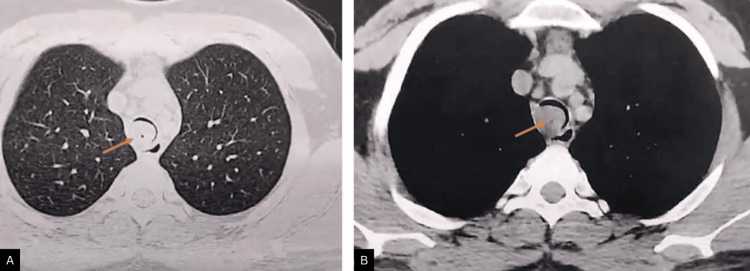 Figure 1
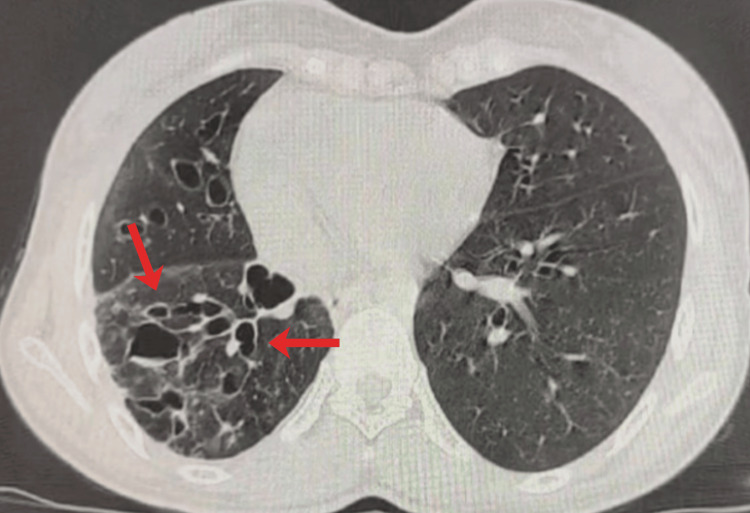 Figure 2
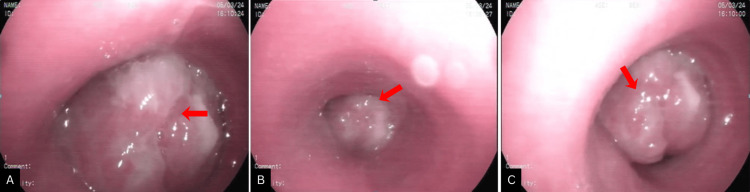 Figure 3
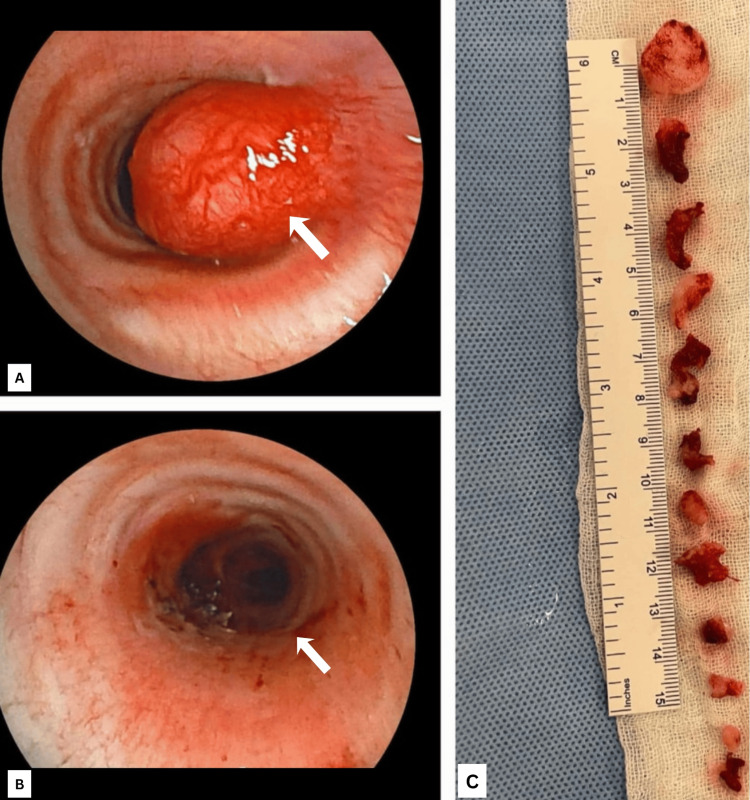 Figure 4
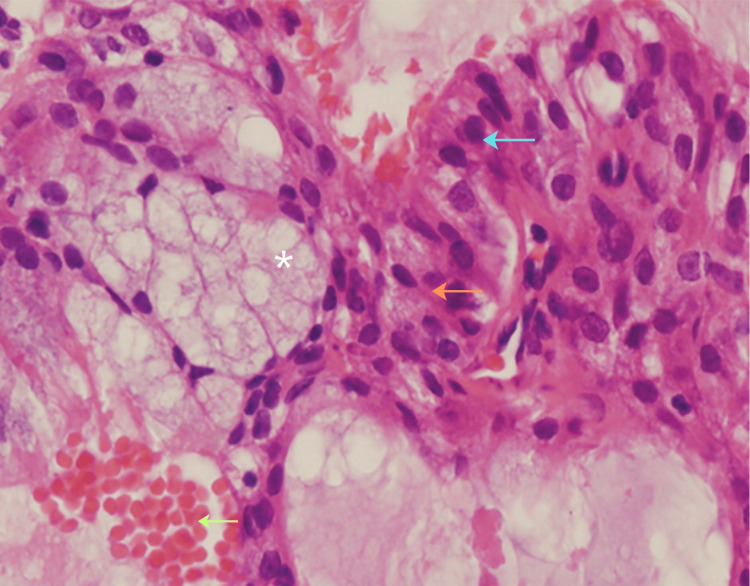 Figure 5
Peer Reviews
No public reviews on file for this paper yet. If you reviewed it on a platform where reviews are public (OpenReview, ICLR, NeurIPS, ICML), you can paste yours below so the community can read it here.
Videos
No videos yet. Explain this paper in a talk, walkthrough, or lecture? Add one.
Taxonomy
TopicsSalivary Gland Tumors Diagnosis and Treatment · Tracheal and airway disorders · Head and Neck Anomalies