Patient‐Specific Coculture of S. aureus and P. aeruginosa Enhances Epithelial Barrier Disruption and Virulence in CRS
Xiaohan Sun MMed, Mahnaz Ramezanpour, Jordan Hall, Emma Barry, Alkis J. Psaltis, Peter‐John Wormald, Sarah Vreugde

TL;DR
This study shows that combining two bacteria from the same patient worsens nasal cell damage and increases bacterial virulence in chronic sinusitis.
Contribution
The study demonstrates that patient-specific cocultures of S. aureus and P. aeruginosa enhance epithelial damage and bacterial virulence in CRS.
Findings
Cocultures reduced HNEC TEER values and increased paracellular permeability compared to monocultures.
P. aeruginosa proliferation and protease activity increased significantly in cocultures.
Pyoverdine production increased in cocultures, but pyocyanin levels remained unchanged.
Abstract
Chronic rhinosinusitis (CRS) is a chronic inflammatory disease that is associated with polymicrobial infections, often involving S. aureus and P. aeruginosa. It is unclear whether the polymicrobial context plays a role in exacerbating epithelial damage, inflammation, and resistance to therapy. S. aureus and P. aeruginosa (n = 3 each) biofilms were established in a Transwell system, followed by the extraction of P. aeruginosa conditioned media and application to an air–liquid interface (ALI) model of human nasal epithelial cells (HNECs). Transepithelial electrical resistance (TEER) and FITC dextran paracellular permeability tests evaluated the epithelial integrity. Colony‐forming unit (CFU) counting, protease activity assay, and pyocyanin and pyoverdine quantification were used to test the proliferation and production of virulence factors of the bacteria. Cocultures of P. aeruginosa…
Genes, proteins, chemicals, diseases, species, mutations and cell lines named across the full text — each resolved to its canonical identifier and authoritative record.
Click any figure to enlarge with its caption.
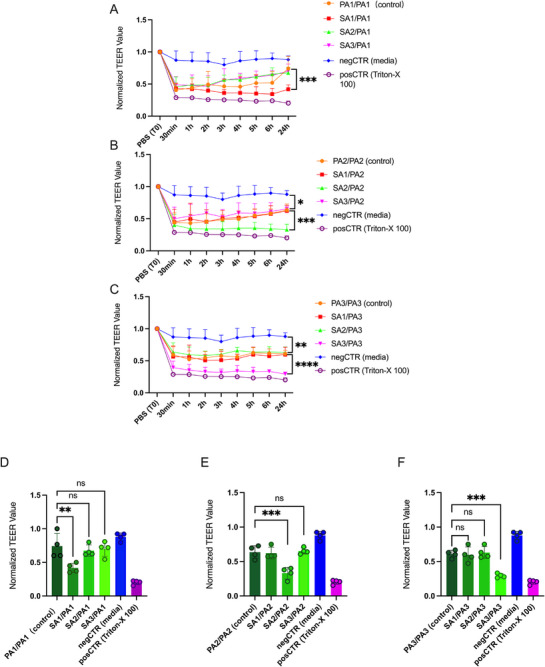 Figure 1
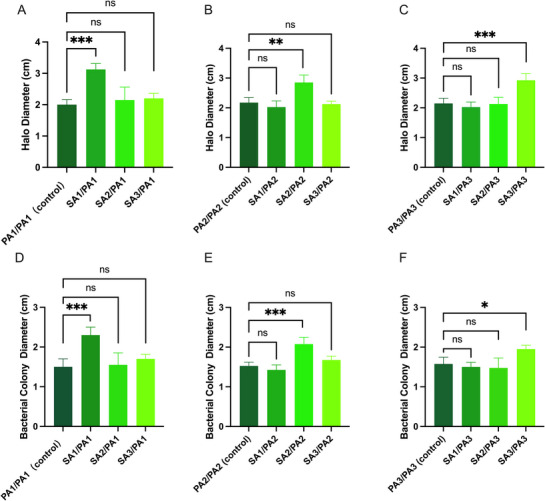 Figure 2
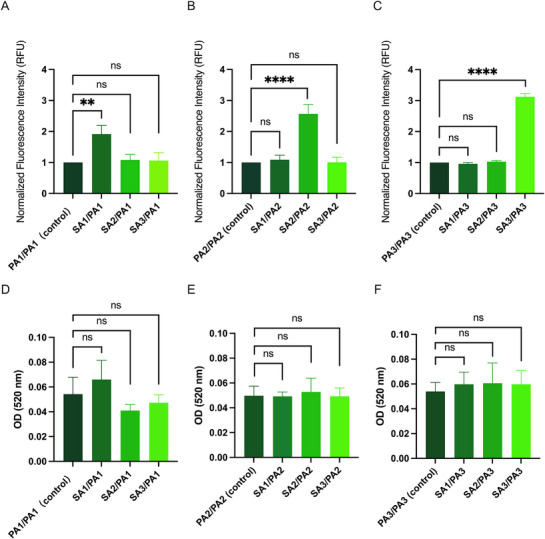 Figure 3
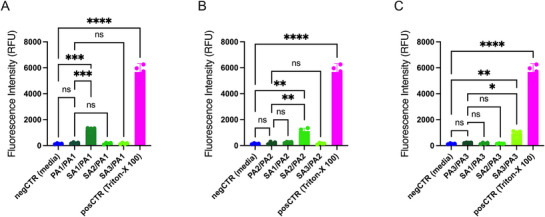 Figure 4
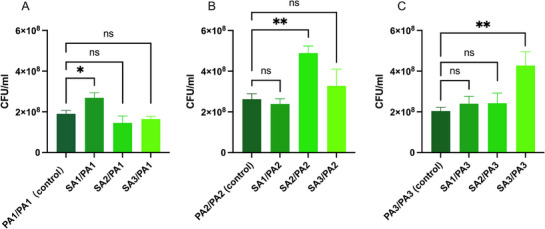 Figure 5
Peer Reviews
No public reviews on file for this paper yet. If you reviewed it on a platform where reviews are public (OpenReview, ICLR, NeurIPS, ICML), you can paste yours below so the community can read it here.
Videos
No videos yet. Explain this paper in a talk, walkthrough, or lecture? Add one.
Taxonomy
TopicsSinusitis and nasal conditions · Cystic Fibrosis Research Advances · Allergic Rhinitis and Sensitization