Chemical Characterization and Allelopathic Effects of Ambrosia psilostachya (Asteraceae)
Hesan Saberi, Ali Reza Yousefi, Majid Pouryousef, Somayeh Tokasi, Jafar Asghari Birbaneh, Marcello Iriti

TL;DR
This study identifies the chemical components of Ambrosia psilostachya and shows that its extracts inhibit the growth of bean and peanut plants, suggesting allelopathic effects.
Contribution
The study identifies specific chemical compounds in A. psilostachya and demonstrates their allelopathic effects on crop plants.
Findings
Essential oil of A. psilostachya contains compounds like isoaromadendrene epoxide, citral, and caryophyllene.
Aqueous extracts at 50% or higher concentration significantly inhibit growth parameters in bean and peanut seedlings.
The allelopathic effect is likely due to high concentrations of specific compounds like isoaromadendrene epoxide and citral.
Abstract
Ambrosia spp. have been introduced and distributed across different continents as an invasive alien plant species. The present study aimed to identify the chemical components of essential oil isolated from different parts of Ambrosia psilostachya and evaluate the phytotoxic effect of its aqueous extracts on the growth parameters of Phaseolus vulgaris L. (bean) and Arachis hypogaea L. (peanut) under greenhouse conditions. The chemical components of the essential oil of A. psilostachya were analyzed by gas chromatography‐mass spectrometry. Total 44 compounds, including isoaromadendrene epoxide (17.38 %), citral (15.13 %), caryophyllene (7.23 %), borneol (8.76%), (+)‐2‐bornanone (6.45 %), eucalyptol (4.61 %), and 22 compounds including endo‐borneol (22.76%), (+)‐2‐bornanone (8.08%), caryophyllene oxide (7.77%), citral (14.65%), cis‐verbenol (4.43%), and eucalyptol (4.72%) as the major…
Genes, proteins, chemicals, diseases, species, mutations and cell lines named across the full text — each resolved to its canonical identifier and authoritative record.
Click any figure to enlarge with its caption.
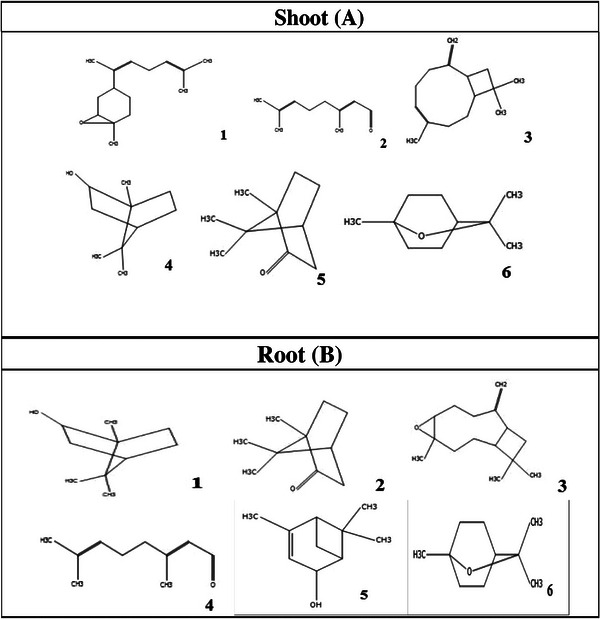 Figure 1
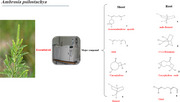 Figure 2
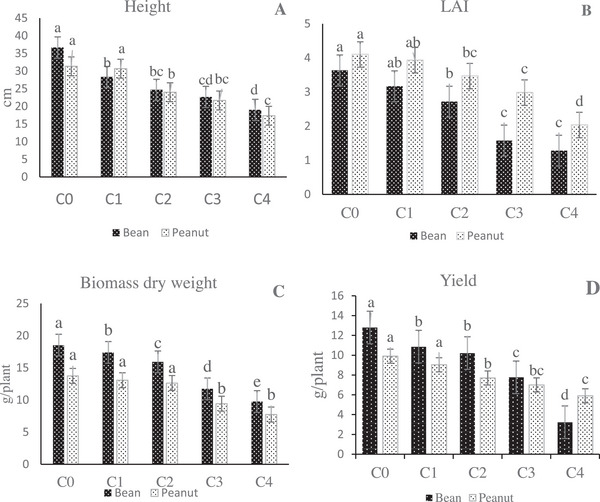 Figure 3
Peer Reviews
No public reviews on file for this paper yet. If you reviewed it on a platform where reviews are public (OpenReview, ICLR, NeurIPS, ICML), you can paste yours below so the community can read it here.
Videos
No videos yet. Explain this paper in a talk, walkthrough, or lecture? Add one.
Taxonomy
TopicsAllelopathy and phytotoxic interactions · Insect Pest Control Strategies · Essential Oils and Antimicrobial Activity