Potential of Eugenia brejoensis (Mazine) Essential Oil in Combating Multidrug‐Resistant (MDR) Acinetobacter baumannii and Pseudomonas aeruginosa
Jonathan Mandú de Araújo, Amanda Vieira de Barros, Fábio Henrique Galdino Dos Santos, Weslley Felix De Oliveira, Daniela Maria do Amaral Ferraz Navarro, Márcia Vanusa da Silva, Bruno Oliveira de Veras, John Eversong Lucena de Vasconcelos, Henrique Douglas Melo Coutinho

TL;DR
This study explores the antibacterial and biofilm-inhibiting potential of Eugenia brejoensis essential oil against drug-resistant bacteria, showing low toxicity and synergy with antibiotics.
Contribution
The study introduces Eugenia brejoensis essential oil as a potential therapeutic agent against multidrug-resistant Acinetobacter baumannii and Pseudomonas aeruginosa.
Findings
EOEb showed significant antibacterial activity against MDR strains with MIC and MBC values ranging from 0.512 to 4.096 mg/mL.
EOEb inhibited biofilm formation at concentrations between 0.512 and 4.096 mg/mL.
EOEb exhibited synergistic effects with ciprofloxacin and gentamicin, with FIC indices close to 0.5.
Abstract
The genus Eugenia has a long history of use in traditional medicine for treating various conditions, including infectious diseases, gastrointestinal disorders, and skin problems. Essential oils derived from Eugenia species are known for their medicinal properties and have been studied for their antimicrobial and bioactive potential. This study aimed to evaluate, through in vitro tests, the antibacterial, antibiofilm, and antibiotic‐modulating effects of Eugenia brejoensis essential oil (EOEb) against multidrug‐resistant (MDR) clinical isolates of Acinetobacter baumannii and Pseudomonas aeruginosa from COVID‐19 patients. In addition, we sought to analyze its toxicity and survival rates through in vivo tests in an invertebrate model using Tenebrio molitor. The EOEb was extracted via hydrodistillation and analyzed by gas chromatography–mass spectrometry (GC–MS) and flame ionization…
Genes, proteins, chemicals, diseases, species, mutations and cell lines named across the full text — each resolved to its canonical identifier and authoritative record.
Click any figure to enlarge with its caption.
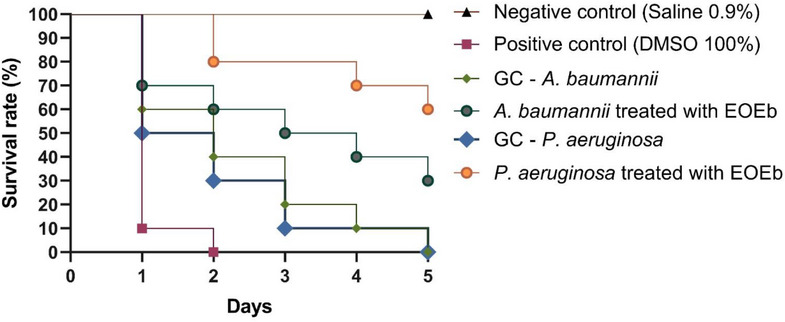 Figure 1
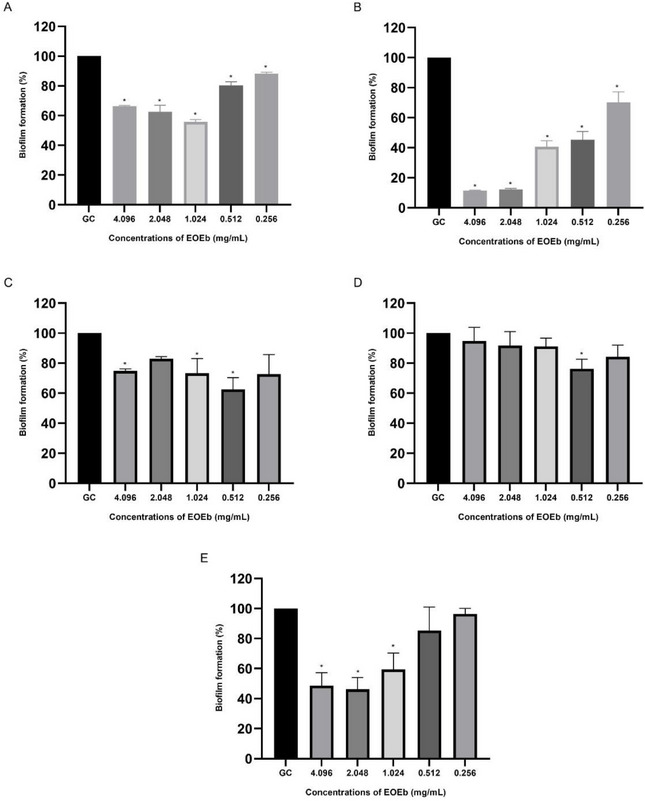 Figure 2
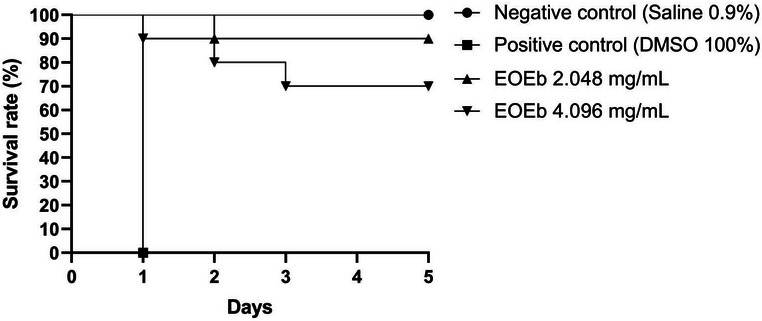 Figure 3
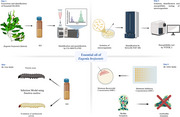 Figure 4
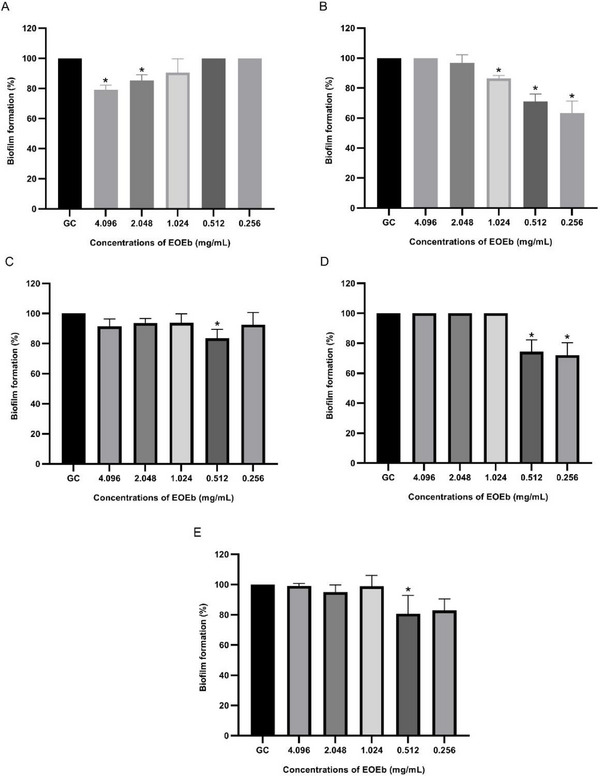 Figure 5
Peer Reviews
No public reviews on file for this paper yet. If you reviewed it on a platform where reviews are public (OpenReview, ICLR, NeurIPS, ICML), you can paste yours below so the community can read it here.
Videos
No videos yet. Explain this paper in a talk, walkthrough, or lecture? Add one.
Taxonomy
TopicsEssential Oils and Antimicrobial Activity · Insect Pest Control Strategies · Bioactive Natural Diterpenoids Research