External Validation of a Multivariable Diagnostic Prediction Model for Acute Invasive Fungal Rhinosinusitis in Tertiary Care Settings
Aviv Spillinger, Johanna Ellefson, Qiuyu Yang, Linda X. Yin, Janalee K. Stokken, Thomas Pasic, Ian J. Koszewski, Sandra Y. Lin

TL;DR
This study validates a diagnostic model for a serious fungal sinus infection in a new patient group, showing it works well despite differences in health conditions.
Contribution
The paper externally validates an existing AIFS diagnostic model in a new tertiary care cohort with distinct comorbidity profiles.
Findings
Both the three-variable and four-variable models showed strong discrimination (C-indexes of 0.844 and 0.963, respectively).
The models slightly overpredicted risk but maintained acceptable calibration in a different patient population.
The model's performance suggests it can be generalized to patients with varying underlying health conditions.
Abstract
Prompt detection and intervention are crucial for improving outcomes in acute invasive fungal rhinosinusitis (AIFS). Diagnostic prediction models assist in risk‐stratification, but their accuracy requires testing through external validation. This study aims to validate a previously published diagnostic prediction model for AIFS in an independent cohort. A retrospective chart review was conducted at a tertiary care center (2008–2023) to identify patients with an otolaryngology consult for suspected AIFS. Of 65 patients identified, 11 (16.9%) were diagnosed with AIFS based on histopathology. Risk was calculated using Yin et al.’s predictive model. Predictive performance was assessed by calibration and discrimination. Patients had significantly higher rates of diabetes (46.2% vs. 26.1%, p = 0.002), long‐term steroid use (60% vs. 28.2%, p < 0.0001), and solid organ transplantation (38.5%…
Genes, proteins, chemicals, diseases, species, mutations and cell lines named across the full text — each resolved to its canonical identifier and authoritative record.
Click any figure to enlarge with its caption.
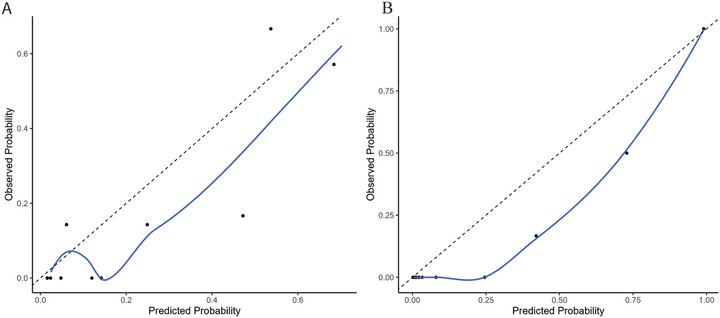 Figure 1
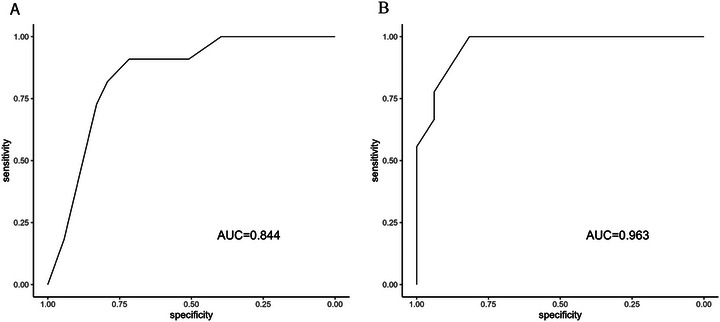 Figure 2
Peer Reviews
No public reviews on file for this paper yet. If you reviewed it on a platform where reviews are public (OpenReview, ICLR, NeurIPS, ICML), you can paste yours below so the community can read it here.
Videos
No videos yet. Explain this paper in a talk, walkthrough, or lecture? Add one.
Taxonomy
TopicsSinusitis and nasal conditions · Antifungal resistance and susceptibility · Oral Health Pathology and Treatment