Mucoadhesive Polyvinyl Alcohol Film Containing Fridericia chica Extract for Mucositis Treatment: Pharmacological Evaluation and Active Compounds Release
Ilza Maria de Oliveira Sousa, Ailane Souza de Freitas, Fabrício de Faveri Favero, Lucia Elaine O. Braga, Mariana Cecchetto Figueiredo, Diana Pinto, Maria Beatriz P. P. Oliveira, Simone Nataly Busato de Feiria, Nubia de Cássia Almeida Queiroz, Ana Lucia T. G. Ruiz

TL;DR
A new mucoadhesive film containing Fridericia chica extract is evaluated for treating oral mucositis, showing antioxidant, antimicrobial properties, and safe delivery of active compounds.
Contribution
A novel mucoadhesive PVA film with Fridericia chica extract is proposed for mucositis treatment, demonstrating effective compound release and biological activity.
Findings
The film exhibited antioxidant and antimicrobial activity against Candida spp. and bacteria without cytotoxicity up to 62.5 µg/mL.
3-Deoxyanthocyanidins and luteolin permeated porcine esophageal membrane, indicating unhindered compound release by PVA.
Nanoparticles were monodisperse with a zeta potential of -11.13 mV, suggesting good colloidal stability.
Abstract
Oral mucositis is a frequent and painful complication of cancer therapy with limited effective options. This study evaluated a mucoadhesive polyvinyl alcohol (PVA) film containing 2.5% Fridericia chica extract as a novel strategy. The formulation was characterized for antioxidant activity, phenolic and flavonoid content, and reactive species scavenging. Nanostructure size and morphology were assessed by DLS and TEM. Biological assays included antimicrobial activity, ex vivo release (Franz cells), and cytotoxicity in HGF‐1 and HaCaT cells. The film showed antioxidant and antimicrobial activity against Candida spp. and bacterial strains, and showed no cytotoxicity up to 62.5 µg/mL. Particles were nanometric (245.5 nm), monodisperse, with a zeta potential of −11.13 mV. 3‐Deoxyanthocyanidins and luteolin permeated the porcine esophageal membrane, indicating that PVA did not hinder compound…
Genes, proteins, chemicals, diseases, species, mutations and cell lines named across the full text — each resolved to its canonical identifier and authoritative record.
Click any figure to enlarge with its caption.
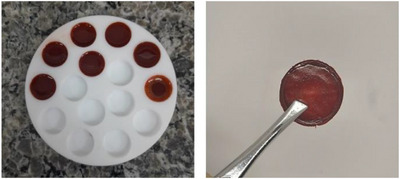 Figure 1
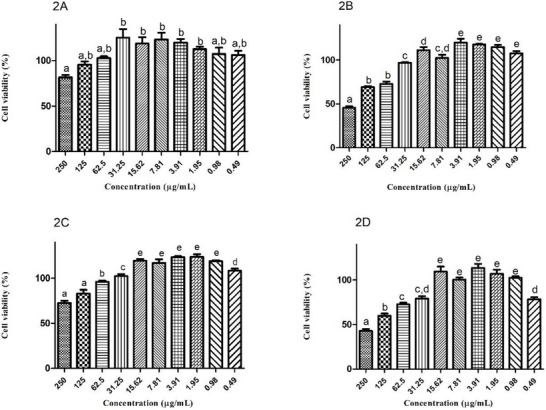 Figure 2
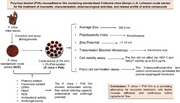 Figure 3
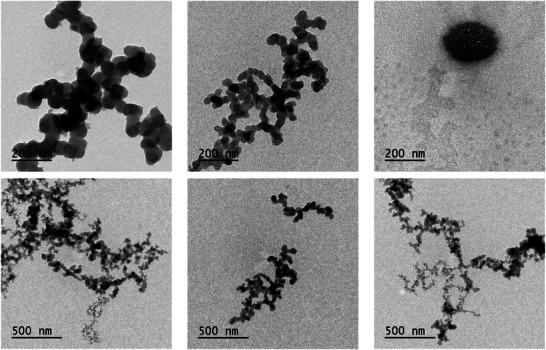 Figure 4
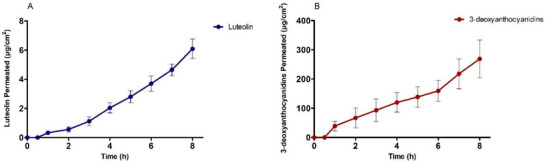 Figure 5
Peer Reviews
No public reviews on file for this paper yet. If you reviewed it on a platform where reviews are public (OpenReview, ICLR, NeurIPS, ICML), you can paste yours below so the community can read it here.
Videos
No videos yet. Explain this paper in a talk, walkthrough, or lecture? Add one.
Taxonomy
TopicsOral health in cancer treatment · Head and Neck Cancer Studies · Antifungal resistance and susceptibility