Bioinformatic Analysis of RNF43 and Its Co-expressors As Prognostic Biomarkers for Gastric Cancer
Masanobu Tsubaki, Taira Matsuo, Rie Komori, Haruka Kubo, Chihiro Miyamoto, Noriaki Nagai

TL;DR
This study identifies RNF43 and AXIN2 as potential biomarkers for better survival in gastric cancer patients, while HUNK is linked to worse outcomes.
Contribution
The study identifies RNF43 co-expressors and their prognostic significance in gastric cancer for the first time.
Findings
High RNF43 expression is associated with prolonged overall survival in gastric cancer patients.
AXIN2 co-expression with RNF43 further improves patient survival outcomes.
Overexpression of HUNK alone is linked to poor prognosis, but combined with RNF43 it improves survival.
Abstract
Background Gastric cancer (GC) exhibits high morbidity and mortality rates worldwide. Although surgery, pharmacotherapy using antibody drugs, and chemotherapy improve the survival rate, some patients exhibit a poor prognosis, necessitating the identification of new prognostic factors. Downregulation or mutation of the ring finger protein (RNF)-43, a negative regulator of the Wnt pathway, serves as a poor prognostic factor for various cancers; however, its specific mechanisms in GC remain unclear. Therefore, in this study, we used a clinical database to determine whether RNF43 and its co-expressors impact the life expectancy of patients with GC. Methods The evaluations were executed on publicly available datasets and website for analysis, including the University of Alabama at Birmingham Cancer Data Analysis Portal (UALCAN), cBioPortal, Kaplan-Meier plotter, Linkedomics, and…
Genes, proteins, chemicals, diseases, species, mutations and cell lines named across the full text — each resolved to its canonical identifier and authoritative record.
Click any figure to enlarge with its caption.
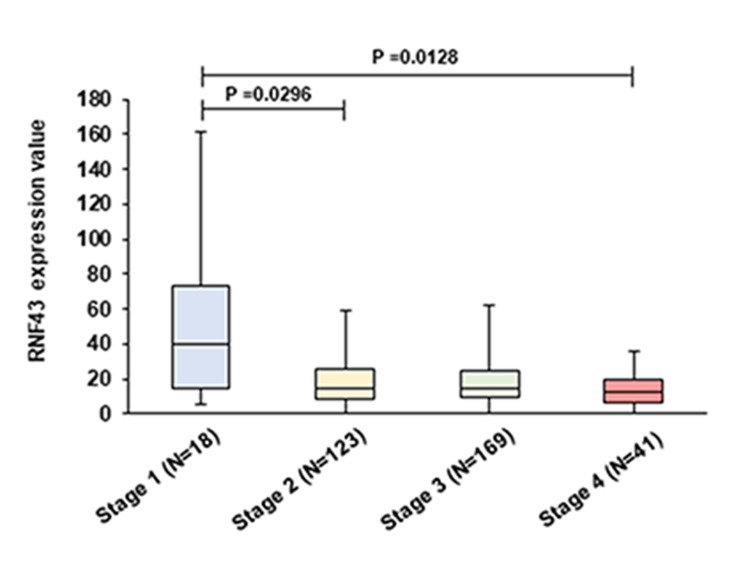 Figure 1
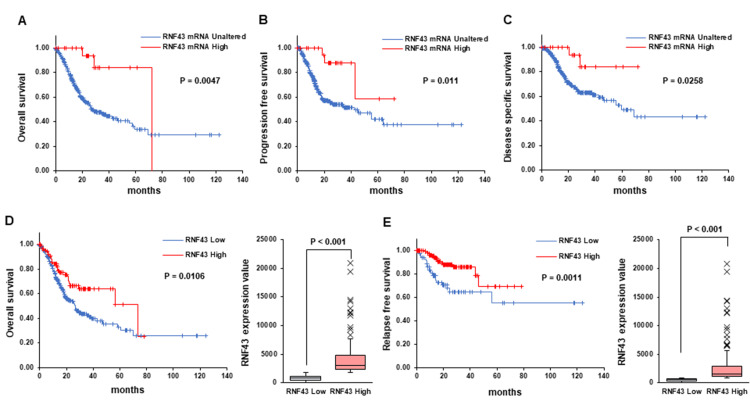 Figure 2
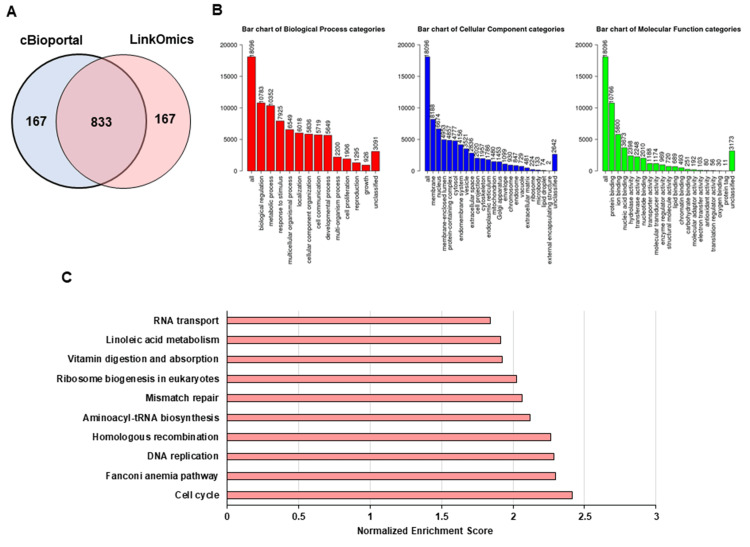 Figure 3
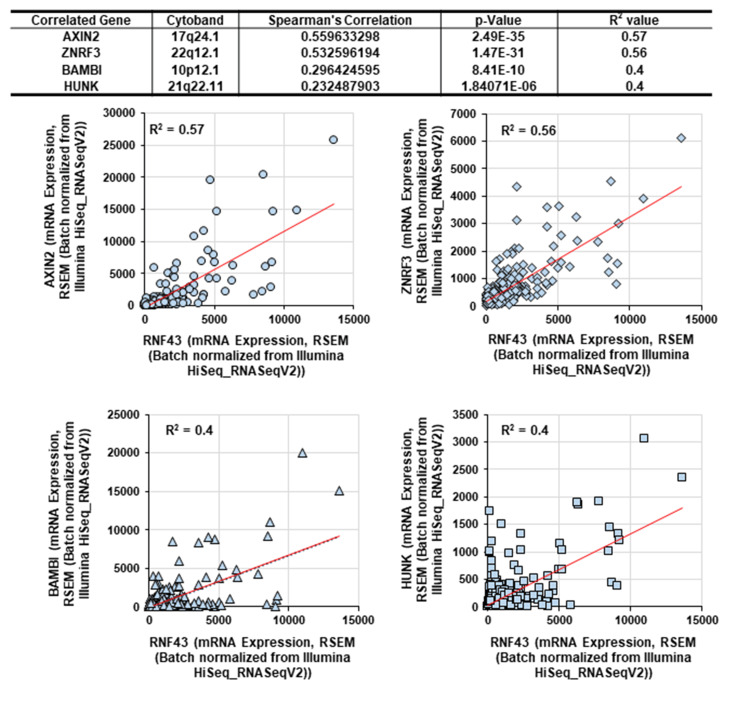 Figure 4
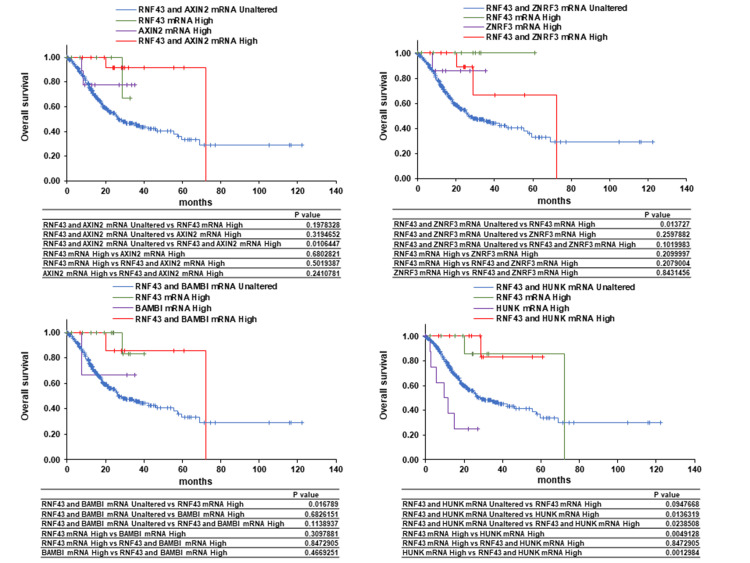 Figure 5
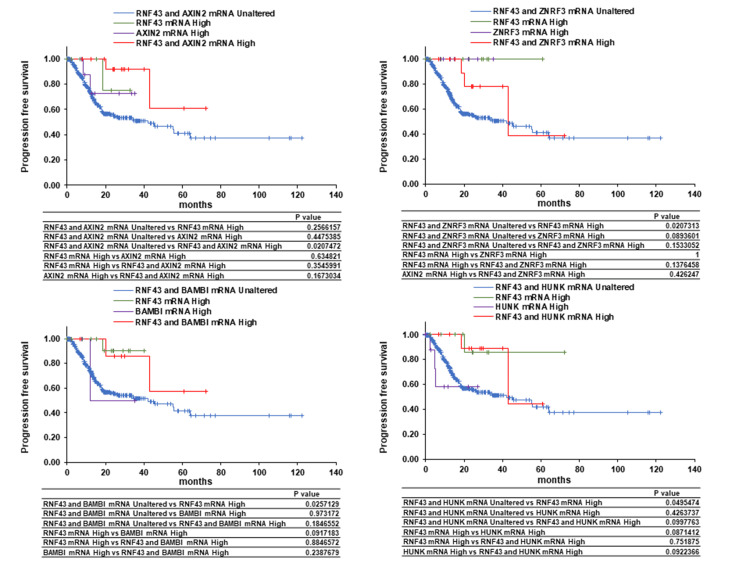 Figure 6
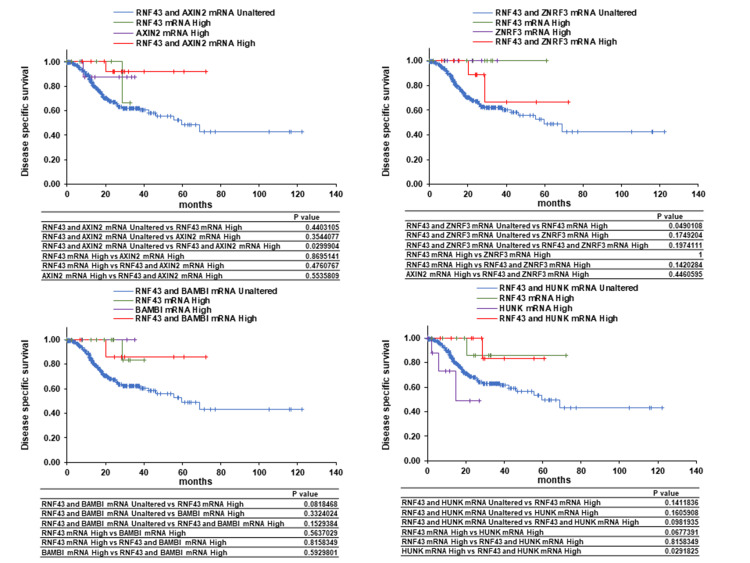 Figure 7
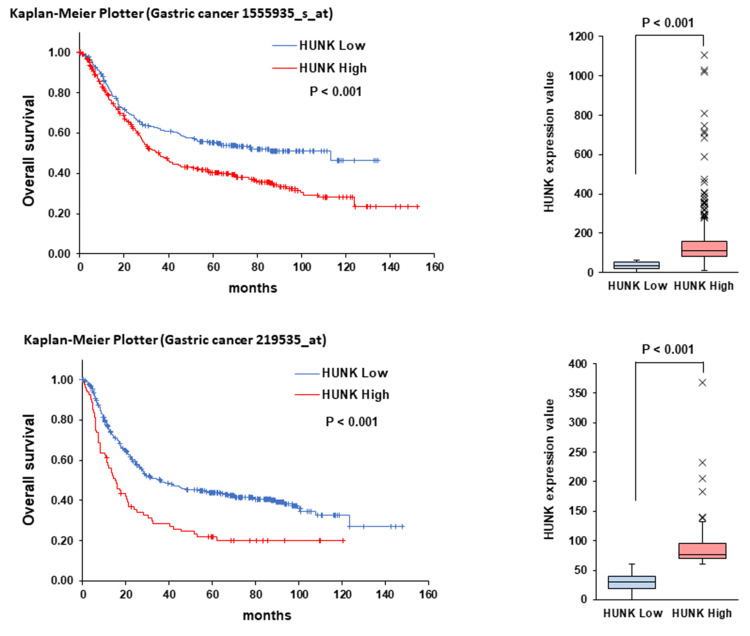 Figure 8
Peer Reviews
No public reviews on file for this paper yet. If you reviewed it on a platform where reviews are public (OpenReview, ICLR, NeurIPS, ICML), you can paste yours below so the community can read it here.
Videos
No videos yet. Explain this paper in a talk, walkthrough, or lecture? Add one.
Taxonomy
TopicsWnt/β-catenin signaling in development and cancer · Ferroptosis and cancer prognosis · TGF-β signaling in diseases
Introduction
Gastric cancer (GC) ranks fifth in cancer incidence and fourth in cancer-related mortality worldwide [1]. Gastrectomy with D2 lymphadenectomy and perioperative or adjuvant therapy is the global standard of care for locally progressive GC [2,3]. Despite the gradual improvement in survival rate after radical therapy, over half of the patients with localized progressive GC exhibit recurrence and limited survival rates post-recurrence [4]. Currently, chemotherapy with platinum-based drugs, such as oxaliplatin and cisplatin, and fluoropyrimidines, such as 5-fluorouracil (5-FU), capecitabine, and S-1, is the standard treatment for advanced GC [5,6]. Additionally, drugs targeting GC-related factors (claudin 18.2, human epidermal growth factor receptor 2 (HER2), and programmed cell death-1), such as zolbetuximab (anti-claudin 18.2 monoclonal antibody), trastuzumab (anti-HER2 monoclonal antibody), and pembrolizumab (anti-programmed cell death-1 monoclonal antibody), are used in combination with chemotherapy. These drugs improve the response rates of patients with advanced GC harboring the above-mentioned targets [7-9]. Despite the advances in therapy, the prognosis of patients with GC remains poor [10], underscoring the need for new prognostic biomarkers and therapeutic targets for GC.
Ring finger protein (RNF)-43 is an E3 ubiquitin ligase that negatively regulates the Wnt/β-catenin signaling pathway [11,12]. Some RNF43 mutations cause loss of function, promote β-catenin stabilization, and induce tumorigenesis; RNF43 mutations are frequently observed in gastric, ovarian, pancreatic, endometrial, colon, and liver cancers [13,14]. Mutations in RNF43 have been identified in about 10% of patients with GC [14]. In addition, the diminished expression and loss-of-function mutations of RNF43 in GC cells enhance cell invasion and proliferation, while also conferring resistance to 5-FU, cisplatin, and radiation-induced DNA damage by mitigating their effects [15]. Furthermore, RNF43 mutations in GC have been shown to be frequently observed in tumors exhibiting microsatellite instability [16]. Moreover, it has been observed that RNF43 expression in GC cells negatively correlates with PD-L1 expression and that high RNF43 expression enhances T cell antitumor activity [17]. These findings suggest that reduced expression or loss-of-function mutations in RNF43 might be implicated in resistance to chemotherapy or immune checkpoint inhibitors in GC and may serve as useful prognostic predictors.
In this study, we analyzed whether RNF43 is a potential prognostic factor for GC and whether its co-expressed genes influence the prognosis, utilizing publicly available databases.
Materials and methods
UALCAN analysis
University of Alabama at Birmingham Cancer Data Analysis Portal (UALCAN) database, a platform for cancer data analytics utilizing information from The Cancer Genome Atlas (TCGA), was used to examine the differential expression of RNF43 mRNA in gastric tumor tissues [18]. The analysis of this database was conducted under the following parameters: "TCGA Gene: RNF43", "dataset: stomach adenocarcinoma", "Links for analysis: Expression", and "Sample types: individual cancer stages". The analysis conducted under these circumstances produced the following outcomes: stage 1 (N=18), stage 2 (N=123), stage 3 (N=169), and stage 4 (N=41).
cBioPortal
Changes in RNF43 mRNA expression levels in patients with GC were analyzed using the cBioPortal [19]. RNF43 mRNA overexpression (RNA Seq V2 RSEM) was defined by a Z-score of ± 2.0. This analysis utilized the "TCGA, PanCancer Atlas" dataset. By applying the aforementioned Z-score to differentiate between RNF43 mRNA high and unaltered categories, the results were high (N=23) and unaltered (N=384). Kaplan-Meier curves were used to analyze the associations between RNF43 gene expression changes and the overall survival (OS), progression-free survival (PFS), and disease-specific survival (DSS) of patients with GC.
Kaplan-Meier plotter
The Kaplan-Meier plotter was used to determine the predictive value of the RNF43 gene for patients with GC [20]. To analyze overall survival (OS) and relapse-free survival (RFS) based on RNF43 mRNA expression, a dataset from "Pan-cancer RNA-seq" for "Stomach adenocarcinoma" was utilized. GC patients were classified into high- and low-expression groups based on RNF43 mRNA expression levels using data calculated via Kaplan-Meier plots (auto select best cutoff set to percentiles). Kaplan-Meier curves for OS and RFS were generated using this data. In the OS analysis, GC patients were divided into RNF43 high (N=95) and RNF43 low (N=276) groups. For the RFS analysis, the groups consisted of high (N=130) and low (N=85). Regarding the effect of HUNK mRNA expression in the OS, analysis was performed using "Affy id: 1555935_s_at and 219535_at" based on "mRNA in gastric cancer". For 1555935_s_at, HUNK expression was high (N=360) and low (N=271); for 219535_at, it was high (N=80) and low (N=551).
Co-expression analysis
For RNF43 mRNA co-expression analysis, we identified and investigated the top 1000 genes exhibiting positive co-expression with RNF43 mRNA using cBioPortal and Linkedomics [21]. In cBioPortal, after confirming RNF43 mRNA expression using the "Stomach Adenocarcinoma (TCGA, PanCancer Atlas)" dataset, we selected the "Co-expression" tab and chose the top 1000 mRNAs co-expressed with RNF43. In Linkedomics, after selecting "RNA-Seq" and 'RNF43' using the "Stomach Adenocarcinoma" dataset in the Cancer Cohort, we selected "RNA-Seq" in the target dataset and "Pearson Correlation test" in the statistical method to list the top 1000 mRNAs co-expressed with RNF43. To further understand the features and pathways related to RNF43, Gene Ontology (GO) and Kyoto Encyclopedia of Genes and Genomes (KEGG) enrichment analyses were conducted using WebGestalt [22]. Enrichment analysis was performed for RNF43 co-expressed mRNAs identified in both cBioPortal and Linkedomics. Additionally, mRNAs positively correlated with RNF43 mRNA expression (r≥0.4 and Benjamini-Hochberg corrected p-value <0.0001) were identified using cBioPortal.
Statistical analyses
Statistical significance was analyzed via two-sided t-test and analysis of variance, followed by Dunnett's test. Kaplan-Meier curves and log-rank analyses were used to evaluate the patient survival rates. The significance level was set at 5%.
Results
Association of RNF43 expression with the clinical stage of patients with GC
We investigated whether RNF43 expression correlated with the tumor stage of patients with GC using the UALCAN database. RNF43 expression decreased as the tumor stage progressed (Figure 1).
Comparison of RNF43 expression levels in patients with gastric cancer by clinical stage using the UALCAN databaseUALCAN - University of Alabama at Birmingham Cancer Data Analysis Portal; RNF - ring finger protein
High RNF43 mRNA expression is correlated with the prognosis of patients with GC
Next, the prognostic significance of RNF43 mRNA expression in patients with GC was evaluated using the cBioPortal and Kaplan-Meier plotter. cBioPortal analysis revealed that patients with high RNF43 mRNA levels exhibited potentially better OS, PFS, and DSS than those with low RNF43 mRNA levels (Figure 2A-C). Kaplan-Meier plotter analysis also showed that patients with high RNF43 mRNA levels may exhibit a better prognosis, including higher OS and relapse-free survival (RFS), than those with low RNF43 mRNA levels (Figure 2D and E). These findings suggest high RNF43 mRNA levels may be useful as a prognostic biomarker for patients with GC.
Prolonged life expectancy of patients with gastric cancer with high RNF43 expression levels(A-C) Overall (A), progression-free (B), and disease-specific (C) survival of patients with gastric cancer with high RNF43 levels were analyzed using the cBioPortal. (D and E) Correlations of RNF43 expression with the overall and relapse-free survival rates of patients with gastric cancer were analyzed using the Kaplan-Meier plotter. (D) Correlation between RNF43 expression and overall survival of patients with gastric cancer. (E) Correlation between RNF43 expression and relapse-free survival of patients with gastric cancer.RNF - ring finger protein
Analysis of RNF43 mRNA co-expressed genes and their functional enrichment in GC
Top 1000 genes positively co-expressed with RNF43 were screened using cBioPortal and LinkedOmics (Figure 3A). GO and KEGG enrichment analyses were conducted to predict the RNF43 functions and pathways. Biological process terms included growth, cell proliferation, cell communication, and metabolic processes. Cellular component terms included the cytosol, nucleus, and membrane. Molecular function terms involved transferase activity, hydrolase activity, ion binding, and protein binding (Figure 3B). KEGG pathways included the cell cycle, Fanconi anemia, DNA replication, and mismatch repair pathways (Figure 3C). These results suggest that the RNF43 mRNA co-expressed genes may be involved in various cancer suppression-related processes. Therefore, RNF43 may play an important role in suppressing GC progression.
Comprehensive bioinformatics analysis of RNF43 and its co-expressed genes in gastric cancer(A) Intersection of positively co-expressed genes among the top 1000 genes identified using cBioPortal and LinkedOmics. (B and C) Gene Ontology (GO) and Kyoto Encyclopedia of Genes and Genomes (KEGG) enrichment analyses of RNF43RNF - ring finger protein
Next, we determined the factors correlated with RNF43 mRNA expression among the co-expressed genes identified using the cBioPortal. Among the identified genes (Figure 3A), AXIN2, zinc and ring finger 3 (ZNRF3), bone morphogenetic protein and activin membrane-bound inhibitor (BAMBI), and hormonally upregulated neu-associated kinase (HUNK) mRNA levels exhibited R2 values ≥0.4 (Figure 4). This suggests that RNF43 may suppress tumor progression in cooperation with the above-mentioned genes.
RNF43 co-expressor analysis of patients with gastric cancer using the cBioPortalFour factors showing significant differences with R2 values >0.4 were identified.
Predictive value of the factors co-expressed with RNF43
Correlations of the mRNA levels of RNF43 and its co-expressors, AXIN2, ZNRF3, BAMBI, and HUNK, with the OS, PFS, and DSS of patients with GC were analyzed using the cBioPortal. Overexpression of both RNF43 and AXIN2 was found to be potentially associated with prolonged OS. No significant differences in OS were observed between RNF43 and ZNRF3 co-expression and between RNF43 and BAMBI co-expression. High expression of HUNK was found to potentially shorten OS, whereas RNF43 and HUNK co-expression and high RNF43 expression were confirmed to potentially prolong OS (Figure 5). Similar trends were observed for PFS and DSS (Figure 6, Figure 7). These findings suggest that AXIN2 may function as a favorable prognostic factor in GC patients in concert with RNF43, while HUNK may act as an unfavorable prognostic factor (Figure 8). Therefore, RNF43 likely suppresses HUNK, which is probably an unfavorable prognostic factor.
Effect of RNF43 co-expression with AXIN2, ZNRF3, BAMBI, or HUNK on the overall survival of patients with gastric cancerRNF - zinc and ring finger three; ZNRF3 - zinc and ring finger three; BAMBI - bone morphogenetic protein and activin membrane-bound inhibitor; HUNK - hormonally upregulated Neu-associated kinase
Effect of RNF43 co-expression with AXIN2, ZNRF3, BAMBI, or HUNK on the progression-free survival of patients with gastric cancerRNF - zinc and ring finger three; ZNRF3 - zinc and ring finger three; BAMBI - bone morphogenetic protein and activin membrane-bound inhibitor; HUNK - hormonally upregulated Neu-associated kinase
Effect of RNF43 co-expression with AXIN2, ZNRF3, BAMBI, or HUNK on the disease-specific survival of patients with gastric cancerRNF - zinc and ring finger three; ZNRF3 - zinc and ring finger three; BAMBI - bone morphogenetic protein and activin membrane-bound inhibitor; HUNK - hormonally upregulated Neu-associated kinase
Correlation of HUNK expression with the overall survival of patients with gastric cancer determined using the Kaplan-Meier plotter (ID: 1555935_s_at and 219535_at)HUNK - hormonally upregulated Neu-associated kinase
Discussion
In this study, RNF43 mRNA expression decreased with GC progression, and OS, PFS, DSS, and RFS were possibly shorter in patients with low or unchanged RNF43 mRNA levels than in those with high RNF43 mRNA levels. RNF43 expression is associated with the tumor-node-metastasis stage, distant metastasis, and survival rate of patients with GC, with decreased RNF43 expression supporting the cancer stem cell-like maintenance of GC cell lines [23]. RNF43 overexpression abrogates the Wnt5A-induced drug resistance and tumor progression and improves the OS in patients with melanoma [24]. Notably, RNF43 expression is related to OS, possibly serving as a prognostic predictor for patients with glioma [25]. These findings suggest that high RNF43 expression may prolong the OS, PFS, DSS, and RFS of patients with GC.
RNF43 expression is associated with the prognosis of various cancers and enhances the sensitivity to immunotherapy, conventional anticancer drugs, and molecular-targeted drugs by affecting signal transduction, drug metabolism, and the tumor immune microenvironment [26]. In this study, RNF43 was involved in various cell growth regulatory mechanisms and processes, such as cell proliferation, metabolic processes, transferase activity, and mismatch repair. Additionally, AXIN2, ZNRF3, BAMBI, and HUNK were identified as RNF43-expressors. AXIN2, ZNRF3, and BAMBI are target genes of β-catenin, with AXIN2 negatively regulating the Wnt/β-catenin pathway by degrading β-catenin [27,28]. ZNRF3 is another negative regulator of Wnt/β-catenin; similar to RNF43, it degrades Frizzled, a Wnt receptor [29]. BAMBI acts as an inhibitor of the transforming growth factor-β type 1 receptors, playing a promoting role in advanced tumors and an inhibitory role during early tumor development [30]. HUNK is implicated in tumorigenesis, metastasis, and invasion via epidermal growth factor receptor activation in HER2-positive and triple-negative breast cancers [31,32]. In this study, overexpression of both RNF43 and AXIN2 demonstrated the potential to improve the OS, PFS, and DSS of patients with GC compared to the overexpression or unaltered expression of RNF43 and AXIN2 alone. Homeobox C6 overexpression reduces the RNF43 and AXIN2 expression levels, leading to a poor prognosis for patients with colorectal cancer [33]. Furthermore, low RNF43 and AXIN2 levels indicate the involvement of β-catenin activation in inflammatory bowel disease-associated colorectal cancer development [34]. Borealin overexpression enhances tumor growth and metastasis by downregulating the RNF43 and AXIN2 expression levels and activating β-catenin, thereby decreasing the survival rate of patients with hepatocarcinoma [35]. Compared to high AXIN2 levels, low AXIN2 levels are associated with the shorter survival of patients with lung and pancreatic cancers [36,37]. These findings suggest that low RNF43 and AXIN2 levels may be poor prognostic factors and potential prognostic predictors for patients with GC.
Overexpression of HUNK alone was possibly associated with shorter OS compared to the overexpression of both RNF43 and HUNK or no change in expression. A similar decreasing trend was observed in PFS and DSS. Compared to low HUNK expression, high HUNK expression may be associated with a poor prognosis in patients with GC. HUNK expression is also associated with the distant metastasis-free survival and OS of patients with triple-negative breast cancer [31]. Additionally, HUNK is associated with HER2-targeted therapy resistance of HER2-positive breast cancer cells [38]. These findings suggest that HUNK may be a potential therapeutic target for GC.
This study has several limitations. First, this study relied on a clinical database and did not directly assess the data of patients with GC. Second, in vitro and in vivo studies using GC cell lines were not performed to validate the obtained results. Third, the specific relationship between RNF43 and HUNK expression levels could not be determined. Fourth, since this study utilizes public databases, detailed data on GC patients are not available. Consequently, multivariate analysis, assessment of dataset heterogeneity, and subgroup analysis based on multiple mRNA expressions could not be performed. Therefore, further studies are necessary to address these limitations and validate our findings.
Conclusions
In summary, RNF43 overexpression was shown to potentially prolong the OS, PFS, DSS, and RFS of patients with GC. AXIN2 and HUNK were identified as potential co-expression factors with RNF43. Specifically, RNF43 co-expression with AXIN2 was found to potentially improve the patients' OS. In contrast, overexpression of HUNK alone was shown to potentially shorten the patients' OS. Moreover, overexpression of both RNF43 and HUNK may reduce the effect of HUNK and potentially enhance the patients' OS compared to no change in expression. Overall, our clinical database analysis indicated that RNF43 and AXIN2 overexpression may be a favorable prognostic factor, whereas HUNK overexpression may be a poor prognostic factor, suggesting potential therapeutic targets for patients with GC.
The reference list from the paper itself. Each links out to its DOI / PubMed record.
- 1Global Cancer Statistics 2020: GLOBOCAN Estimates of Incidence and Mortality Worldwide for 36 Cancers in 185 Countries CA Cancer J Clin Sung H Ferlay J Siegel RL Laversanne M Soerjomataram I Jemal A Bray F 2092497120213353833810.3322/caac.21660 · doi ↗ · pubmed ↗
- 2Gastric cancer: ESMO Clinical Practice Guideline for diagnosis, treatment and follow-up Ann Oncol Lordick F Carneiro F Cascinu S 100510203320223591463910.1016/j.annonc.2022.07.004 · doi ↗ · pubmed ↗
- 3Gastric Cancer, Version 2.2022, NCCN Clinical Practice Guidelines in Oncology J Natl Compr Canc Netw Ajani JA D'Amico TA Bentrem DJ 167192202022 https://10.6004/jnccn.2022.0008.3513050010.6004/jnccn.2022.0008 · doi ↗ · pubmed ↗
- 4First-line nivolumab plus chemotherapy for advanced gastric, gastroesophageal junction, and esophageal adenocarcinoma: 3-year follow-up of the Phase III Checkmate 649 trial J Clin Oncol Janjigian YY Ajani JA Moehler M 20122020422024 https://10.1200/JCO.23.01601.3838200110.1200/JCO.23.01601 PMC 11185916 · doi ↗ · pubmed ↗
- 5S-1 plus leucovorin and oxaliplatin versus S-1 plus cisplatin as first-line therapy in patients with advanced gastric cancer (SOLAR): a randomised, open-label, phase 3 trial Lancet Oncol Kang YK Chin K Chung HC 104510562120203268245710.1016/S 1470-2045(20)30315-6 · doi ↗ · pubmed ↗
- 6FLOT 4-AIO Investigators. Perioperative chemotherapy with fluorouracil plus leucovorin, oxaliplatin, and docetaxel versus fluorouracil or capecitabine plus cisplatin and epirubicin for locally advanced, resectable gastric or gastro-oesophageal junction adenocarcinoma (FLOT 4): a randomised, phase 2/3 trial Lancet Al-Batran SE Homann N Pauligk C 1948195739320193098268610.1016/S 0140-6736(18)32557-1 · doi ↗ · pubmed ↗
- 7Zolbetuximab plus m FOLFOX 6 in patients with CLDN 18.2-positive, HER 2-negative, untreated, locally advanced unresectable or metastatic gastric or gastro-oesophageal junction adenocarcinoma (SPOTLIGHT): a multicentre, randomised, double-blind, phase 3 trial Lancet Shitara K Lordick F Bang YJ 1655166840120233706850410.1016/S 0140-6736(23)00620-7 · doi ↗ · pubmed ↗
- 8Recent progress in treatment for HER 2-positive advanced gastric cancer Cancers (Basel) Kawakami T Yamazaki K 17471620243873070010.3390/cancers 16091747 PMC 11083522 · doi ↗ · pubmed ↗