Tattooing following snake envenomation
Amit Toshniwal, Varun Hanumanthaiah

Abstract
Genes, proteins, chemicals, diseases, species, mutations and cell lines named across the full text — each resolved to its canonical identifier and authoritative record.
Click any figure to enlarge with its caption.
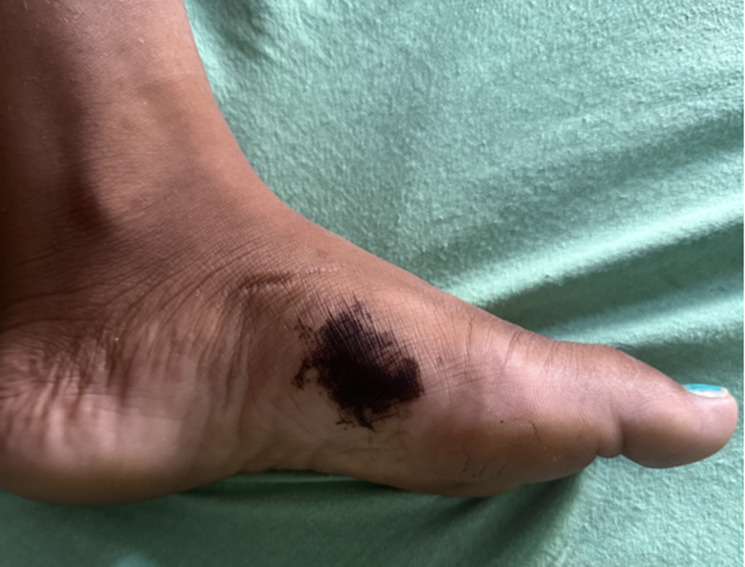 Figure 1
Peer Reviews
No public reviews on file for this paper yet. If you reviewed it on a platform where reviews are public (OpenReview, ICLR, NeurIPS, ICML), you can paste yours below so the community can read it here.
Videos
No videos yet. Explain this paper in a talk, walkthrough, or lecture? Add one.
Taxonomy
TopicsVenomous Animal Envenomation and Studies · Tattoo and Body Piercing Complications · Drug-Induced Adverse Reactions
Image in medicine
A 32-year-old female from rural India presented to the emergency department with a history of a snake bite that had occurred two hours earlier on the left foot. Upon examination, a small bite mark was visible, and the surrounding area was swollen and warm to the touch. However, there were no neurological abnormalities observed in the patient. Initially, the diagnosis was nontoxic snake envenomation, and conservative management was initiated, and the patient was closely monitored. After three days, the patient returned to the emergency department with blackish discoloration over the left foot. Upon examination, the area was no longer warm to the touch and was not tender. The patient had been counseled about post-envenomation tattooing and was asked to follow up. This case highlights the unusual presentation of tattooing after snake envenomation and emphasizes the importance of thorough counseling in such situations.
tattooing over the left foot after a snakebite