Larvicidal effects of selected medicinal plant extracts against Anopheles arabiensis, Anopheles stephensi, and Aedes aegypti
Negesse Gebissa, Ketema Tolossa, Araya Gebresilassie, Esayas Aklilu, Daniel Bisrat, Bersissa Kumsa, Sisay Dugassa

TL;DR
This study tests plant extracts as eco-friendly alternatives to chemical insecticides for killing mosquito larvae.
Contribution
The study evaluates the larvicidal potential of four traditional plant extracts against three mosquito species.
Findings
n-hexane extracts of Ocimum lamiifolium and Amaranthus hybridus showed high larvicidal activity against mosquito larvae.
Lepidium sativum and Premna schimperi n-hexane extracts exhibited 100% larvicidal activity against Anopheles arabiensis.
The plant extracts are effective and could serve as bioinsecticides.
Abstract
The emergence of resistance to synthetic (chemical) insecticides along with their harmful effects on human health, non-target organisms and the environment necessitates the development of new complementary bioinsecticides that are effective, environmentally friendly, biodegradable and target-specific. This study was undertaken to evaluate larvicidal activities of 80% methanol and n-hexane extracts of four plants that are traditionally used by communities against mosquitoes. The dried plant parts of Ocimum lamiifolium, Amaranthus hybridus, Premna schimperi, and Lepidium sativum were extracted with 80% methanol and n-hexane solvents. Bioinsecticidal activities of these extracts were evaluated under laboratory condition in the range of 62.5–2000 ppm against late 3rd to early 4th instar larvae of An. arabiensis, An. stephensi and Ae. aegypti mosquitoes. Larval mortality was observed after…
Genes, proteins, chemicals, diseases, species, mutations and cell lines named across the full text — each resolved to its canonical identifier and authoritative record.
Click any figure to enlarge with its caption.
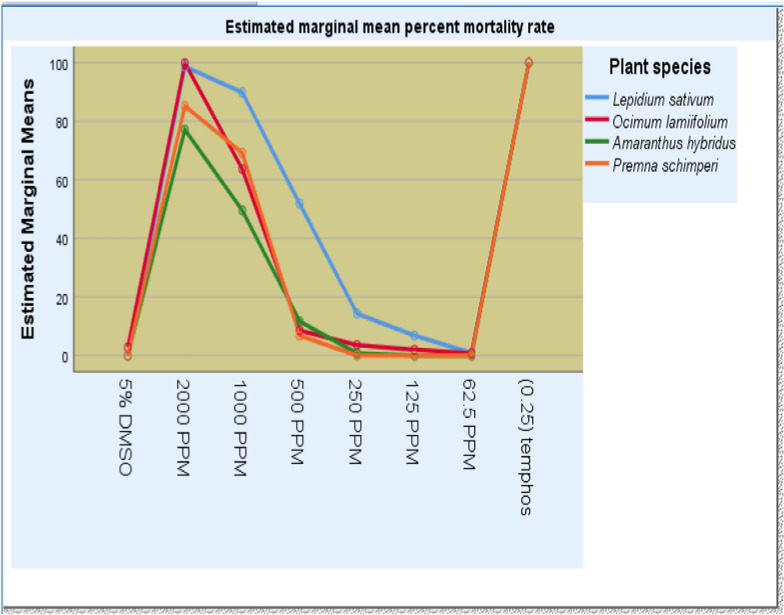 Figure 1
Peer Reviews
No public reviews on file for this paper yet. If you reviewed it on a platform where reviews are public (OpenReview, ICLR, NeurIPS, ICML), you can paste yours below so the community can read it here.
Videos
No videos yet. Explain this paper in a talk, walkthrough, or lecture? Add one.
Taxonomy
TopicsInsect Pest Control Strategies · Agricultural Practices and Plant Genetics · Phytochemicals and Medicinal Plants
Background
Mosquito-borne diseases (MBDs) are increasingly prevalent due to the resultant impact of global change with significant health and economic impacts worldwide [1]. Anopheles and Aedes mosquitoes are among the most important groups of arthropods with medical significance that transmit several important parasitic and arboviral diseases [2]. Malaria, a life-threatening disease, is primarily transmitted to humans through the bites of infected female Anopheles mosquitoes, including An. arabiensis and An. stephensi [3]. An. arabiensis is also a major malaria vector within the An. gambiae species complex in sub-Saharan Africa and surrounding islands [4].
Arboviruses continue to generate significant health and economic burdens for people living in endemic regions, such as East Africa, including Ethiopia [5]. These viruses (dengue, Zika, chikungunya, and yellow fever virus) are transmitted mainly by Aedes mosquitoes [6]. Arbovirus infections are a global public health threat accounting for approximately 73% of the total emerging and re-emerging human infections, where the burden is worsened in sub-Saharan Africa, including Ethiopia [7]. Malaria, caused by protozoans and arboviral diseases caused by viruses can lead to high mortality and morbidity in tropical and sub-tropical regions [8]. The spread of these mosquito vectors in different parts of East African Region including Ethiopia has become a serious concern for malaria and arboviral diseases prevention and elimination strategies [9]. Global malaria cases and deaths have been significantly reduced following the scaling up of long-lasting insecticidal nets (LLINs) and indoor residual spraying (IRS) [10]. However, widespread use of synthetic insecticides in controlling mosquito vectors has resulted in the persistence and accumulation of non-biodegradable chemicals in the ecosystem, development of resistance to insecticides in vectors, and toxic effects in non-target organisms, including humans [11].
As evidenced in recent studies from different parts of Ethiopia, all the three mosquito species have shown resistance to insecticides belonging to the four chemical classes (such as organochlorines, organophosphates, carbamates, and pyrethroids) and approved for IRS and ITNs [12]. There is also evidence of changes in biting and resting behavior of the main malaria vectors as a result of selective pressures by the widespread and long-term use of bed nets and indoor residual spraying [13]. The emergence of synthetic insecticides resistance necessitates an urgent need to develop natural product-based mosquito control methods that are biodegradable, economical, effective and less toxic to non-target organisms, including edible aquatic animals, humans and the environment [14]. In this regard, plant extracts with bioinsecticidal potential are recognized as complementary and/or alternative plant-based products to synthetic insecticides in mosquito control programs due to their ovicidal, larvicidal, adulticidal and repellence properties that may enhance the discovery of botanical-based products that are safe, biodegradable, and target-specific natural agents [15].
Widespread resistance to synthetic (chemical) insecticides used to control disease-carrying mosquitoes poses a global health threat. The use of plants in the production of bioinsecticides is vital under these circumstances.
Therefore, the aim of this study was to assess the effectiveness of plant extracts that are repeatedly used traditionally as a larval poison for mosquitoes that transmit diseases in Ethiopia, following the standard WHO bioassay test methods and procedures using the chemical insecticide Temephos as positive control.
Materials and methods
Selection and collection of plant species
The plant species that were evaluated for insecticidal properties were collected following the ethno-taxonomic approach by searching targeted plant families from the literature in the manner discussed by Martin [16]. The information on bioinsecticidal plants were collected from literature reports. Different ethno-botanical publications by different researchers were reviewed. Appropriate data collection format was prepared to tabulate scientific, family and local names of species. To select the most relevant and promising plant species, the candidate test plant species were listed by taking the fidelity level (Fidelity level is a statistical tool to measure the potentiality of a specific plant for treating a specific disease [16] into consideration. Here, the citation frequency of medicinal plants (at least in 3 reviewed articles) and the availability of important and adequate information of each of the medicinal plants in the reviewed documents were taken into consideration [17]. Accordingly, the candidate plant species were initially compiled from literatures and followed by field sampling of the test plants.
Four plant species, namely, Ocimum lamiifolium, Lepidium sativum L., Amaranthus hybridus L. and Premna schimperi Engl., were selected, and collected based on their traditional use as against insects*.* The plant materials both (voucher specimens, and materials for extraction and testing) were collected during field trips at the sites in the months of August and November, 2024, respectively, from Oromia Regional State, Jimma zone, Asendabo district and Southwest Ethiopia Regional State, Kaffa Zone, Bonga district, Ethiopia.
Voucher specimen collection and identification
The plant specimens were identified by the plant taxonomy specialist, Mr. Melaku Wondafirash and deposited at National Herbarium, Department of Plant Biology and Biodiversity Management, College of Natural and Computational Sciences, Addis Ababa University, Ethiopia for future references. All the field data were properly recorded, summarized and presented in Table 1.Table 1. Field data and ethno-botanical information of plants used in this studyS.NSpecies nameFamily namePlant partsCollection PlaceLocal nameHabitatGPS coordinatesAltitudeReferences1Ocimum lamiifolium Hochst. Ex. Walp (LG-01)LamiaceaeAerial partsAsendaboDamakase (AO)Home(07^0^46′15.155″N) (037^0^14′03.585″E)1,761 m[17–19]2Lepidium sativum L.(LG-10)LamiaceaeSeedAsendaboFeto (AO)Stead(07^0^43′20.34″N) (36^0^18′09.79″E)1,772 m[20–22]3Amaranthus hybridus L. (LG-06)AmaranthaceaeAerial partsBongaAsangira (AO)Forest(07^0^43′20.34″N) (36^0^18′09.79″E)1,772 m[23–25]4Premna schimperi Engl. (LG-04)LamiaceaeLeavesAsendaboUrgessa (AO)Wild(07^0^46′05.846″N) (037^0^14′02.226″E)1,757 m[26–28]
Bulk sample collection and processing
The plant of Ocimum lamiifolium (aerial parts), Lepidium sativum (seeds), Premna schimperi (leaves) and Amaranthus hybridus (aerial parts) were collected and kept separately in plastic bags, tied with rubber bands and brought to Aklilu Lemma Institute of Health Research (ALIHR) laboratory, Addis Ababa University, Ethiopia. The collected plant materials were air-dried under shade at room temperature (25 ± 2 °C) for 7 days. The dried plant materials were separately powdered using electrical grinder and sieved to get 1-mm particle sizes to improve the subsequent extraction by rendering the sample more homogenous, increasing the surface area and facilitating the penetration of solvent into cells. The powdered plant materials were placed in air-tight plastic bags, labeled and stored in dark box at room temperature until used for crude extract preparation and bioassays.
Preparation of crude extracts
Hundred grams of each finely powdered plant material was separately soaked in a clean 500 ml flask with 80% methanol and n-hexane solvent systems for extraction at a ratio of 1:5 (w/v) at room temperature for 3 days with continuous stirring at 120 rpm using shaker to ensure complete extraction. At the end of extraction, the micelle of each solvent system was separated from marc by filtration using four layered cloths. Afterward, the crude extracts were centrifuged by HERMLE (Z 383 K) apparatus at 1500 rpm for 5 min for clarification of the filtered sample extracts. Subsequently, the clear filtrates of extracts of both solvent systems were concentrated using rotary evaporator (DREHSCHIEBR-VAKUUMPUMPE ROTARY VANE VAUUM PUMP) under reduced pressure at 40 °C, while the remaining aqueous portions were collected separately in amber glass bottles, and then evaporated to dryness using an oven set at a temperature of 40 °C. The dried plant extracts were weighed, the percentage yields determined and stored in amber-colored vials at 4 °C until the stock solutions were prepared and used for bioassays.
Rearing of mosquitoes
Larvae of three mosquito vectors were reared at the insectary of the Aklilu Lemma Institute of Health Research, AAU, Ethiopia. The eggs of Anopheles arabiensis, Anopheles stephensi, and Aedes aegypti were placed in a tray with tap water under laboratory conditions. After 24 h of incubation, the eggs hatched into first instar larvae. An appropriate amount of nutrient, comprised of sterilized yeast powder and dog biscuit in a 1:1 ratio, was added to promote the growth of the larvae. The late third-to-early fourth instar larvae were utilized in the study. The larvae colonies were maintained under standardized conditions in a separate room in the insectary at 25 ± 2 °C and 60% ± 10% relative humidity, following a 12:12 light–dark photoperiod cycle to ensure the reliability and reproducibility of the data.
Larvicidal bioassay
The bioinsecticide bioassays against laboratory-reared mosquitoes were carried out following the standard procedures of WHO larvicidal test method [26]. Twenty ml of 1% (w/v) stock solutions of each extract was prepared by dissolving 200 mg extracts in 20 ml of 5% dimethyl sulfoxide and twofold serial dilutions of the plant extracts test concentrations (2000, 1000, 500, 250,125 and 62.5 ppm) were prepared. The n-hexane extracts of the four selected plant species, namely, Ocimum lamiifolium, Lepidium sativum, Premna schimperi and Amaranthus hybridus, were evaluated against late 3rd to early 4th instar larvae of An. arabiensis, An. stephensi and Ae. aegypti mosquitoes and then subjected to a dose dependent bioassay to determine LC_50_ and LC_90_ values.
For the bioassay, stock solutions of each extract test concentrations of the plant extracts were serially diluted with 5% dimethyl sulfoxide as described in the WHO larvae bioassay protocol [26]. The mixtures were gently stirred to ensure a homogeneous test solution and kept at ambient temperature. Determination of the desired lower concentrations were prepared by serial dilutions based on the dilution principle following the formula C_1_V_1_ = C_2_V_2_ as described [29].
One hundred fifty (150) larvae of a given species were required to conduct a single dose–response tests; of these, 100 were exposed to the concentration being tested (4 replicates each of 25 mosquitos’ larvae) plus 25 larvae in the negative control and 25 larvae in the positive control groups. Each assay was repeated three times. At the end of the 24 h, the number of dead larvae was recorded and the percentage mortality was calculated using the formula [30].
The percentage of mortality = (number of dead larvae/total number of larvae used)*100In the first phase of bioassay, the bioinsecticidal activity of 80% methanol and n-hexane crude extracts of frequently used candidate test plants, namely, O. lamiifolium, L. sativum, A. hybridus and P. schimperi, were screened at 2000 ppm concentration. The mosquitoes’ larvae were exposed to 2000 ppm of test concentration and a control to find out the activity of the materials under test. Based on the preliminary screening, four levels of classifications were used to determine efficacy level of extracts: strong mortality > 80%; moderate mortality 80–60%; weak mortality 60–40%; little or no activity mortality < 40%. Hence, extracts yielding the mortality of larvae > 40% were selected and subjected to dose–response bioassay. Whereas, none larval mortalities were observed in the corresponding negative control, while the corresponding positive control exhibited 100% mortalities of the respective mosquito larvae during the preliminary screening.
Data analysis
Results were expressed as the mean percent mortality with standard deviations. One-way analysis of variance (ANOVA) using SPSS for windows (version 26) was used to test differences in mean larval mortality rates between crude extracts. Larvicidal activity was considered to be significantly different when 95% confidence limit levels failed to overlap or if P value < 0.05. Comparisons between mean percent mortality rates of larvae that were treated with crude extracts, negative and positive controls were made using Turkey’s post hoc testing. The tests were conducted with 4 replicates per concentration, and the experiment was repeated 3 times and then the mean mortality rates of 12 replicates were taken to determine the percent mortality after 24 h of exposure using Turkey’s post hoc HSD test. The average larval mortality data were subjected to general linear probit model analysis for calculating LC_50_, LC_90_ and other statistics at 95% confidence limits of upper confidence limit and lower confidence limit, and chi-square values were calculated.
Results
Plant species collected for the larvicidal tests
The dried crude extracts were weighed and their percentage yield also calculated. The scientific names, solvents used for extraction and yield of crude extracts of the selected plants used for bioinsecticide bioassays are summarized in Table 2.Table 2. Percentage yield of 80% methanol and n-hexane crude extracts of targeted plant species evaluated against larvae of An. arabiensis, An. stephensi, and Ae. aegyptiS.NPlant speciesWt (%)80% methanoln-hexane1Ocimum lamiifolium Hochst. ex. Walp5.314.72Lepidium sativum L11.38.13Amaranthus hybridus L9.72.94Premna schimperi13.34.8
A total of four extracts from four different medicinal plants were tested for bioinsecticide activities against An. arabiensis*, An. stephensi and Ae. aegypti. The bioinsecticidal activity of the candidate test plant species of 80% methanol and n-hexane crude extracts were evaluated. From these, the n-hexane crude extracts of O. lamiifolium, L. sativum, A. hybridus and P. schimperi were selected and subjected to dose–response bioassays at concentrations of 2000, 1000, 500, 250, 125 and 62.5 ppm (Table 3) and yielding larvae mortality of > 40% after 24 h during the preliminary screening, while all 80% methanol crude extract treated larvae exhibited mortalities under 40% classification range in the first phase of bioassay or during the screening.Table 3. Mean percentage mortality against larvae of An. arabiensis, An. stephensi and Ae. aegypti of various concentrations of n-hexane crude extracts from the test plants after 24 h of exposure. All values are in triplicate; () implies no mortalityPlant SpeciesMosquito speciesConc. (PPM)Mean %MDSD95% CISigLBUPLepidium sativum LAn. arabiensis5% DMSO100.01.005.810118.0481.961.0002000100.0* − 100.005.810 − 118.04 − 81.96.000100090.7 − 90.75.810 − 108.71 − 72.63.00050041.3 − 41.35.810 − 59.37 − 23.29.00025026.7 − 26.75.810 − 44.71 − 8.63.00512513.7 − 13.75.810 − 31.714.37.54762.51.67* − 1.75.810 − 19.7116.371.000Ae. aegypti200097.3* − 97.33.540 − 113.54 − 79.96.000100089.0 − 89.03.540 − 103.29 − 69.71.00050062.3 − 62.33.540 − 61.79 − 28.21.00025013.5 − 13.53.540 − 30.293.29.9991253.5 − * − 3.53.540 − 20.2913.291.00062.5 − .03.540 − 16.7916.791.000O. lamiifolium* Hochst. ex. WalpAn. arabiensis2000100.0* − 100.04.672 − 106.17 − 77.16.000100093.0 − 93.04.672 − 99.17 − 70.16.00050017.0 − 17.04.672 − 23.175.84.58525010.3 − 10.34.672 − 16.5112.511.0001256.0 − 6.04.672 − 12.1716.841.00062.52.3* − 2.64.672 − 106.17 − 77.161.000An. stephensi200099.7* − 99.7*.691 − 101.81 − 97.52.00010007.0* − 7.0*.691 − 9.15 − 4.85.000500.7* − 0.7.691 − 2.811.48.978250.4* − .4.691 − 2.481.811.000125 − .0.691 − 2.152.151.00062.5 − .0.691 − 2.152.151.000Ae. aegypti2000100.0* − 100.0*.744 − 102.31 − 97.69.000100091.7* − 91.7*.744 − 93.31 − 88.69.0005008.0* − 8.0*.744 − 10.31 − 5.69.000250 − .0.744 − 2.312.311.000125 − .0.744 − 2.312.311.00062.5 − .0.744 − 2.312.311.000Amaranthus hybridus LAn. arabiensis200031.3 − 31.31.298 − 35.36 − 27.30.00010003.0 − 3.01.298 − 7.031.03.299500.7* − .71.298 − 4.703.361.000250 − .01.298 − 4.034.031.000125 − .01.298 − 4.034.031.00062.5 − .01.298 − 4.034.031.000An. stephensi2000100.0 − 100.0*.734 − 109.11 − 90.89.000100062.3* − 62.3*.734 − 71.44 − 53.22.0005005.0* − 5.0.734 − 14.114.11.685250.4* − .4.734 − 9.448.781.000125 − .0.734 − 9.119.111.00062.5 − .0.734 − 9.119.111.000Ae. aegypti2000100.0* − 100.01.449 − 104.50 − 95.50.000100083.3 − 83.31.449 − 87.83 − 78.83.00050029.3 − 29.31.449 − 33.83 − 24.83.0002502.5 − 2.51.449 − 6.502.50.864125 − .01.449 − 4.504.501.00062.5 − .01.449 − 4.504.501.000Premna schimperi EnglAn. arabiensis2000100.0* − 100.01.999 − 106.21 − 93.79.000100082.0 − 82.01.999 − 88.21 − 75.79.00050012.3 − 12.31.999 − 18.54 − 6.13.967250 − .01.999 − 6.216.211.000125 − .01.999 − 6.216.211.00062.5 − .01.999 − 6.216.211.000Ae. aegypti200070.3 − 70.31.441 − 74.81 − 65.86.000100056.3 − 56.31.441 − 60.81 − 51.86.0005001.3* − 1.31.441 − 5.813.14.983250 − *.01.441 − 4.474.471.000125 − *.01.441 − 4.474.471.00062.5 − *.01.441 − 4.474.471.000Temephos 0.25 − 100.000 − 100.05.810 − 118.04 − 81.96.000There were statistically significant differences in mean percentage mortality of the respective mosquito larvae among different concentrations of the n-hexane plant extracts at ≥ 500 ppm compared with negative control (P < 0.05) (Table 3). Statistical results (one-way ANOVA) have showed significantly high larvicidal activity (100% mortalities) of n-hexane solvent crude extracts (P < 0.00) after 24 h exposure to four extracts of the test plants at concentrations of 2000 ppm, against An. arabiensis mosquito larvae
The results of larval mortality were obtained from bioassays of the n-hexane crude extracts of O. lamiifolium, L. sativum, A. hybridus and P. schimperi against An. arabiensis*, *An. stephensi and Ae. aegypti at different concentrations after 24 h exposure periods are presented in Table 3 and Fig. 1.Fig. 1. Bioinsecticide activity of various concentrations of n-hexane crude extracts from the test plants: Ocimum lamiifolium, Lepidium sativum, Amaranthus hybridus, and Premna schimperi against Anopheles arabiensis, Anopheles stephensi, and Aedes aegypti
All n-hexane crude extracts of test plants showed low, moderate, and high bioinsecticidal activities between 62.5 and 2000 ppm treatments against the late 3rd to early 4th instar larvae of the respective mosquito larvae. Within the same exposure period, larval mortality was not recorded at lower concentrations (≤ 250 ppm) of extracts and the negative control, while the standard (temephos) achieved 100% of larval mortality.
The present study also showed that n-hexane crude extracts of Lepidium sativum and Ocimum lamiifolium had pronounced bioinsecticide activity followed by Amaranthus hybridus and Premna schimperi. Significantly higher bioinsecticide activity (P < 0.00) was exerted by Ocimum lamiifolium at a concentration ≥ 500 ppm. Around 100% mortalities against late 3rd to early 4th instar larvae of An. arabiensis, An. stephensi and Ae. aegypti by Ocimum lamiifolium and Amaranthus hybridus, and An. arabiensis by Lepidium sativum and Premna schimperi crude extracts were recorded, respectively, after 24 h of exposure at a concentration of 2000 ppm the same effect as 0.25 ppm temephos (P > 0.05). However, there were no statistically significant difference (P > 0.05) in the bioinsecticidal potential of all n-hexane extracts at the lower concentrations (P < 500 ppm). The mortality effect of the test plant extracts against the test mosquitoes’ larvae were dose dependent. No activity was observed in the negative control, while the positive control exhibited 100% larvae mortality (Table 3). Larvae mortality increased with increased concentrations of the tested crude extracts (Fig. 1).
Table 3 indicates one-way ANOVA (statistical) results that had showed significantly higher bioinsecticidal activities (P < 0.00) of the respective mosquito larvae after 24 h of exposure to Ocimum lamiifolium, Lepidium sativum and Amaranthus hybridus n-hexane crude extracts at concentrations ≥ 500 ppm.
Determination of LC50 and LC90 of the crude extracts
The lethal effects of four different test plant species crude extracts against larvae of the targeted vector mosquitos were subjected to probit analysis. The LC_50_ and LC_90_ values of the n-hexane crude extracts are shown in Table 4.Table 4. Lethal concentration of n-hexane crude extracts against larvae of An. arabiensis, An. stephensi, and Ae. aegypti after 24 h of exposure (ppm) According to probit analysis (Finney, 1971) % Mortality = mean ± SDPlant extractsMosquito speciesX^2^LC_50_95% CILC_90_95% CILBUBLBUBLepidium sativumAn. arabiensis* ^(b,c)^5.7545.36451.61669.48982.160822.991260.60Ae. Aegypti ^(b,c)^6.2642.24423.37755.901073.86955.991260.06*Ocimum lamiifoliumAn. arabiensis* ^(b,c)^13.8843.70633.501388.211386.791016.892452.24An. stephensi (^b,c^)19.81278.22940.424537.281717.441309.959365.05Ae. aegypti ^(b,c)^.004713.25622.76815.92988.90858.001255.86Amaranthus hybridus**An. arabiensis^(b,c)^.4082333.961985.33246.983225.872623.695155.50An. stephensi^(b,c)^.963874.78744.231031.011240.271092.871545.77Ae. aegypti ^(b,c)^.167636.76536.86755.901046.01915.371260.06Premna schimperi**An. arabiensis^(b,c)^.050736.15633.92854.781073.76955.991271.54Ae. aegypti ^(b,c)^6.41209.30987.321525.252230.201538.147879.38a) *LC_50_ Lethal concentration that kills 50% of the exposed larvae, LC_90_ Lethal concentration that kills 90% of the exposed larvae, X^2^ chi-square, LB lower boundary limit, UB Upper boundary limitb) A heterogeneity factor is used for split file Botanic crude extracts = Ocimum lamiifolium, exposed mosquito species = An. arabiensis mosquito larvaec) A heterogeneity factor is used for split file Botanic crude extracts = Ocimum lamiifolium, exposed mosquito species = An. stephensi mosquito larvae
Discussion
Due to environmental concerns and the development of insect resistance to synthetic insecticides, the recent trend is to evaluate plants to obtain extracts that are safe for non-target animals and do not pose any residue problem but are still able to suppress vector populations. In view of this, the present study tested the bioinsecticidal activities of 80% methanol and n-hexane crude extracts of Ocimum lamiifolium, Lepidium sativum, Amaranthus hybridus and Premna schimperi plants against An. arabiensis, An. stephensi, and Ae. aegypti. In this study, all 80% methanol crude extracts showed little/no bioinsecticidal activities on the target malaria and viral infections vectors, while n-hexane crude extracts of the test plants achieved lower, moderate, and high bioinsecticidal activities. This suggests the presence of more non-polar solvent–soluble phytochemicals in the tested plant species and parts, namely, Ocimum lamiifolium, Lepidium sativum, Amaranthus hybridus and Premna schimperi, which are responsible for the observed bioactivities of these plants against larvae of An. arabiensis, An. stephensi and Ae. aegypti mosquitoes.
The rationale for the use of solvents with different polarity such as water (P = 1.00), methanol (P = 0.762), and n-hexane (P = 0.009) and methanol gradient with water such as 80% methanol was because different organic solvents and their combination with water show difference in dissolving the bioactive plant secondary metabolites present in the plant materials. The use of different solvents with various polarities is necessary, because different solvents can significantly affect the potency of extracted plant compounds [31]. This has also been shown by [32] in oak gall extraction and [33] in neem plant extraction, whereby a converse relationship between extract effectiveness and solvent polarity was observed. It had also reported that the extraction of more bioactive components from Acorus calms (Acoraceae) that had more lethal effect on adult mosquitoes with certain solvents than others [34].
The current findings of the bioassay revealed that the n-hexane extract was more effective than the 80% methanol extracts. This is consistent with earlier reports [35] that showed decline in mortality of mosquitoes with increasing solvent polarity of a mosquitocidal plant extract. These authors showed that water extract of Zanthoxylum heitzii (Rutaceae) produced low adult mortalities, whereas its ethyl acetate and n-hexane extracts produced higher mortalities on Anopheles gambiae. From this, it is clear that the bioactive components responsible for the lethal effect on mosquitoes are extracted in greater amount and potency with certain solvents only and not with all. The current finding of bioassay of polar (80% methanol) and non-polar (n-hexane) plant extracts against An. arabiensis, An. stephensi and Ae. aegypti mosquito larvae was in line with the findings of earlier studies. The present study demonstrated that the bioinsecticidal activities of n-hexane extracts were much higher compared to the 80% methanol extracts implies that the potency of the active constituents in the crude extracts might have been masked by non-polar and major/minor constituents.
All the n-hexane extracts showed bioinsecticidal activities against larvae of An. arabiensis and Ae. aegypti mosquitos. Among the tested extracts, the high bioinsecticidal activity shown by n-hexane extract of Ocimum lamiifolium against the larvae of the three mosquito vectors in Ethiopia is not surprising, since it has been reported as a multipurpose traditional medicine. Due to its pharmacological effects, this plant has been widely used traditionally for the treatment of headaches, coughs, diarrhea, constipation, warts, and kidney damage [18]. These properties come from the secondary metabolite components that are abundant in Ocimum plants, such as steroids, tannins, alkaloids, flavonoids, and phenolics [36]. In addition, the abundant components of essential oils make Ocimum a plant that can fight the growth of organisms [37]. Ocimum lamiifolium has many pharmacological properties that are the reason why they are well-known, praised, and widely used as home remedies [37].
The most widely used mosquito repellent plant reported in Ethiopia is Allium sativum L. followed by Lepidium sativum L. and Capparis tomentosa Lam*.* [20, 21]. Abebe et al. [21] reported that bioinsecticides were made locally to kill insects by spraying all over the walls of the house. It is plausible to assume that it is the phytochemicals contained in such plants that are responsible for the bioinsecticidal activities against both the larvae and adult stages of mosquitoes.
The findings of the present study also indicated that n-hexane crude extract of Amaranthus hybridus showed statistically significant bioinsecticidal activity (P < 0.000) against late third-to-early fourth instars larvae of An. arabiensis, An. stephensi and Ae. aegypti at concentrations of 2000, ≥ 1000, and ≥ 500 ppm, respectively, after 24 h exposure. The result of this finding is consistent with the research, [23] which showed the larvicidal activity of the same plant extract and their Cu nanoparticles (extract materials sized, from 1 to 100 nm in diameter) against Culex and anopheles’ larvae. The highest mortality was found at 50 mg/L with the lethal dose or lethal concentration (LC) of 50% and 90% mortality calculated to be 0.861 and 0.995, respectively. The mortality is attributed to the presence of phytochemicals in the leaves of the plant extract. The current work also can be compared to the work of [24]. Similarly, the finding of [38] where ethanol leaf extract of D. stramonium was found to cause 70.56% mortality against 3rd instar An. gambiae larvae at 1000 ppm in Eritrea, though the concentrations are different. The petroleum ether extract of Datura stramonium also showed strong efficacy against the 4th instar larvae Ae. aegypti 100% mortality after 24 h of exposure [39]. The difference in bioinsecticidal activity of the current finding could be due to the difference in species and parts of plants, concentrations, extraction solvent, and season of collection and agro ecology of the plants.***
The biological activities of the phytochemicals that include alkaloids, terpenoids, steroids, phenols, saponins and tannins extracted from several tropical plants have been receiving the attention of many researchers as potential sources of mosquitocides and for treatment of various vector-borne diseases [31, 40]. The crude extracts that caused high mortality to mosquitos’ larvae contained plant secondary metabolites, such as alkaloids, phenols, flavonoids, saponins, and cardiac glycosides with insecticidal effects [23, 41]. Therefore, the high bioinsecticidal potencies of n-hexane crude extracts of the four plants were the basis for considering further screening studies on the different solvent partitioned fractions against the three targeted mosquito vectors.
The ethyl acetate extract of L. sativum damaged the midgut of Cx. pipiens larvae, interfering with development and survival. A similar result was obtained when Ae. aegypti (Linnaeus in Hasselquist) (Diptera: Culicidae) larvae were treated with Schinus terebinthifolius Raddi (Sapindales: Anacardiaceae) extract, resulting in disorganization and damage in the midgut in comparison with the control [19]. Different plant derived larvicides caused deleterious effects in the larvae midgut, including vacuolization, cell hypertrophy, damage to microvilli, cell lysis, degeneration of epithelial cells, disruption of osmoregulation, and damage to the gastric caeca [42–44]. The remarkable larvicidal and ovicidal activities of L. sativum ethyl acetate extract might be due to the presence of phenol, which is known to possess promising insecticidal activity. Several compounds from different plants such as phenolics, steroids, alkaloids, essential oils, and terpenoids have been reported as promising potential insecticides [31], either in pure or crude extract form. The larvicidal effects of plant secondary metabolites vary based on plant species, parts used, geographical region, mosquito species, extraction methodology, and the polarity of the solvents used during extraction [45]. In the present study, all 80% methanol crude extracts caused lower bioinsecticidal activities, only n-hexane solvents crude extracts were subjected to dose response bioassay to detect the lethal concentrations. The n-hexane extract of Lepidium sativum caused the highest bioinsecticidal activities against the late 3rd to early 4th instar larvae of An. arabiensis and Ae. aegypti with the lowest LC_50_ of 545.360 ppm and LC_90_ of 982.160, Amaranthus hybridus showed the relatively highest LC_50_ and LC_90_ (LC_50_ = 2857.24 ppm, LC_90_ = 6683.15 ppm) and, 642.244 and 1073.864, respectively. Similarly, the highest bioinsecticidal activities against An. stephensi larvae were exhibited by n-hexane extract of Amaranthus hybridus with the lowest LC_50_ of 874.78 ppm and LC_90_ of 1240.27 ppm values. This difference could be related to differences in environmental factors. In his review, [46] indicated that plant secondary metabolite accumulation is strongly dependent on a variety of environmental factors, such as light, temperature, soil water, soil fertility and salinity, and for most plants, a change in an individual factor may alter the content of secondary metabolites even if other factors remain constant.
The n-hexane extract of Amaranthus hybridus demonstrated the most significant bioinsecticidal activity against An. stephensi larvae, with an LC_50_ value of 874.78 ppm and an LC_90_ value of 1240.27 ppm. Similarly, [25] reported that, petroleum ether extract of leaf powder Amaranthus hybridus resulted in the LC_50_ of 409.87 ppm against 3rd instar larvae of Culex species after 24 h of exposure. The variations in bioinsecticidal activities may be attributed to the differences in susceptibility of the test species and the type of solvent used. The differences observed in the current study's bioinsecticidal activity may stem from these factors. Consequently, it is recommended to pursue bioassay-guided fractionation, isolation, and characterization of the bioactive constituents from the crude extracts of the four plants utilized in this research.
Conclusion
This study demonstrated that the n-hexane crude extracts of Ocimum lamiifolium, Lepidium sativum, and Premna schimperi possess significant bioinsecticidal activity against the late 3rd to early 4th instar larvae of Anopheles arabiensis and Aedes aegypti mosquitoes. Furthermore, the n-hexane crude extract of Ocimum lamiifolium showed even greater bioinsecticidal activity against larvae of the An. stephensi mosquito. The complete mortality of larvae from Amaranthus hybridus crude extract at 2000 ppm against both An. stephensi and Ae. aegypti larvae indicates the potential of this plant for the development of botanical bioinsecticides targeting the mosquito vectors studied. However, additional research is necessary to assess their effectiveness in field conditions. Overall, these four plants may be considered as viable candidates for the development of effective, safe, biodegradable, and cost-effective botanical bioinsecticides for vector control, potentially enhancing resistance management against the larvae of mosquito vectors in Ethiopia and other regions. Therefore, further bioassay-guided phytochemical studies on the promising plants and their extracts to formulate and develop plant-based products as mosquito vector control strategy are highly recommended. Accordingly, further bioassay-guided phytochemical investigations on these promising plants extracts are strongly recommended to formulate and develop plant-based products for mosquito vector control strategies.
Limitations
The main limitations of this study include:
- The effectiveness of the extracts was not assessed and validated in field settings or against all developmental stages of the targeted vector.
- In addition, due to financial constraints, bioassay-guided phytochemical studies were not undertaken to identify and characterize the bioactive compounds from the selected plant extracts.
The reference list from the paper itself. Each links out to its DOI / PubMed record.