Psychological Interventions for the Treatment of Patients with Chronic Dermatoses: A Systematic Literature Review
Vera Almeida, Ângela Ferreira, Ana Veloso, Rita Rocha, Ângela Leite, Ana Teixeira

TL;DR
This paper reviews psychological interventions for chronic skin conditions, finding that mindfulness and self-compassion may improve quality of life, though results vary.
Contribution
The paper systematically evaluates the effectiveness of psychosocial interventions for chronic dermatoses, highlighting promising approaches and gaps in current research.
Findings
Mindfulness and self-compassion interventions showed reductions in disease-related suffering.
Some interventions had no significant benefit for anxiety or appearance-related distress.
Peer-reviewed studies indicate potential for improving quality of life in patients with chronic dermatoses.
Abstract
Objectives: Chronic dermatoses are extremely prevalent and can manifest in various forms across genders and ages. Faced with the symptoms experienced by these conditions and the patient’s perception of the disease and its manifestation, it often leads to isolation and difficulty in emotional regulation. All these symptoms are associated with low quality of life, resulting in depressive and anxious symptomatology. Methods: This systematic literature review aims to study psychosocial interventions with an impact on the treatment of patients with chronic dermatoses. Preferred Reporting Items for Systematic Reviews and Meta-Analyses (PRISMA) guidelines were followed, guiding a systematic search across PubMed, Google Scholar, and PsycNet databases. The considered studies reported the impact of interventions when applied to patients with chronic dermatoses. All the studies found were…
Genes, proteins, chemicals, diseases, species, mutations and cell lines named across the full text — each resolved to its canonical identifier and authoritative record.
Click any figure to enlarge with its caption.
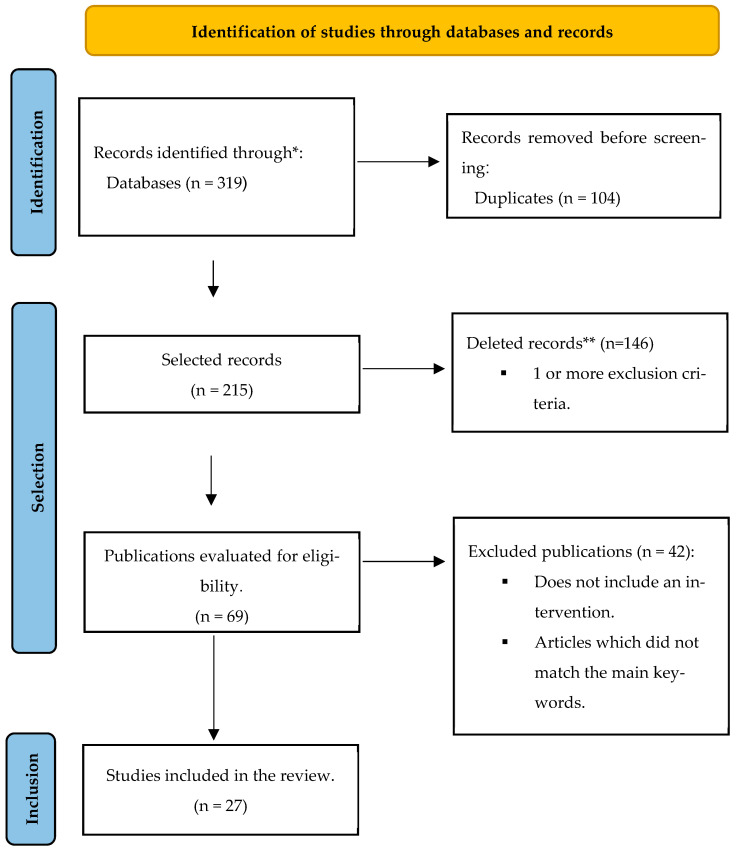 Figure 1
| Authors | Q1 | Q2 | Q3 | Q4 | Q5 | Q6 | Q7 | Q8 | Q9 | Q10 | Q11 | Q12 | Q13 | % Yes | Risk of Bias |
|---|---|---|---|---|---|---|---|---|---|---|---|---|---|---|---|
| (Adkins, 2021) [ | Y | U | Y | U | NA | Y | Y | N | Y | Y | Y | Y | Y | 69.2 | Moderate |
| (Kelly et al., 2009) [ | Y | U | Y | N | NA | NA | Y | Y | Y | Y | Y | Y | Y | 69.2 | Moderate |
| (D’Alton et al., 2019b) [ | Y | U | N | N | U | U | Y | Y | U | Y | Y | Y | Y | 53.8 | Moderate |
| (Singh et al., 2017) [ | Y | U | U | N | U | U | Y | Y | Y | Y | Y | Y | Y | 61.5 | Moderate |
| (Larsen et al., 2014b) [ | Y | U | U | N | U | U | Y | Y | U | Y | Y | Y | Y | 53.8 | Moderate |
| (Kishimoto et al., 2023) [ | Y | Y | Y | N | N | Y | Y | Y | Y | Y | Y | Y | Y | 84.6 | Low |
| (Hudson et al., 2020) [ | Y | U | U | N | N | U | Y | N | Y | Y | Y | Y | Y | 53.8 | Moderate |
| (Mifsud et al., 2021b) [ | Y | Y | Y | Y | NA | Y | Y | Y | Y | Y | Y | Y | Y | 92.3 | Low |
| (Muftin et al., 2022) [ | Y | Y | Y | N | Y | Y | Y | Y | Y | Y | Y | Y | Y | 92.3 | Low |
| (Łakuta, 2022) [ | Y | Y | Y | Y | Y | Y | Y | Y | Y | Y | Y | Y | Y | 100 | Low |
| (Seekis et al., 2017b) [ | Y | U | Y | N | Y | Y | Y | Y | Y | Y | Y | Y | Y | 84.6 | Low |
| (Sengupta et al., 2025) [ | Y | U | U | N | N | U | Y | U | Y | Y | Y | Y | Y | 53.8 | Moderate |
| (Sherman et al., 2019) [ | Y | U | Y | Y | NA | NA | Y | Y | Y | Y | Y | Y | Y | 76.9 | Low |
| (Borimnejad et al., 2015) [ | Y | U | Y | N | N | Y | Y | Y | Y | Y | Y | Y | Y | 76.9 | Low |
| (Bundy et al., 2013) [ | Y | U | Y | U | NA | NA | Y | Y | Y | Y | Y | Y | Y | 69.2 | Moderate |
| (Pascual-Sánchez et al., 2020) [ | Y | U | Y | N | NA | U | Y | NA | Y | Y | Y | Y | Y | 61.5 | Moderate |
| Authors | Q1 | Q2 | Q3 | Q4 | Q5 | Q6 | Q7 | Q8 | Q9 | % Yes | Risk of Bias |
|---|---|---|---|---|---|---|---|---|---|---|---|
| (Hedman-Lagerlöf et al., 2019) [ | Y | N | NA | NA | Y | Y | U | Y | Y | 55 | Moderate |
| (Offenbächer et al., 2021) [ | Y | N | NA | NA | Y | Y | Y | Y | Y | 66.6 | Moderate |
| (Harfensteller, 2022) [ | Y | N | NA | NA | Y | Y | Y | Y | Y | 66.6 | Moderate |
| (Ridge et al., 2021) [ | Y | N | Y | Y | Y | Y | Y | NA | Y | 77.7 | Low |
| (Latifi et al., 2020) [ | Y | Y | Y | Y | Y | Y | Y | Y | Y | 100 | Low |
| (Li et al., 2020) [ | Y | Y | Y | Y | Y | Y | Y | U | Y | 88.8 | Low |
| Authors | Q1 | Q2 | Q3 | Q4 | Q5 | Q6 | Q7 | Q8 | Q9 | Q10 | % Yes | Risk of Bias |
|---|---|---|---|---|---|---|---|---|---|---|---|---|
| (Da Silva et al., 2011) [ | Y | Y | Y | Y | Y | Y | Y | Y | Y | Y | 100 | Low |
| (Zucchelli et al., 2021) [ | Y | Y | Y | Y | Y | Y | U | Y | Y | Y | 90 | Low |
| Authors | Q1 | Q2 | Q3 | Q4 | Q5 | Q6 | Q7 | Q8 | Q9 | Q10 | Q11 | % Yes | Risk of Bias |
|---|---|---|---|---|---|---|---|---|---|---|---|---|---|
| (Bartholomew et al., 2022) [ | Y | Y | Y | U | U | Y | Y | Y | N | Y | Y | 72.7 | Moderate |
| (Rafidi et al., 2022) [ | Y | Y | Y | Y | Y | U | U | Y | N | Y | Y | 72.7 | Moderate |
| Authors | Q1 | Q2 | Q3 | Q4 | Q5 | Q6 | % Yes | Risk of Bias |
|---|---|---|---|---|---|---|---|---|
| (Yosipovitch et al., 2024) [ | Y | Y | Y | U | Y | Y | 83.3 | Low |
| Reference | Analysis and Statistical Methods | Variables |
|---|---|---|
| (Adkins, 2021) [ | ANCOVA; Cronbach’s alphas | Age; gender; ethnicity, educational; dermatological condition that affects their body image; language |
| (Ahmed et al., 2018) [ | Independent | People with vitiligo; age (>18) |
| (Bartholomew et al., 2022) [ | Qualitative synthesis | Type of intervention; psoriasis; Psoriasis Area and Severity Index; Dermatology Life Quality Index; Perceived stress |
| (Borimnejad et al., 2015) [ | Student’s | Age; diagnosis of vitiligo confirmed; ability to read and write |
| (Bundy et al., 2013) [ | Analise of covariance (ANCOVA), intention-to treat (ITT), multiple imputation, multivariate logistic regression, Shapiro–Wilk test, Stata v12 | |
| (Clarke et al., 2020b) [ | SPSS 26; multiple regression; bivariate correlations; independent | Dermatology patients; age; gender; ethnicity; employment status; marital status; education level |
| (D’Alton et al., 2019b) [ | Not discriminated | Age; diagnosis of psoriasis; systemic medication for 6 months or more |
| (Da Silva et al., 2011) [ | Not discriminated | People with psychodermatoses; age; gender |
| (Galhardo et al., 2022) [ | SPSS, v. 27; Pearson’s correlation; hierarchical multiple linear regression; Durbin–Watson statistics; | People with a diagnosis of psoriasis; age; gender |
| (Harfensteller, 2022) [ | Spearman’s correlation coefficient; SPSS IBM 26; | Patients with diagnosed Atopic dermatitis (AD); age (18–65); language |
| (Hedman-Lagerlöf et al., 2019) [ | STATA version 14.2; | Age (18–65); adults with Atopic dermatitis; duration of AD for at least 6 months; language |
| (Hewitt et al., 2022) [ | NVivo 12 Pro; | Age; self-diagnosed dermatological condition |
| (Hudson et al., 2020) [ | Independent samples | Age (16); English-speaking; diagnosis of a skin condition; |
| (Hughes et al., 2023) [ | Thematic analysis | 8–11 years of age; diagnosed with any skin condition and English-language speakers; eligible parents were 18 years of age or over; the child’s main caregiver |
| (Kelly et al., 2009) [ | ANOVAs; | Age; facial acne; prescribed acne treatment perceived to be ineffective |
| (Kishimoto et al., 2023) [ | Mixed model for repeated measures (MMRM), adjusting for age, sex, and baseline DLQI, to assess within- and between-group differences. | Age, sex, education, marital status, living situation, working situation |
| (Łakuta, 2022) [ | Six linear mixed models (LMMs); PROCESS macro version 3.5.3; | Age; physician-diagnosed psoriasis |
| (Larsen et al., 2014b) [ | SPSS version 19; | Age; gender; educational level; health status; disease duration |
| (Latifi et al., 2020) [ | Descriptive statistics (frequency, percentage, mean, and standard deviation) and inferential statistics (repeated-measures ANOVA and Kruskal–Wallis test) | Women with skin cancer; age; children; education. |
| (Li et al., 2020) [ | SPSS Statistics for Windows, Version 17.0. Student’s | Age, gender, mean time from diagnosis to treatment initiation, and family history of psoriasis |
| (Melissant et al., 2021b) [ | SPSS version 26; Multiple regression model; Linear mixed; | Head and neck cancer (HNC) survivors |
| (Mifsud et al., 2021b) [ | c2 tests of Independence; ANOVA; chi-square tests; Shapiro–Wilk’s; Levene’s Test of Homogeneity of Variance; SPSS version 23; | Age; gender; diagnosed with stage I to III breast cancer, ductal carcinoma in situ (DCIS) and/or lobular carcinoma in situ (LCIS); experienced at least one negative event related to the changes that have occurred to their body after breast cancer; language |
| (Muftin et al., 2022) [ | SPSS Statistics; intention-to-treat (ITT); v2-tests; MANOVA; ANOVA; | Gender; age; ethnicity; education |
| (Offenbächer et al., 2021) [ | SPSS; | Age; diagnosis of AD; |
| (Pascual-Sánchez et al., 2020) [ | IBM SPSS Statistics for Macintosh, Version 21.0; | Women with AAU; age; time of disease; number of received treatments |
| (Rafidi et al., 2022) [ | Qualitative synthesis | Type of intervention; dermatologic disease; treatment outcomes |
| (Ridge et al., 2021) [ | GraphPad Prism software; version 9.3.1. | Age; diagnosis of chronic urticaria |
| (Seekis et al., 2017b) [ | MANOVA; one-way ANOVA; | Age (17–25); language |
| (Sengupta et al., 2025) [ | SPSS version 27; ANCOVAs | Age; Depression; Anxiety; Stress; Dermatology-specific quality of life; Self-esteem; Well-being |
| (Sherman et al., 2019) [ | SPSS version 25.0; Chi-square; | Age, gender, education level, skin condition type, time since skin condition onset; whether treatment was received for the skin condition |
| (Singh et al., 2017) [ | SPSS version 18; Wilcoxon signed-rank test | Age (>15); moderate and severe chronic plaque psoriasis |
| (Yosipovitch et al., 2024) [ | Focused literature review of mind–body therapies | Pruritus/itch; pain; stress; sleep disturbances; anxiety; depressive symptoms; dermatology-specific quality of life; scratching behavior |
| (Zucchelli et al., 2021) [ | NVivo© version 15.3.0 software; | Age; gender; participants with a range of appearance-affecting conditions; language |
| Reference | Instruments |
|---|---|
| (Borimnejad et al., 2015) [ | General Health Questionnaire-28 (GHQ-28); |
| (Bundy et al., 2013) [ | Hospital Anxiety Depression Scale (HADS) |
| (D’Alton et al., 2019b) [ | The Hospital Anxiety and Depression Scale (HADS); |
| (Kelly et al., 2009) [ | Depressive Experiences Questionnaire (DEQ); |
| (Kishimoto et al., 2023) [ | Dermatology Life Quality Index—Japanese version (DLQI-J) |
| (Łakuta, 2022) [ | Health Questionnaire [PHQ-9]; |
| (Larsen et al., 2014b) [ | Self-Administered Psoriasis Area and Severity Index (SAPASI); |
| (Latifi et al., 2020) [ | Self-compassion scale (SCS) |
| (Li et al., 2020) [ | Symptom Checklist-90 (SCL-90) |
| (Melissant et al., 2021b) [ | Body Image Scale (BIS); |
| (Mifsud et al., 2021b) [ | Body Image Scale (BIS: [ |
| (Muftin et al., 2022) [ | Other as Shamer Scale (OAS); |
| (Offenbächer et al., 2021) [ | Score of Atopic Dermatitis (SCORAD); |
| (Pascual-Sánchez et al., 2020) [ | Dermatology Life Quality Index—DLQI |
| (Ridge et al., 2021) [ | Depression and Anxiety Stress Scale (DASS 21); |
| (Seekis et al., 2017b) [ | State Body Appreciation Scale-2 (SBAS-2); |
| (Sengupta et al., 2025) [ | Dermatology Life Quality Index (DLQI) |
| (Sherman et al., 2019) [ | Self-Compassion Scale—Short Form (SCS-SF); |
| (Singh et al., 2017) [ | Psoriasis Area Severity Index (PASI); |
| (Zucchelli et al., 2021) [ | Not discriminated |
Peer Reviews
No public reviews on file for this paper yet. If you reviewed it on a platform where reviews are public (OpenReview, ICLR, NeurIPS, ICML), you can paste yours below so the community can read it here.
Videos
No videos yet. Explain this paper in a talk, walkthrough, or lecture? Add one.
Taxonomy
TopicsPsoriasis: Treatment and Pathogenesis · Dermatology and Skin Diseases · Cancer survivorship and care
1. Introduction
Society is frequently exposed to live and virtual images that pose a threat to body image, images that are related to appearance and lead to a reduction in body satisfaction or a momentary decrease in evaluative attitude towards one’s own body or its parts. Another aspect can be defined as discomfort or apprehension about body parts falling short of culturally defined beauty standards. A positive body image does not imply the absence of a negative body image; it is a flexible, holistic, and protective construct that goes beyond mere appearance satisfaction to include respect, honor, love, and acceptance of the body, including its unique features that deviate from appearance ideals [1].
The skin, as the most visible organ, is central to body image and self-perception. However, many chronic skin conditions—such as psoriasis, atopic dermatitis, vitiligo, and chronic urticaria—can profoundly disrupt an individual’s relationship with their body [2]. Chronic dermatoses are extremely prevalent and, due to their visible nature, carry a significant psychosocial burden. The self-assessed implications by individuals with a skin condition are more strongly associated with psychological distress than the severity estimated by the physician, suggesting that individuals’ perceptions and emotions regarding their skin condition play a fundamental role in the development of related distress [3].
Broader surveys of conditions affecting appearance report findings where individuals with visible signs tend to experience above-average levels of psychological distress [4,5]. There is considerable individual variation in the psychosocial impact of an altered appearance, and mental health condition can therefore affect the burden, severity, and implications of physical conditions. This highlights the need for attention from healthcare professionals, especially those in the mental health field [3]. In fact, chronic dermatoses are conditions frequently associated with significant psychological impacts, including symptoms of anxiety, depression, and reduced quality of life, as evidenced in the literature emphasizes the importance of addressing these issues through integrated psychological interventions within the clinical management of such conditions, highlighting the need for multidisciplinary approaches that consider both the physical and psychological aspects of the disease [6].
This strong bidirectional link between psychological state and skin health is underpinned by well-characterized biological pathways. Psychological stress activates the hypothalamic–pituitary–adrenal (HPA) axis and the sympathetic nervous system (SNS), leading to the release of neuroendocrine mediators such as cortisol and catecholamines [7]. These substances can directly modulate immune function and promote inflammation, a key driver of many chronic dermatoses like psoriasis and atopic dermatitis [7]. Furthermore, stress can impair the skin’s barrier function and increase pruritus (itching), triggering a scratch-itch cycle that exacerbates lesions [8]. Therefore, psychological interventions that effectively reduce stress may not only alleviate psychological distress but also directly mitigate this neuroimmunocutaneous activity, potentially leading to disease modification.
Consequently, patients often experience symptoms such as shame, distress, frustration, lack of confidence, loss of self-esteem, and body image issues [9], which, combined with the patient’s perception of the illness and its manifestation, often leads to isolation, abandonment of activities, difficulties in relationships with others, and challenges in emotional regulation. In effect, all these symptoms are associated with elevated levels of low quality of life that generate depressive and anxiety-related symptoms [10].
In response to this complex biopsychosocial interplay, psychological interventions for the treatment of dermatoses have been developed, often based on principles of self-compassion, self-concept, and mindfulness, which are rooted in non-self-judgment and acceptance of inner experiences and physical sensations. Mindfulness-based therapies not only aim to increase body awareness and regulate suffering overall but also emphasize the fundamental role of self-compassion in the patient’s ability to be kind to oneself during moments of heightened distress [11]. In addition to these interventions, expressive writing based on self-compassion aims to stimulate self-compassion to improve body image, especially in situations of failure, humiliation, and feelings of loss. This approach seeks to prevent negative thoughts about oneself and one’s body [12]. This intervention has shown promise in other visible conditions; for example, in a study conducted by [13], when applied, expressive writing based on self-compassion in the post-cancer process, there was an observed increase in self-compassion, demonstrating an improvement in distress. The aim of this systematic literature review is to investigate the efficacy of these and other psychological interventions for patients with chronic dermatoses. Based on the existing literature, we expect to find that interventions focusing on mindfulness and self-compassion will be particularly effective in reducing psychological distress and improving quality of life in this patient population.
2. Materials and Methods
2.1. Search Strategy
This review was conducted by PRISMA (Preferred Reporting Items for Systematic Reviews and Meta-Analyses) guidelines (PRISMA check list are available in the Supplementary Materials—Table S1) and registered on the International Prospective Register of Systematic Reviews (PROSPERO) under the registration number 1170236. The databases selected were PubMed, Google Scholar and PsycNet. The keywords used were: “dermatoses”, “skin diseases”, “psychological intervention”, “self-compassion “, “body image”, “atopic dermatitis” and “psoriasis”. Some studies were obtained through the references of others. All the authors were actively involved in all stages of the review process.
The core search criteria, including the key concepts, search terms, and Boolean operators used, are detailed in Table 1. The search strategy was adapted for the specific syntax of each database.
2.2. Inclusion Criteria
The titles and abstracts of the studies were evaluated and selected for inclusion following specific criteria: (a) complete studies (without protocols); (b) studies correlating dermatoses and psychological interventions; (c) involving specific interventions and their psychological and psychosocial outcomes; and (d) studies published in peer-reviewed journals. The articles considered are in English and Portuguese.
2.3. Exclusion Criteria
Studies were excluded if they focused only on dermatoses and excluded psychological interventions, or if they addressed only the dermatological or pharmacological aspects themselves and did not establish an association with the psychological dimensions. Studies that addressed interventions with the family were also excluded, as were case reports and studies that did not describe the results of the intervention and had a small sample size (<10 participants).
2.4. Screening
The title/summary of the studies was selected independently, always based on the inclusion and exclusion criteria.
2.5. Quality Assessment
The methodological quality and risk of bias of the included studies were critically appraised using the appropriate Joanna Briggs Institute (JBI) checklists for study design (2024) [14]. The appraisal was conducted independently by the review authors, with any discrepancies resolved through consensus. The results of this assessment are summarized in Table 2, Table 3, Table 4, Table 5 and Table 6. The overall risk of bias for each study, as determined by this appraisal, was considered when interpreting the results and drawing conclusions in this review.
3. Results
The initial searches in the databases yielded a total of 319 articles, of which 104 (32.60%) were removed due to duplication. The abstracts of the remaining 215 (67.39%) studies were analyzed, and 146 (45.77%) were excluded. Among the remaining 69 (21.63%) full-text articles, 42 (13.17%) were excluded, resulting in 27 (8.46%) articles for review (Figure 1).
3.1. Studies’ Characteristics
The characteristics of the studies (n = 27) are presented in Table 7. Three studies (11.11%) included cancer survivors, twenty-three studies (85.19%) focused on patients with dermatological conditions, predominantly psoriasis, and one study (3.70%) addressed the role of negative body image in individuals with dermatoses. Of the 27 studies, four (14.81%) applied the intervention of expressive writing based on self-compassion, and nineteen (70.37%) applied interventions based on mindfulness therapy. Regarding methodology, twelve (44.44%) were randomized controlled trials, five (18.52%) randomized study, two (7.41%) were pilot studies, five (7.41%) were qualitative studies, one (3.70%) was a prospective study; one (3.70%) was a prospective cutting study, and one (3.70%) was an open trial.
3.2. Studies’ Results Summary
In the analysis of the tables (Table 8 and Table 9), we observe that the selected studies present a similar methodology, twelve (44.44%) were randomized controlled trials, five (18.52%) randomized study, two (7.41%) were pilot studies, five (7.41%) were qualitative studies, one (3.70%) was a prospective study; one (3.70%) was a prospective cutting study, and one (3.70%) was an open trial. As seen in Table 9, despite the variations in the instruments used to assess the effectiveness of interventions across different studies, they generally evaluated depression and anxiety [12,16,17,18,20,22,25,28,29,31,33,35], quality of life [17,18,20,23,24,25,28,29,31,35,38], self-compassion [12,20,22,26,27], and body appreciation [1,12,22,24,26,34]. The most studied variables included sociodemographic characteristics, with individuals diagnosed with chronic dermatoses, predominantly psoriasis and vitiligo (Table 8). The articles are grounded in aspects related to self-compassion, self-help, body image, and quality of life in patients with dermatoses. Most of the studies are classified as Q1 and Q2 metrics, indicating the significance and recognition of research on the subject.
The evidence for expressive writing was mixed. While a general writing intervention on body functionality showed no significant effects on appearance anxiety or skin-related quality of life [15,26], writing tasks specifically designed to cultivate self-compassion demonstrated more consistent benefits for body appreciation and satisfaction [1,15] compared to control conditions. These data can be explained by the fact that expressive writing based on self-compassion requires more awareness, greater self-reflection, and a stronger self-connection [32], as kindness and unconditional acceptance are also important for body acceptance. These results can be useful for clinical use since cultivating a self-compassionate attitude toward stressors can promote better coping and improve mood [32].
Mind–Body therapies (MBT) in atopic dermatitis (AD) demonstrated promising effects on both physical and psychological outcomes. Studies reported reductions in pruritus, scratching behaviors, and overall disease severity, alongside improvements in anxiety, stress, depressive symptoms, and quality of life. Interventions including mindfulness, cognitive–behavioral therapy, hypnotherapy, relaxation techniques, biofeedback, and therapeutic massage showed beneficial effects as adjuncts to conventional treatment [8]. Mindfulness and self-compassion–based interventions significantly reduced psychological distress in individuals with chronic skin conditions. Improvements were observed in depression, anxiety, stress, self-esteem, dermatology-related quality of life, and overall well-being. Mindfulness enhanced emotional regulation and reduced rumination, self-judgment, and experiential avoidance. Self-compassion promoted acceptance, self-kindness, and recognition of the universality of negative experiences. These findings suggest that such interventions may be effective as adjuncts in psychodermatological care [25,40].
In mindfulness-based interventions [3,17,25,31,32,33,38], a decrease in the severity of symptomatology, as well as emotional suffering caused by the physical effects of dermatoses, was observed. Improvements in stress, changes in depressive symptomatology (but not anxiety), and enhanced coping with the disease were also noted. The studies reported that mindfulness led to improvements in symptoms, coping mechanisms, a deeper understanding of emotions, increased awareness of impulses, and enhancements in positive psychological attributes. In another study comparing mindfulness-based interventions such as Mindfulness-Based Cognitive Therapy, Mindfulness-Based Self-Compassion Therapy, and self-help to usual treatment, despite the beneficial aspects of these interventions, they were not significant for psychological well-being. The evidence on meditation and mindfulness practices in psoriasis is promising, but still limited by the small number of RCTs and short follow-up periods. Most studies reported improvements in psoriasis severity measured by the saPASI, while only a few demonstrated significant effects on quality of life. These interventions may also address psychological comorbidities, such as anxiety, depression, and worry, providing additional benefits beyond physical symptom relief [38].
In two studies, Cognitive–Behavioral Therapy (CBT) was used; in one, exposure-based CBT involving mindfulness practice was employed [30], and in another, general CBT was applied to dermatosis [28]. In both studies, a reduction in anxiety and improvements in quality of life were observed, but there were no changes in the depressive component. In mindfulness-based CBT, quality of life underwent changes during the intervention, while in the study of general CBT applied to dermatosis, the results regarding quality of life were more significant. Perhaps this difference is due to the latter intervention having a greater focus on overall disease management rather than specifically targeting the treatment of suffering for psoriasis. In both studies, careful consideration is warranted when analyzing results due to the potentially limiting small sample size for interventions based on self-compassion and Mindfulness [20,22,26,27,34], various studies reported significant effects on stress, self-compassion, anxiety, and depression [21]. These interventions assisted in the acceptance of altered appearance [37], reduction in shame and skin complaints, and a greater reduction in depression was observed in individuals with higher levels of self-criticism [16]. In one study [31], with a similar intervention basis, an increase in anxiety and depression levels was reported; however, caution is advised due to the small sample size, which prevents definitive conclusions.
Finally, in a study where individual motivational interviewing was used [19], significant changes were observed in lifestyle and overall positive changes. However, this intervention is recommended as a potential complement to medical management and for patient education regarding the condition. In a self-affirmation intervention [24], despite significant results for depressive symptoms, anxiety, and well-being, no differences were observed in mental health. The conclusion reached was that self-affirmation is not a pathway to improving psychological functioning in patients with dermatoses.
4. Discussion
The objective of this literature review is to investigate psychological interventions for the treatment of chronic dermatoses. Chronic dermatoses, especially psoriasis and vitiligo, have a significant impact on an individual’s life, leading to depression, anxiety, an increased risk of suicide, experiences of stigma, tendencies towards isolation, and negative body image [44]. All these factors can affect the individual’s quality of life [45] and may pose a risk of psychiatric morbidity [9]. The difficulties faced by individuals with dermatoses regarding their self-image and social life are mentioned [46]. In this sense, psychological intervention is essential.
Among the interventions used in different articles, expressive writing-based intervention has the potential to promote a positive body image and increase self-compassion. Interventions based on Mindfulness, self-compassion, and self-help demonstrate greater efficacy in the treatment of chronic dermatoses and can be a complementary tool for intervention [47]. They are promising in addressing the psychological stress generated by the effects of chronic dermatoses on the skin, mitigating negative thoughts about body image, reducing feelings of shame, skin complaints, depression, and self-criticism, and improving quality of life levels [48]. These interventions were also reported with higher participant satisfaction. While interventions based on Cognitive–Behavioral Therapy (CBT) show positive results, their practice is general and non-specific, demonstrating significant effects only when applied in conjunction with mindfulness practices.
The success of mindfulness-based and self-compassion interventions in reducing disease-related suffering and improving quality of life can be understood within the context of the neuroimmunocutaneous framework discussed in the introduction. By fostering a non-judgmental awareness of thoughts and sensations (mindfulness) and cultivating self-kindness during distress (self-compassion), these techniques can downregulate the maladaptive stress response [49,50]. This psychophysiological shift likely leads to a reduction in pro-inflammatory signaling and a break in the stress-itch cycle [8,39]. Consequently, the observed benefits of these interventions may extend beyond the psychological realm, contributing to a direct, positive impact on disease activity—such as reducing flare-ups, severity of lesions, and pruritus—by modulating the very biological pathways that link the mind and the skin. This underscores the potential of psychosocial strategies as integral components of a treatment plan aimed at comprehensive disease management.
A critical appraisal of the evidence base reveals several recurrent limitations within the included studies, which consequently inform the constraints of the present review. The primary literature is frequently characterized by modest sample sizes and notable attrition rates, which challenge the statistical power and generalizability of the findings. Furthermore, the context of participant recruitment introduces potential bias; for instance, individuals recruited in clinical settings may present with lower symptom severity and demonstrate reduced post-treatment improvement, suggesting that interventions might yield different effects for those experiencing higher levels of distress. The interpretability of results is also complicated by confounding variables, such as the concurrent use of antidepressant medication and the fluctuating nature of dermatoses, where the level of disease exacerbation at the time of assessment can significantly influence outcomes. An additional methodological concern across studies is the predominant reliance on self-report measures for psychological outcomes, which inherently carries the potential for bias. These inherent limitations in the primary literature directly shape the constraints of this review. While conducted according to PRISMA guidelines, the present synthesis was limited by its search strategy, being restricted to three databases and including only English and Portuguese publications, which may have led to the omission of pertinent research. The significant heterogeneity observed in the interventions, methodological designs (ranging from RCTs to qualitative studies), and outcome measures precluded a quantitative meta-analysis, thereby limiting the ability to draw definitive conclusions regarding efficacy. Finally, the broad focus on chronic dermatoses as a whole means the findings may not be uniformly applicable to each specific condition. Collectively, these factors underscore that the conclusions drawn here, while promising, should be viewed as indicative of a rapidly evolving field rather than as definitive evidence.
Considering the objective of this study, the analysis of the articles easily reveals the understanding and knowledge that experts have regarding the physical, psychological, and social impact of chronic dermatoses on an individual’s life. However, the therapists’ knowledge for assisting these patients is limited when it comes to determining the most suitable intervention. Despite the promising results observed in the studies, it would be important to develop more objective research with conclusive outcomes to enable better adaptation to the characteristics of the patient, as well as the use of feasible interventions.
The purpose of this literature review was to clarify which interventions demonstrate effectiveness in the treatment of patients with chronic dermatoses, with the aim of increasing knowledge in this field.
In future research, it would be important to conduct comparative studies between different psychological interventions to determine relative effectiveness, patient acceptability, and long-term outcomes. Evaluating the effectiveness of different intervention formats, such as in-person sessions, online videos, and remote interventions, is crucial to understanding the feasibility and efficacy of these approaches in different contexts and populations. Given the limited sample sizes and high dropout rates, it would be important to investigate factors influencing patient acceptance and participation in psychological interventions, considering barriers such as stigma, accessibility, and individual preferences. Finally, delving deeper into the relationship between improvements in dermatoses severity measures and the reduction in psychological distress would be a valuable avenue for exploration. Furthermore, the emergence of telehealth and digital health platforms presents a transformative prospect for expanding the reach and accessibility of psychological interventions. Future research should rigorously evaluate the efficacy and long-term adherence of interventions delivered remotely via videoconferencing, mobile applications, and structured online programs. Investigating how these digital formats compare to traditional in-person therapy in terms of clinical outcomes, patient engagement, and economic feasibility will be crucial. Embracing telemedicine could ultimately help overcome barriers such as geographic limitations, mobility issues, and stigma, making integrative psychodermatological care available to a broader and more diverse patient population.
5. Conclusions
The psychological impact of chronic dermatoses is well-documented in the literature, significantly affecting patients’ self-esteem, body image, and overall quality of life. In this context, psychological interventions that address not only the physical symptoms but also the emotional and social consequences of skin disorders are essential.
The evidence reviewed in this study suggests that therapeutic approaches based on mindfulness, self-compassion, and self-help are promising but heterogeneous. While they show potential for managing psychological distress and improving quality of life in patients with chronic dermatoses, their effectiveness varies across specific outcomes, conditions, and intervention formats. Future research should aim to identify the most effective components of these interventions and the patient populations most likely to benefit. Additionally, expressive writing interventions focused on self-compassion have shown potential in promoting body image acceptance and reducing self-critical thoughts.
In summary, this review contributes to the growing body of knowledge on psychological interventions for chronic dermatoses and underscores the importance of an interdisciplinary approach that integrates both physical and psychological aspects in the care of dermatological patients.
The reference list from the paper itself. Each links out to its DOI / PubMed record.
- 1Seekis V. Bradley G.L. Duffy A. The effectiveness of self-compassion and self-esteem writing tasks in reducing body image concerns Body Image 20172320621310.1016/j.bodyim.2017.09.00329198366 · doi ↗ · pubmed ↗
- 2Ücker Calvetti P. Rivas R. Coser J. Barbosa A. Ramos D. Biopsychosocial aspects and quality of life of people with chronic dermatoses Psicol. Saúde Doença 20171829730710.15309/17psd 180202 · doi ↗
- 3Clarke E.N. Thompson A.R. Norman P. Depression in people with skin conditions: The effects of disgust and self-compassion Br. J. Health Psychol.20202554055710.1111/bjhp.1242132394487 · doi ↗ · pubmed ↗
- 4Rumsey N. Harcourt D. Body image and disfigurement: Issues and interventions Body Image 20041839710.1016/S 1740-1445(03)00005-618089143 · doi ↗ · pubmed ↗
- 5Thompson A. Kent G. Adjusting to disfigurement: Processes involved in dealing with being visibly different Clin. Psychol. Rev.20012166368210.1016/S 0272-7358(00)00056-811434225 · doi ↗ · pubmed ↗
- 6Misery L. Schut C. Balieva F. Bobko S. Reich A. Sampogna F. Altunay I. Dalgard F. Gieler U. Kupfer J. White paper on psychodermatology in Europe: A position paper from the EADV Psychodermatology Task Force and the European Society for Dermatology and Psychiatry (ES Da P)J. Eur. Acad. Dermatol. Venereol.2023372419242710.1111/jdv.1942737615377 · doi ↗ · pubmed ↗
- 7Chen Y. Lyga J. Brain-skin connection: Stress, inflammation and skin aging Inflamm. Allergy-Drug Targets 20141317719010.2174/187152811366614052210442224853682 PMC 4082169 · doi ↗ · pubmed ↗
- 8Yosipovitch G. Bernhard J.D. Chronic pruritus N. Engl. J. Med.20133681625163410.1056/NEJ Mcp 120881423614588 · doi ↗ · pubmed ↗