Genetic Association Study of Brain-Derived Neurotrophic Factor (BDNF) and Serotonin-Related Gene Variants in Suicide Attempters with Major Depressive Disorder and Control Persons
Taehun Kim, Seong Beom Oh, Han Joo Choi, Chan Young Koh, Yong Oh Kim, Min Jeong Kim, Sijun Woo, Youngil Lee, Chang Min Lee, Jong Wan Kim, You-Shin Yi, Myung Ho Lim

TL;DR
This study explores how genetic variations in BDNF and serotonin-related genes are linked to suicide attempts in people with major depressive disorder in Korea.
Contribution
The study identifies a specific BDNF gene variant associated with suicide attempts in Korean individuals with major depression.
Findings
The rs11030101 (BDNF) genotype and allele were significantly associated with suicide attempts in Korean patients.
The rs3813034 (SLC6A4) recessive genotype was also significantly linked to suicide attempts.
No significant associations were found for serotonin-related polymorphisms after multiple testing correction.
Abstract
Objective: Suicide attempts have become one of the most serious problems worldwide in recent years. Suicide attempts are known to be genetically highly associated with serotonin and BDNF in international studies. Methods: In this study, we investigated the association with rs6265 (BDNF), and rs11030101 (BDNF), rs3813034 (Serotonin Transporter, SLC6A4) rs4680 (TPH1), rs1800532 (TPH1), rs1386493 (TPH2), rs6311 (HTR2A), rs6313 (HTR2A), rs6314 (HTR2A), rs6296 (HTR1B), gene polymorphism in Korean suicides with major depressive disorder who visited the emergency room. Results: A case-control study was conducted with 226 suicide and suicide attempts with major depressive disorder and 1469 general controls, and genotypes were determined by PCR-RFLP method. Significant associations between the rs11030101 (BDNF) genotype and suicide/suicide attempters were confirmed (OR 0.44, 95% CI 0.23–0.84, p…
Genes, proteins, chemicals, diseases, species, mutations and cell lines named across the full text — each resolved to its canonical identifier and authoritative record.
Click any figure to enlarge with its caption.
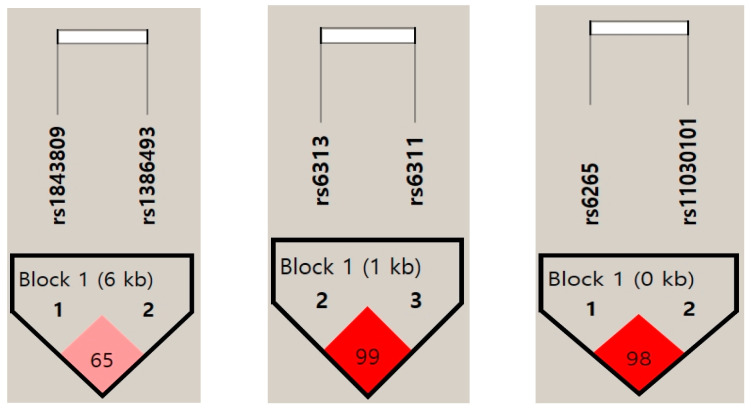 Figure 1
Peer Reviews
No public reviews on file for this paper yet. If you reviewed it on a platform where reviews are public (OpenReview, ICLR, NeurIPS, ICML), you can paste yours below so the community can read it here.
Videos
No videos yet. Explain this paper in a talk, walkthrough, or lecture? Add one.
Taxonomy
TopicsNerve injury and regeneration · Neurotransmitter Receptor Influence on Behavior · Suicide and Self-Harm Studies
1. Introduction
In 2021, there were 13,352 suicide deaths in Korea, making it the highest suicide rate (26.0 per 100,000 people) among countries in the Organization for Economic Co-operation and Development (OECD) [1]. Furthermore, while most OECD countries have seen a decline in suicide rates since 1990, South Korea has experienced an increase. While various biological, psychological, sociological, and economic factors contribute to the complex etiology of suicidal behavior, evidence for genetic factors is robust [2]. The most important determinant in those who attempt suicide is the individual’s genetic sensitivity to suicidal behavior. There was sufficient epidemiological evidence to show that suicidal tendencies are practiced within the family regardless of the presence of mental illness in family, twin, and adoption studies [2,3].
Over the past few decades, several studies have reported abnormalities in the function of the serotonin operating system associated with suicidal behavior [4]. Consequently, genes encoding proteins that regulate the neurotransmission of serotonin and BDNF (including Tryptophan hydroxylase TPH1 and TPH2, serotonin transport gene SLC6A4, and serotonin receptor genes HT1A, HTR2A, and HTR1B) have been considered strong candidates in the association studies of suicidal behavior [4,5,6].
Studies, including postmortem and epigenetic expression studies, have reported that brain-derived BDNF is associated with suicidal behavior. A Slovenian research team reported an association between BDNF rs6265 polymorphism and suicide in completed suicides. Perroud et al. [7] investigated the interaction between BDNF rs6265 and a history of childhood sexual abuse. They found that violent suicide attempts were associated in adults with the Val/Val genotype of rs6265 when accompanied by a history of childhood sexual abuse. Sarchiapone et al. [8] reported an association between BDNF variants and suicide attempt risk in depressed patients when levels of childhood emotional, physical, and sexual abuse were high. More recently, Zouk et al. [9] found an association between the rs4923463 genotype allele GA and violent suicide attempts (p = 0.03) in patients with bipolar disorder. Zai et al. [10] conducted a meta-analysis of the Val66Met (rs6265) functional BDNF marker in suicide attempters across 12 studies (total N = 3352, of whom 1202 had a history of suicide). The results indicated that the Met allele and the Met-carrier genotype tended to increase the risk of suicide (p = 0.032, or Met = 1.16, 95% CI 1.01–1.32). Recently, Ratta-Apha et al. [11] conducted a meta-analysis including six studies conducted in Asia. The results showed a tendency for the Met allele to be associated with the risk of suicide attempts (number of Met alleles = 437: total number = 1428, pooled OR = 1.37, 95% CI = 1.01~1.86, Z value = 2.047, p = 0.041).
5-HTTPR (SLC6A4) has been extensively studied as a candidate gene for suicide vulnerability. Results from a recent meta-analysis demonstrated a strong association between the 5-HTTPR S allele and suicidal behavior [12]. A stronger difference was observed between suicide attempters and non-suicide attempters compared to healthy controls, indicating an association between the SNP variant and suicide independent of psychiatric diagnoses.
The TPH1 gene is the first serotonin gene to be identified in association with suicide.
Early studies investigating variants within the TPH1 gene reported that a polymorphic change in intron 7, a substitution from A to C at nucleotide 779 (A779C), was associated with violent suicide attempts [13]. Following this initial report, subsequent studies reported an association between the A779C variant and suicide attempts or completed suicides. Later research reported an increased frequency of the A779C allele in suicide attempters [14,15,16]. Rujescu et al. [17] and Bellivier et al. [18] found a significant association between the A218C single-nucleotide polymorphism (SNP) allele and suicide risk in Caucasians in meta-analyses of seven and nine studies, respectively. Li and He [19] confirmed a significant association between suicidal behavior and the A779C/A218C polymorphism in a review study including 22 prior studies, observing a stronger association in Caucasian samples. As the second isoform of TPH, TPH2 plays a more dominant role in brain serotonin synthesis, making it a promising candidate gene in genetic studies of suicide [20]. In 2004, Zill et al. [21] examined associations between 263 suicide victims and healthy controls in Germany. They first identified associations between completed suicides and a single SNP (rs1386494) (p = 0.001) and a haplotype (p < 0.0001) [22]. In this study, they used 10 single SNPs to explore a 28 kb region of the TPH2 gene where linkage disequilibrium (LD) increases and reported the presence of a haplotype block. Similarly, Lopez et al. [23] investigated four SNPs (rs11178997, rs1386494, rs1007023, and rs9325202) and reported associations between suicide attempts and these SNPs in a sample of 670 individuals from families with bipolar disorder.
Musil et al. [24] reported that the TPH2 rs1386494 C/T polymorphism consistently showed a significant association with treatments for emergency suicide ideation (TESI) compared to controls (p = 0.0173). The TPH2 rs1386494 C/T polymorphism showed a significant association with suicidal behavior in logistic regression analysis (p = 0.0041), with an odds ratio of 5.64 (95% CI 1.77–19.58).
The HTR1A gene, located on the long arm of chromosome 5, was proposed as a candidate gene for suicide susceptibility over the past decade. A study by Lemonde et al. [25] demonstrated an association between suicide attempters and the C(-1019) G (or rs6295) variant, where the GG genotype was four times more prevalent. These findings were replicated by a study showing increased methylation in the promoter region of the HTR1A gene in the prefrontal cortex of suicidally depressed patients carrying the C(-1019)G GG genotype [26]. Another study found the G allele occurred more frequently in suicide victims compared to controls and was associated with the number of stressful life events in the suicide victim group [27].
The 5-HT2A receptor gene (HTR2A), located at 13q14q21, is known as an important candidate gene for suicide risk. The most extensively studied polymorphisms in HTR2A are A-1438G (rs6311 C/T) and T102C (rs6313). Li and He [19] concluded in a meta-analysis of 25 previous studies, including those examining HTR2A gene null associations, that there was no significant association between the T102C/A-1438G polymorphisms and suicidal behavior. Some studies observed a positive association between HTR2A markers and suicide. Giegling et al. [28] found that the HTR2A variants (rs594242-rs6311: G-C and rs6311C) were associated with increased nonviolent and impulsive suicidal behavior, respectively. Additionally, the CC genotype of the T102C SNP was more frequently found in suicide attempters.
Reviewing studies related to the HTR1B gene, the single variant rs11568817 and the haplotype variant rs130058 showed a significant association with suicide in a Chinese patient group with major depressive disorder [29].
Therefore, we selected 10 gene candidate polymorphisms related to serotonin based on previous studies related to these suicide attempts. The aim of this study was to investigate the association between the genetic type and alleles for the TPH1, TPH2, SLC6A4, HTR1A, HTR2A, and BDNF genes in Korean suicide attempters with major depressive disorder (suicide attempters) and a control group.
2. Methods
2.1. Study Population
Patients who had visited the emergency room of the Dankook University Hospital in connection with a suicide attempt were investigated within a week by emergency physicians and psychiatrists. These doctors conducted basic epidemiological questions and medical interviews to obtain age, gender, and method of suicide attempt, as well as diagnosis according to the Diagnostic and Statistical Manual of Mental Disorders, edition 5 (DSM-5) criteria. Suicide attempts were defined as self-harm behavior involving at least minimal suicidal intent. Patients diagnosed with intellectual disability, organic brain disorder, dementia, schizophrenia, or alcohol dependence were excluded. The final patient group comprised 226 patients with major depressive disorder. The control group (n = 1469) was recruited from the general population in ten South Korean cities among children and adolescents who reported no neuropsychiatric disorders. All participants, as well as the parents/legal guardians of the children, received a thorough explanation of the study’s purpose and provided written informed consent. The study was conducted with approval from the Institutional Review Board of Dankook University Hospital (2016-08-002). The demographic characteristics of the study subjects are presented in Table 1.
The genetic characteristics of polymorphisms are shown in Table 2.
2.2. Research Methods
2.2.1. Epidemiological Questionnaire
This consists of basic survey questions about the subject, including gender, age, and method of suicide attempt. It was based on the emergency room chart records, where the attending physician questioned the subject.
2.2.2. Genetic Testing
Blood samples were collected at the university hospital’s Department of Laboratory Medicine, and DNA was extracted from leukocytes using a commercial DNA extraction kit: the Wizard Genomic DNA Purification Kit (Promega, Madison, WI, USA).
Candidate genes selected included TPH1/TPH2, SLC6A4, HTR2A, and BDNF, specifically TPH1 rs1800532 (TPH1), TPH2 rs1386493, Serotonin Transporter (SLC6A4) rs3813034, HTR2A rs6311, rs6313, rs6314, HTR1B rs6296, and BDNF rs6265, rs11030101.
Gene testing was performed according to the procedures of our previous study as follows [30]: Immobilization of genomic DNA onto streptavidin-coated magnetic beads; assay oligonucleotide extension and ligation; PCR amplification; PCR product preparation; array hybridization and imaging were outsourced to Macrogen company^®^ (Seoul, Republic of Korea) [31]. This company delivered genotypes with quality scores calculated by proprietary Illumina^®^ algorithms [31].
2.2.3. Data Analysis
Data were processed using SPSS 22.0 (Korean version). For statistical analysis, chi-square cross-tabulation was performed as needed for epidemiological surveys (e.g., gender) and to compare polymorphism frequencies between groups. Age comparisons with the control group used t-tests. p-values < 0.05 were considered statistically significant. The web-based statistical program SNPstats (http://www.snpstats.net/start.htm, accessed on 30 May 2025) was used to compare genotype and allele frequencies between the suicide attempt group and the control group, adjusted for age. Hardy–Weinberg equilibrium was verified for each analyzed result. Furthermore, Haploview software was used to analyze linkage disequilibrium relationships between genetic polymorphisms (Figure 1).
3. Results
Analysis of the association between SLC6a4 rs3813034 and suicide attempters showed no significant association in genotype frequency (OR = 2.10, 95% CI = 1.15–3.85, p = 0.072), and a significant association was observed in the frequency of the recessive genotype among suicide attempters (OR = 2.03, 95% CI = 1.12–3.68, p = 0.03), but these significant values disappeared after the Bonferroni test (Table 3).
Analysis of the association between BDNF rs11030101 and suicide attempters revealed a significant association in genotype frequency with suicide attempters (OR = 0.44, CI = 0.23–0.84, p = 0.0004), and the allele frequency also showed a significant association with suicide attempters (OR = 0.63, CI = 0.50–0.80, p = 0.0002). Furthermore, analysis of the association between the dominant genotype of BDNF rs1103010 and suicide attempters showed a significant association (OR = 0.57, CI = 0.43–0.76, p = 0.0004), and the analysis of the association between the heterozygous genotype and suicide attempters also showed a significant association (OR = 0.66, CI = 0.49–0.88, p = 0.0046). These results showed statistically significant values after the Bonferroni test (Table 3).
4. Discussion
Previous studies on the association between suicide attempters or completers and BDNF gene polymorphisms were primarily a number of studies on rs 6295 (Val66Met).
However, this study did not observe a significant association at rs6265. In previous studies in the past, a Slovenian study reported a significant association between rs6265 and suicide [32], and Zai et al. [10] also confirmed an association between the rs6265 allele and genotype and suicide risk in their meta-analysis. Furthermore, Ratta-Apha et al. [11] confirmed a significant association between the rs6265 allele and suicide perpetrators in six meta-studies conducted in Asia. However, Zarilli et al. [33] did not observe a significant association between the BDNF gene polymorphism rs6265 and suicide deaths. Furthermore, Sears et al. [34] did not observe a significant association between BDNF gene polymorphisms and suicide attempters with bipolar disorder. Similarly, a study in East Asian Chinese subjects did not find a significant association between BDNF gene polymorphisms and suicide attempters with unipolar or bipolar disorder. The findings of this study regarding the rs6265 gene polymorphism were inconsistent with those of Zai et al. [10] but consistent with those of Zarilli et al. [33].
In this study, a significant association was found between the frequency of the BDNF rs11030101 genotype and suicide attempters, and a significant association was confirmed between the allele and suicide attempters. Furthermore, significant associations were also observed with the recessive genotype and the overdominant genotype; these results showed statistically significant values after the Bonferroni test. In previous studies on BDNF rs11030101, a significant association with asthma was first identified, followed by subsequent studies primarily confirming associations in psychiatric disorders. Pae et al. [35] reported that rs11030101 influences treatment responsiveness in a patient group comprising major depressive disorder, bipolar disorder, and schizophrenia. Tsai et al. [36] reported that rs11030101 affects the weight loss effect in antipsychotic drug response. Furthermore, Cao et al. [37] also reported that subjects with BDNF gene polymorphism variants decreased hippocampal volume, and Viikki et al. [38] reported that BDNF rs11030101 influences the efficacy of electroconvulsive therapy in treatment-resistant depressive disorder. Additionally, Kwon et al. [30] reported an association of BDNF rs11030101 in children with ADHD. Han et al. [39]. suggested that BDNF polymorphic variants may affect the Uncinate fasciculus region of the brain, which is a brain region associated with major depressive disorder. Also, it has also been reported that BDNF acts as a transducer between antidepressants and changes in neurons to improve symptoms of depression [40]. Since BDNF rs11030101 polymorphism belongs to the encoding region, it is estimated that it may affect depression or suicide attempts as an indirect association with rs6265 polymorphism, which is a close LD relationship, rather than a direct function. This study is the first to confirm an association between BDNF rs11030101 and suicide attempters, both domestically and internationally.
In this study, a significant association was found between the frequency of the SLC6A4 rs3813034 recessive genotype and suicide attempters. However, when the Bonferroni correction for multiple testing is applied, these significance values disappeared. The serotonin transporter gene SLC6A4 rs3813034 was initially found to be significantly associated with panic disorder [41] and showed a significant association with antidepressant treatment response in patients with major depressive disorder. Additionally, Enoch et al. [42] reported a significant association with suicidal behavior accompanied by childhood trauma. Meanwhile, SLC6A4 rs3813034 also showed a significant association with personality traits characterized by sensitivity to pain, and suicidal behavior appears to be related to sensitivity to pain as well. This result is inconsistent with the international research by Enoch et al. [42].
This study had the following methodological limitations. First, this study has limitations in generalizing the findings as representative of Korea, as the patient group was smaller than the control group, and a significant age difference existed. Although a sufficient number of controls were secured, the genetic data were obtained prospectively from a cohort study conducted over a long period, making it impossible to match the suicide attempt group in terms of size and age. The younger age of the control group in our study still includes the potential risk of future suicide attempts, even if statistical adjustment was performed. Second, the patient group data was obtained from Cheonan and its surrounding areas, with a population of approximately 600,000, while the control group data was obtained from a broader sample across 10 cities nationwide, potentially introducing regional differences. South Korea is a single ethnic nation and has a relatively small territory, but there may still be cultural differences between regions. Considering that socioeconomic and sociocultural status is an epidemiological factor that influences suicide, it would also be necessary to confirm whether the patient group was evenly distributed across urban and rural areas. Third, while this study excluded individuals with severe neuropsychiatric disorders such as intellectual disability, dementia, schizophrenia, and alcohol dependence, it failed to assess epidemiological variables influencing suicide, such as family history, suicide attempt methods, characteristic traits, and trauma experiences, etc. Furthermore, due to difficulties in recruiting sufficient numbers of suicide attempters in actual clinical settings, this study focused on those with comorbid depressive disorders. Future studies should recruit a large group to compare the association between suicide attempters and genotypes or alleles within a single disease group. Meanwhile, Serin et al. [43] conducted psychiatric diagnoses on 48 suicide attempters, suicide completers, and controls, particularly in suicide attempters with high schizophrenia, paranoia, depressive disorder, and antisocial personality disorder scale scores. Therefore, suicide completers and attempters may have distinct characteristics. While this distinction is challenging in general clinical practice, it may be feasible in emergency room settings. Future studies should account for these epidemiological characteristics. Furthermore, this study did not examine biological markers such as serotonin-related neurotransmitters. Since the precise mechanism linking genetic polymorphisms themselves to suicide attempts or whether mental disorders like major depressive disorder mediate the effect on suicide attempts remains unclear, the conclusions of this study require further refinement.
5. Conclusions
Nevertheless, this study holds significance as it is the first international report to identify an association between BDNF rs11030101 and suicide attempters. It also confirms an association between SLC6A4 and suicide attempters, which is consistent with previous international studies.
The reference list from the paper itself. Each links out to its DOI / PubMed record.
- 1National Statistical Office Korean Statistics 2010: The Causes of Death Korean Statistical Information Service Daejeon, Republic of Korea 2012
- 2Brent D.A. Bridge J. Johnson B.A. Connolly J. Suicidal behavior runs in families: A controlled family study of adolescent suicide victims Arch. Gen. Psychiatry 1996531145115210.1001/archpsyc.1996.018301200850158956681 · doi ↗ · pubmed ↗
- 3Mc Guffin P. Marusic A. Farmer A. What can psychiatric genetics offer suicidology?Crisis 200122616510.1027//0227-5910.22.2.6111727895 · doi ↗ · pubmed ↗
- 4Ryding E. Lindström M. Träskman-Bendz L. The role of dopamine and serotonin in suicidal behaviour and aggression Prog. Brain Res.20081723073151877203910.1016/S 0079-6123(08)00915-1 · doi ↗ · pubmed ↗
- 5Nielsen D.A. Virkkunen M. Lappalainen J. Eggert M. Brown G.L. Long J.C. Goldman D. Linnoila M. A tryptophan hydroxylase gene marker for suicidality and alcoholism Arch. Gen. Psychiatry 19985559360210.1001/archpsyc.55.7.5939672049 · doi ↗ · pubmed ↗
- 6Roy A. Ågren H. Pickar D. Linnoila M. Doran A.R. Cutler N.R. Paul S.M. Reduced CSF concentrations of homovanillic acid and homovanillic acid to 5-hydroxyindoleacetic acid ratios in depressed patients: Relationship to suicidal behavior and dexamethasone nonsuppression Am. J. Psychiatry 19861431539154510.1176/ajp.143.12.15392431628 · doi ↗ · pubmed ↗
- 7Perroud N. Salzmann A. Saiz P.A. Baca-Garcia E. Sarchiapone M. Garcia-Portilla M.P. Carli V. Vaquero-Lorenzo C. Jaussent I. Mouthon D. Rare genotype combination of the serotonin transporter gene associated with treatment response in severe personality disorder Am. J. Med. Genet. B Neuropsychiatr. Genet.2010153 B 1494149710.1002/ajmg.b.3111820862697 · doi ↗ · pubmed ↗
- 8Sarchiapone M. Carli V. Roy A. Iacoviello L. Cuomo C. Latella M.C. Giannantonio M.D. Janiri L. Gaetano M.D. Janal M.N. Association of polymorphism (Val 66Met) of brain-derived neurotrophic factor with suicide attempts in depressed patients Neuropsychobiology 20085713914510.1159/00014236118600033 · doi ↗ · pubmed ↗