Winning Opinion in the Voter Model: Following Your Friends’ Advice or That of Their Friends?
Francisco J. Muñoz, Juan Carlos Nuño

TL;DR
This paper studies how different interaction ranges in a voter model affect consensus and convergence time in social networks.
Contribution
The study introduces an asymmetric voter model where interaction range influences consensus dynamics and convergence time.
Findings
At low connectivity, direct neighbor interactions dominate and lead to consensus.
As connectivity increases, consensus probability becomes symmetric between states.
Asymmetric interaction ranges significantly affect convergence time depending on network topology.
Abstract
We investigate a variation of the classical voter model where the set of influencing agents depends on an individual’s current opinion. The initial population is made up of a random sample of equally sized sub-populations for each state, and two types of interactions are considered: (i) direct neighbors and (ii) second neighbors (friends of direct neighbors, excluding the direct neighbors themselves). The neighborhood size, reflecting regular network connectivity, remains constant across all agents. Our findings show that varying the interaction range introduces asymmetries that affect the probability of consensus and convergence time. At low connectivity, direct neighbor interactions dominate, leading to consensus. As connectivity increases, the probability of either state reaching consensus becomes equal, reflecting symmetric dynamics. This asymmetric effect on the probability of…
Genes, proteins, chemicals, diseases, species, mutations and cell lines named across the full text — each resolved to its canonical identifier and authoritative record.
Click any figure to enlarge with its caption.
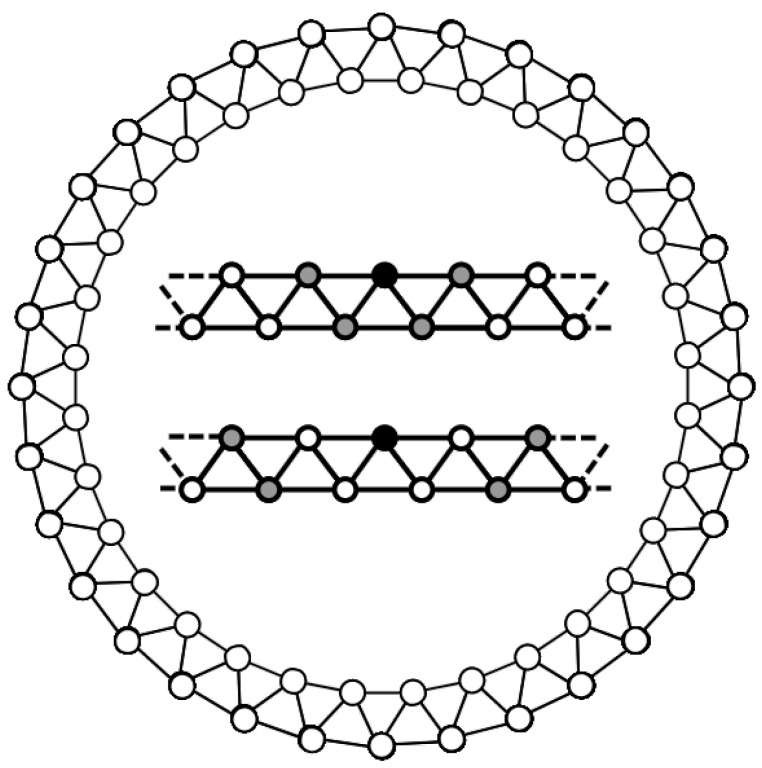 Figure 1
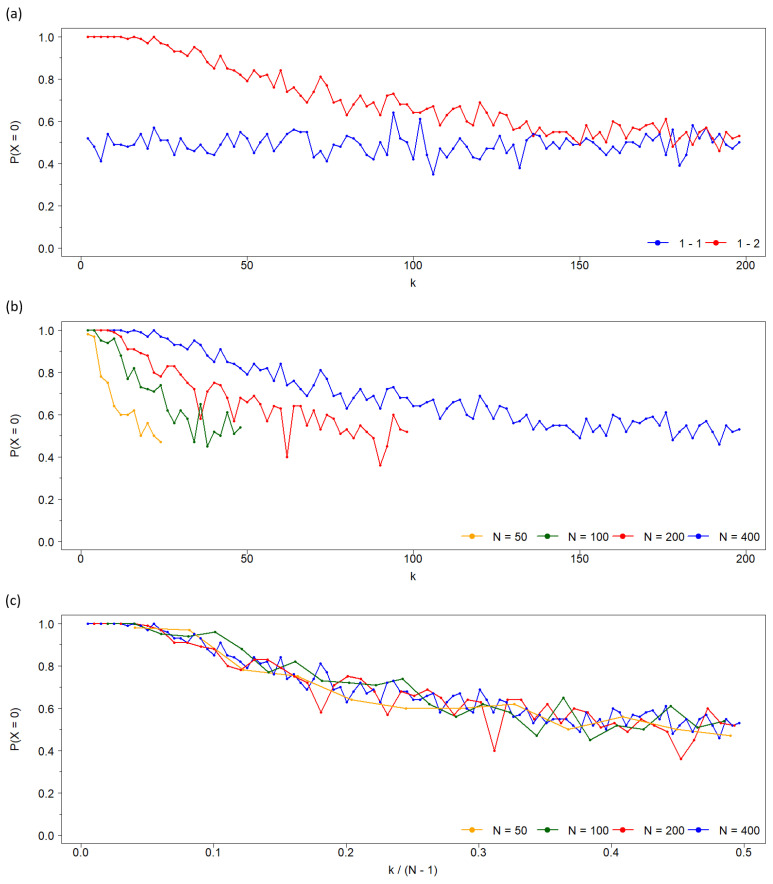 Figure 2
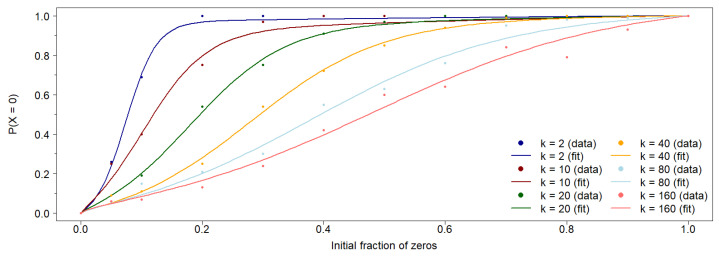 Figure 3
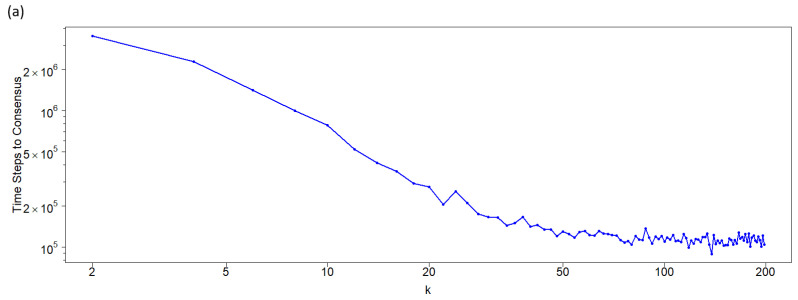 Figure 4
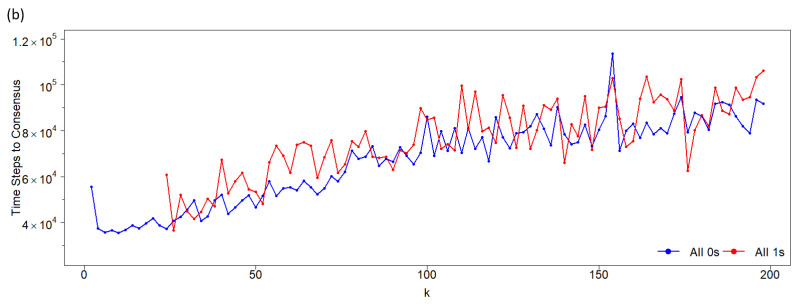 Figure 5
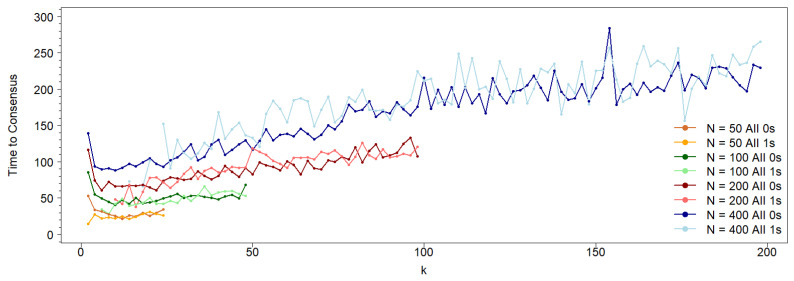 Figure 6
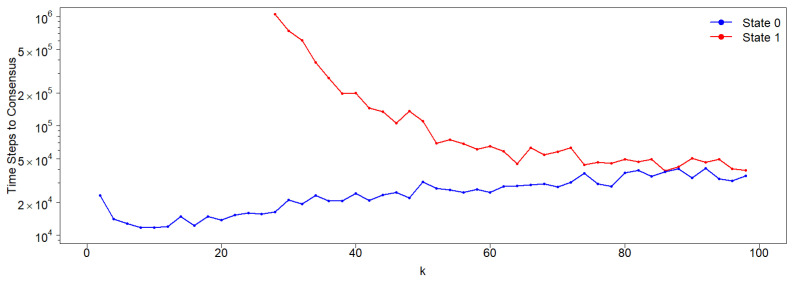 Figure 7
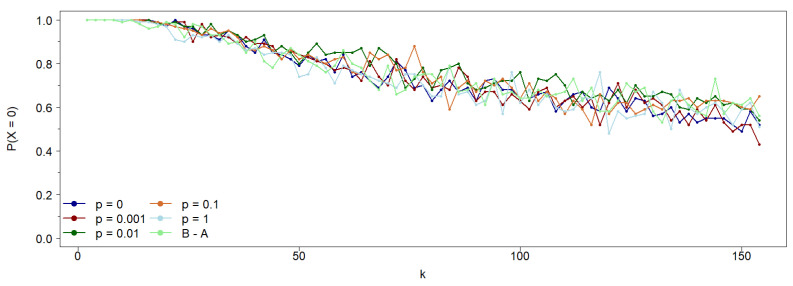 Figure 8
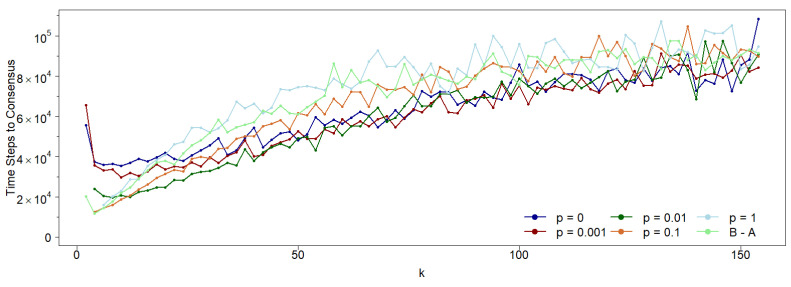 Figure 9
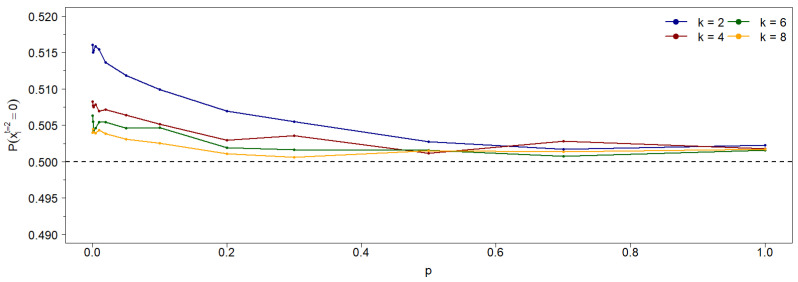 Figure 10
Peer Reviews
No public reviews on file for this paper yet. If you reviewed it on a platform where reviews are public (OpenReview, ICLR, NeurIPS, ICML), you can paste yours below so the community can read it here.
Videos
No videos yet. Explain this paper in a talk, walkthrough, or lecture? Add one.
Taxonomy
TopicsOpinion Dynamics and Social Influence · Social Media and Politics · Complex Network Analysis Techniques