Blood Melatonin in Breast Milk-Fed Preterm Infants: Longitudinal Biomonitoring to 38 Weeks’ Postmenstrual Age (ProMote Study)
Theano Kokkinaki, Manolis Tzatzarakis, Elena Vakonaki, Nicole Anagnostatou, Theano Roumeliotaki, Eleftherios Panteris, Maria Markodimitraki, Ioanna Kakatsaki, Haridimos Kondylakis, Aristidis Tsatsakis, Eleftheria Hatzidaki

TL;DR
The study tracks melatonin levels in preterm infants fed breast milk, finding significant individual variation without clear patterns linked to birth time, age, or weight.
Contribution
This is the first longitudinal study to assess morning blood melatonin in breast milk-fed preterm infants up to 38 weeks PMA.
Findings
Melatonin concentrations showed substantial individual variability among preterm infants.
No consistent differences in melatonin levels were found based on time of birth, PMA, or weight-for-gestational-age.
Umbilical cord melatonin levels were low and not significantly influenced by gestational age at birth.
Abstract
Background/Objectives: Melatonin, produced by the placenta and pineal gland, regulates circadian timing and has antioxidant and immunomodulatory actions. After birth, neonatal secretion is low and its circadian pattern matures over months; evidence in preterm neonates is mixed. We longitudinally monitored morning blood melatonin from birth to 38 weeks’ postmenstrual age (PMA) in breast milk-fed preterm neonates, assessing differences by time of birth (day vs. night), PMA, and weight-for-gestational-age (WfGA). Methods: A prospective NICU cohort, conducted within the ProMote study. In total, 132 preterm neonates were recruited from 112 mothers. For infants ≥33 weeks’ GA, three samples were obtained: umbilical cord (available in 94; otherwise at the first NICU admission), day of life (DOL) 4–7, and DOL 10–14; for infants <33 weeks’ GA, an additional sample at 35–36 weeks’ PMA. Melatonin…
Genes, proteins, chemicals, diseases, species, mutations and cell lines named across the full text — each resolved to its canonical identifier and authoritative record.
Click any figure to enlarge with its caption.
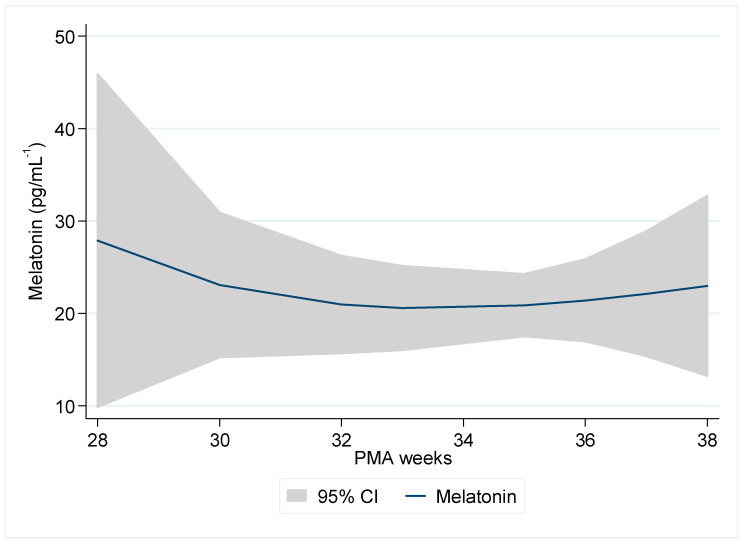 Figure 1
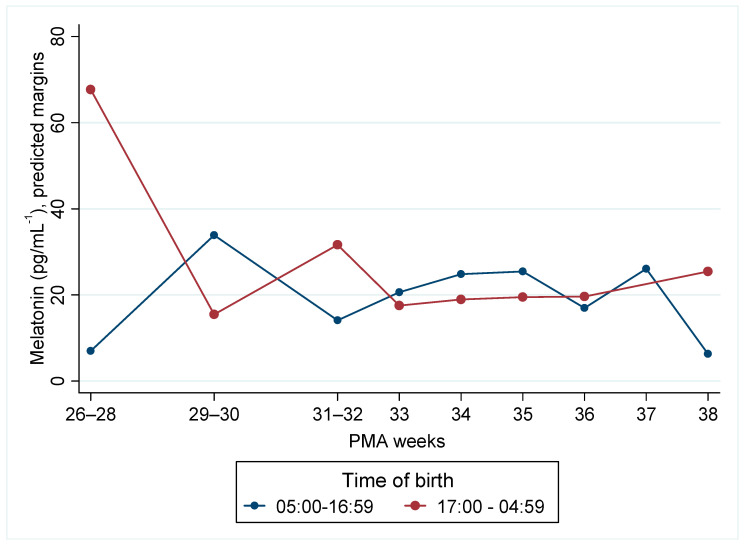 Figure 2
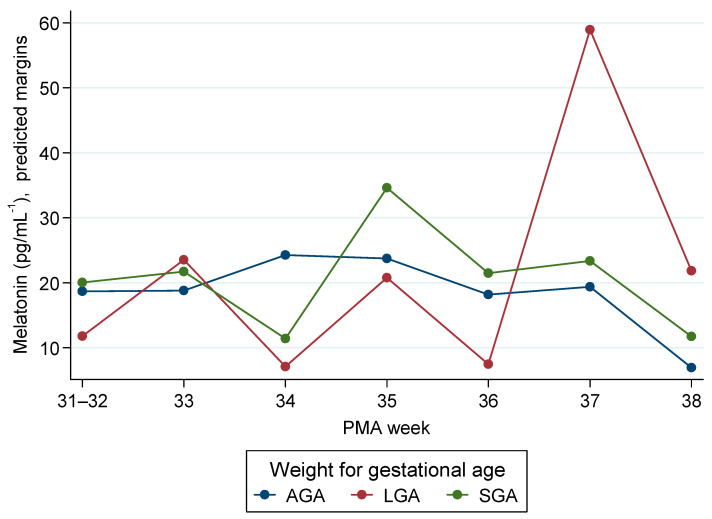 Figure 3
Peer Reviews
No public reviews on file for this paper yet. If you reviewed it on a platform where reviews are public (OpenReview, ICLR, NeurIPS, ICML), you can paste yours below so the community can read it here.
Videos
No videos yet. Explain this paper in a talk, walkthrough, or lecture? Add one.
Taxonomy
TopicsCircadian rhythm and melatonin · Health, Environment, Cognitive Aging · Neonatal Respiratory Health Research