Functional and Structural Connectivity Correlates of Axial Symptom Outcomes After Pallidal Deep Brain Stimulation in Parkinson’s Disease
Gilberto Perez Rodriguez Garcia, Erik Middlebrooks, Shanshan Mei, Takashi Tsuboi, Joshua Wong, Matthew Burns, Coralie de Hemptinne, Adolfo Ramirez-Zamora

TL;DR
This study explores how brain connectivity patterns relate to changes in axial gait symptoms after deep brain stimulation in Parkinson's disease patients.
Contribution
The study identifies specific connectivity patterns linked to axial gait improvement or worsening after GPi-DBS in Parkinson’s disease.
Findings
Axial improvement correlates with connectivity to sensorimotor and supplementary motor networks, including cerebellar lobules V and I–IV.
Worsening axial gait is associated with connectivity to cerebellar Crus II, cerebellum VIII, calcarine cortex, and thalamus.
Distinct connectivity profiles underlie different outcomes in axial and global motor symptoms following GPi-DBS.
Abstract
Background/Objectives: Deep brain stimulation (DBS) of the globus pallidus interna (GPi) is a safe and established therapy for management of refractory motor fluctuations and dyskinesia in Parkinson’s disease (PD). However, the relationship between stimulation site connectivity and improvement of axial gait symptoms remains poorly understood, particularly when stimulating in the GPi. This study investigated functional and structural connectivity patterns specifically associated with axial symptom outcomes following bilateral GPi-DBS, and, as a secondary exploratory analysis, examined whether Volumes of tissue activated (VTAs)-based connectivity related to overall UPDRS-III change. Methods: We retrospectively analyzed 19 PD patients who underwent bilateral GPi-DBS at the University of Florida (2002–2017). Unified Parkinson’s Disease Rating Scale (UPDRS-III) axial gait subscores were…
Genes, proteins, chemicals, diseases, species, mutations and cell lines named across the full text — each resolved to its canonical identifier and authoritative record.
Click any figure to enlarge with its caption.
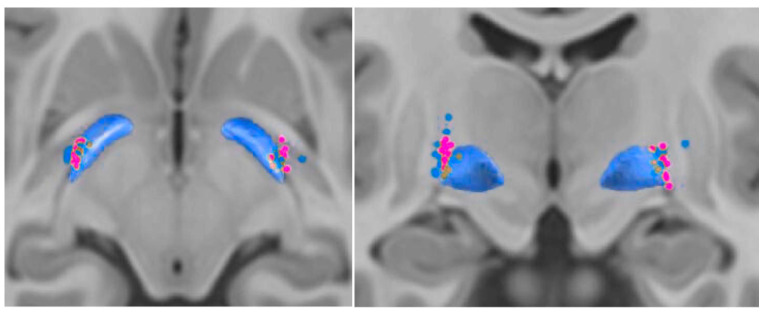 Figure 1
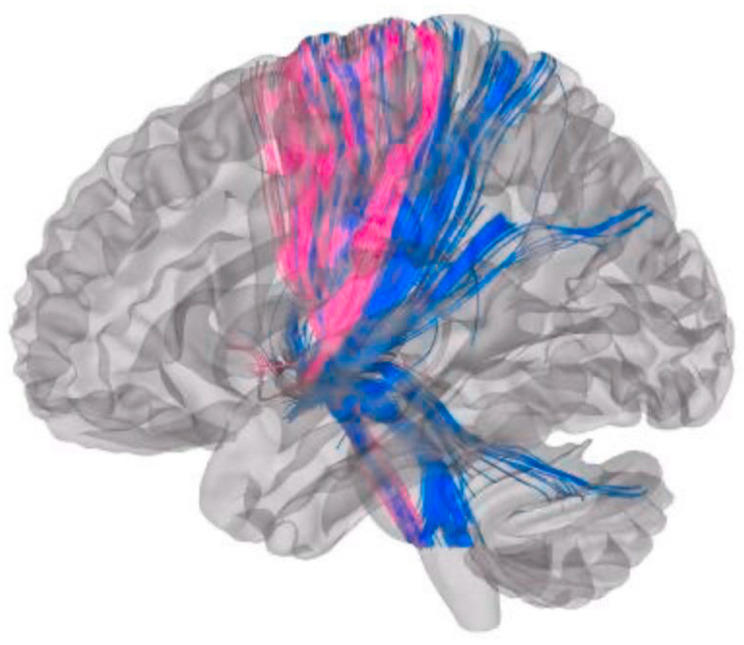 Figure 2
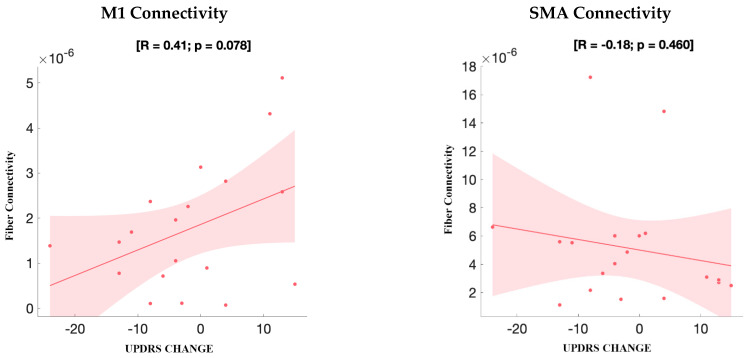 Figure 3
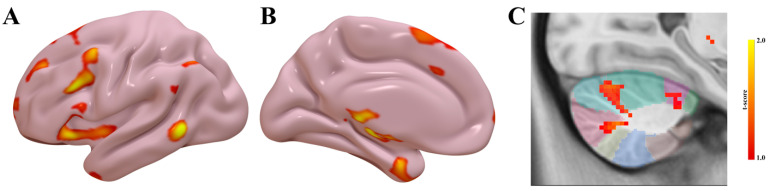 Figure 4
Peer Reviews
No public reviews on file for this paper yet. If you reviewed it on a platform where reviews are public (OpenReview, ICLR, NeurIPS, ICML), you can paste yours below so the community can read it here.
Videos
No videos yet. Explain this paper in a talk, walkthrough, or lecture? Add one.
Taxonomy
TopicsNeurological disorders and treatments · Parkinson's Disease Mechanisms and Treatments · Transcranial Magnetic Stimulation Studies