Comparative Evaluation of [68Ga]Ga-Fibroblast Activation Protein Inhibitor vs. [18F]FDG as a Novel Radiotracer for Biology-Guided Image Radiotherapy
Lin Qiu, Yue Chen, Trevor Ketcherside, Zhixing Wang, Todd DeWees, Terence M. Williams, Arya Amini, Sagus Sampath, Scott Glaser, Yi-Jen Chen, Liu Lin, David Leung, An Liu, Heather M. McGee

TL;DR
This study compares two radiotracers for biology-guided radiotherapy, finding that [68Ga]Ga-FAPI-04 outperforms [18F]FDG in several cancers.
Contribution
The first comparison of [68Ga]Ga-FAPI-04 and [18F]FDG for biology-guided radiotherapy, showing FAPI-04's superior performance.
Findings
NNA and NTS for [68Ga]Ga-FAPI-04 met BgRT requirements for all cancer types.
NNAFAPI was significantly higher than NNAFDG for pancreatic, H&N, and cervical cancer.
NTSFAPI was significantly higher than NTSFDG for pancreatic, liver, and lung cancer.
Abstract
Biology-guided radiotherapy (BgRT) uses PET radiotracer emissions as image guidance to deliver adaptive targeted radiation to tumors. Due to limitations of the PET radiotracer 18F-Fluorodeoxyglucose ([18F]FDG), there is significant interest in developing alternative radiotracers for BgRT. Fibroblast activation protein (FAP) is a transmembrane protein that is overexpressed in cancer-associated fibroblasts within multiple tumor types with minimal expression in normal tissues. Fibroblast activation protein inhibitors (FAPIs) bind avidly to FAP and can be labeled with a radiotracer such as Gallium-68 (68Ga). Multiple studies have compared [68Ga]Ga-FAPI-04 vs. [18F]FDG for diagnostic imaging, but no one has compared the utility of [68Ga]Ga-FAPI-04 vs. [18F]FDG for BgRT. This study was designed to compare calculated parameters from [68Ga]Ga-FAPI-04 vs. [18F]FDG PET-CT to determine if FAPI-04…
Genes, proteins, chemicals, diseases, species, mutations and cell lines named across the full text — each resolved to its canonical identifier and authoritative record.
Click any figure to enlarge with its caption.
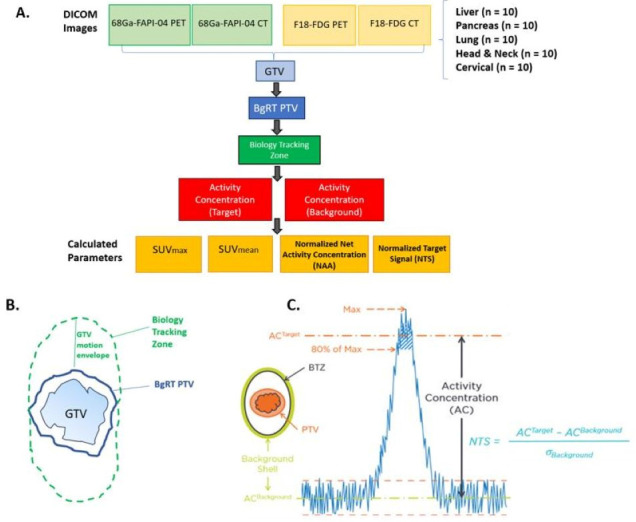 Figure 1
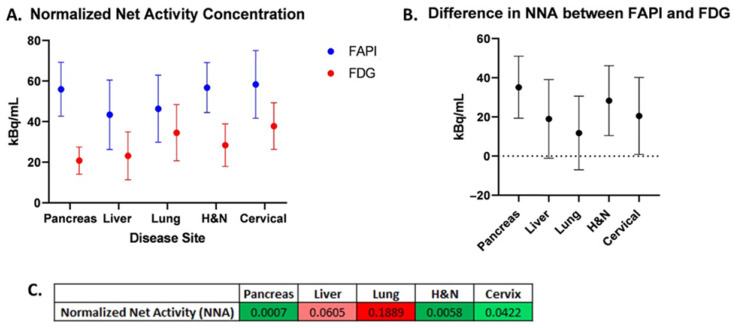 Figure 2
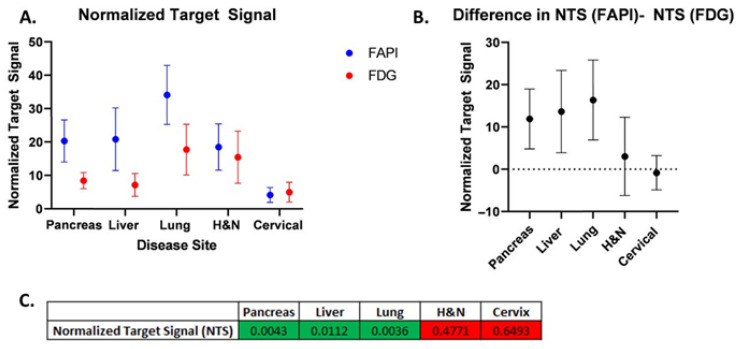 Figure 3
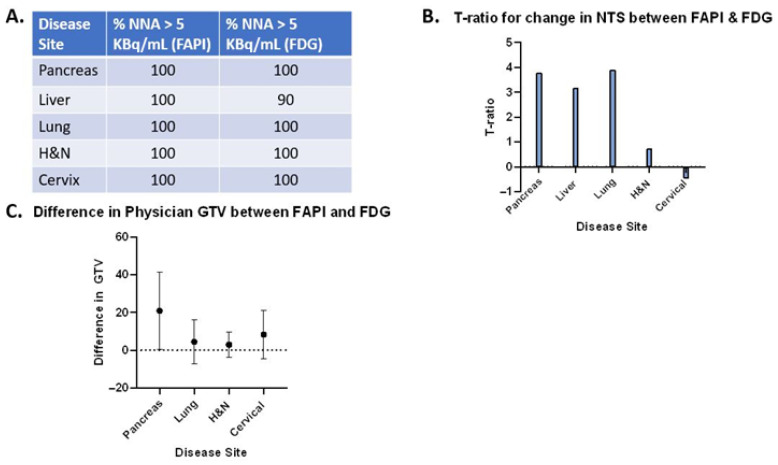 Figure 4
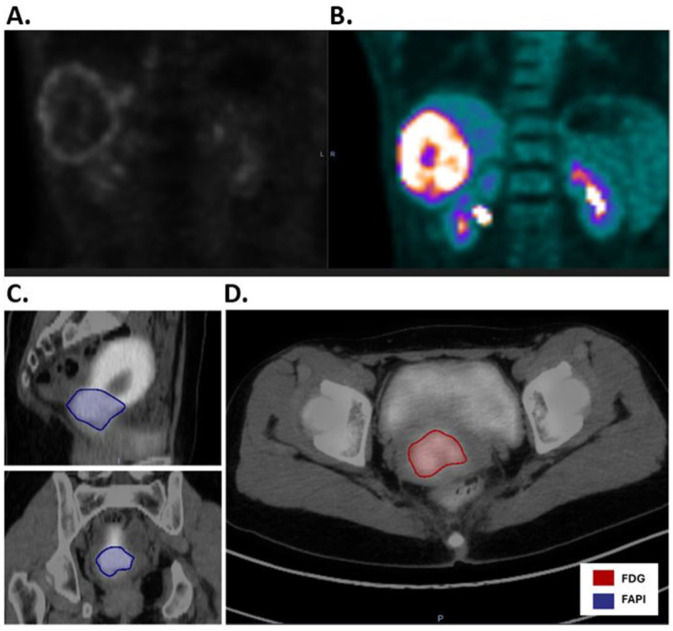 Figure 5
Peer Reviews
No public reviews on file for this paper yet. If you reviewed it on a platform where reviews are public (OpenReview, ICLR, NeurIPS, ICML), you can paste yours below so the community can read it here.
Videos
No videos yet. Explain this paper in a talk, walkthrough, or lecture? Add one.
Taxonomy
TopicsPeptidase Inhibition and Analysis · Heat shock proteins research · Histone Deacetylase Inhibitors Research