Using the Edmonton Symptom Assessment System (ESAS) to Describe Symptom Burden Associated with Breast Cancer and Related Treatments: A Cross-Sectional Study
Sofia Torres, Maureen Trudeau, Geoffrey Liu, Nicholas Mitsakakis, Ahmed M. Bayoumi

TL;DR
This study shows that many breast cancer patients, even those with early-stage disease, experience moderate to severe symptoms that require medical attention.
Contribution
The study highlights the importance of using the Edmonton Symptom Assessment System (ESAS) to identify clinically significant symptoms in breast cancer patients across all stages.
Findings
70% of breast cancer patients reported at least one moderate to severe symptom.
Tiredness, lack of well-being, and anxiety were the most common severe symptoms.
Threshold-based use of ESAS better identifies patient needs than mean scores.
Abstract
Breast cancer is the most common cancer among women. Many patients experience symptoms that affect their ability to function, including feeling tired, having low energy, experiencing anxiety, and an overall sense of not feeling well. While some women report only mild discomfort, many have symptoms that are moderate to severe and may require medical attention. In our study, we asked women who had a range of stages of breast cancer to report their symptoms and daily functioning. We found that about 7 out of 10 had at least one symptom that was strong enough to need extra care. Importantly, symptoms were common for both women with advanced breast cancer and for those with earlier-stage disease, who were expected to be cured. These findings show how important it is for doctors and nurses to ask patients directly about their symptoms during clinic visits. Regular symptom checks can help…
Genes, proteins, chemicals, diseases, species, mutations and cell lines named across the full text — each resolved to its canonical identifier and authoritative record.
Click any figure to enlarge with its caption.
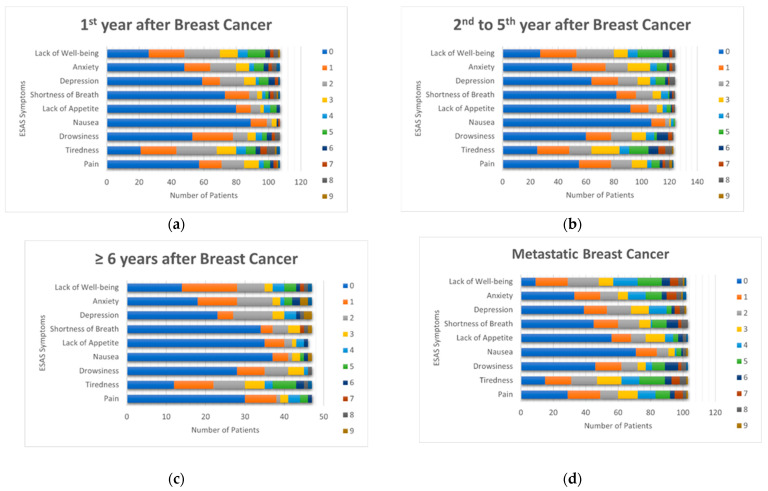 Figure 1
Peer Reviews
No public reviews on file for this paper yet. If you reviewed it on a platform where reviews are public (OpenReview, ICLR, NeurIPS, ICML), you can paste yours below so the community can read it here.
Videos
No videos yet. Explain this paper in a talk, walkthrough, or lecture? Add one.
Taxonomy
TopicsCancer survivorship and care · Cancer Treatment and Pharmacology · Breast Cancer Treatment Studies