A New Species of Macellicephaloides Uschakov, 1955 (Annelida, Polynoidae) from Cold Seeps in the South China Sea: Insights into the Taxonomy and Phylogeny of Macellicephaloides and Related Genera
Jie Li, Linlin Zhang, Mingxiao Wang, Xuwen Wu

TL;DR
A new deep-sea worm species is discovered in the South China Sea, offering insights into the evolution and classification of similar species in extreme environments.
Contribution
The discovery of a new Macellicephaloides species and phylogenetic analysis clarifying its evolutionary relationships with related genera.
Findings
A new species, Macellicephaloides lingshuiensis, was found in cold seeps in the South China Sea, the shallowest record for the genus.
Genetic analyses suggest Macellicephaloides and Macellicephala form separate evolutionary clades, challenging prior classifications.
The study highlights a close evolutionary link between deep-sea Macellicephaloides and cave-dwelling polynoids, indicating ecological connections.
Abstract
Macellicephaloides Uschakov, 1955 (Annelida: Polynoidae) is a genus of deep-sea polychaetes characterized by a specialized pharynx bearing two pairs of jaws (with the dorsal pair fused) and three pairs of lateral papillae, the middle pair of which is greatly elongated, and remarkable adaptability to diverse deep-sea habitats. Most species in this genus inhabit abyssal depths (>7200 m), with high diversity in western Pacific trenches, while a few occur in relatively shallow habitats such as deep-sea seamounts and hydrothermal vents. This paper presents a new species, Macellicephaloides lingshuiensis sp. nov., found in deep-sea cold seeps in the South China Sea, representing the shallowest distribution record for the genus to date and the first record from cold seep environments. The classification and phylogeny of Macellicephaloides and related genera have long been the subject of…
Genes, proteins, chemicals, diseases, species, mutations and cell lines named across the full text — each resolved to its canonical identifier and authoritative record.
Click any figure to enlarge with its caption.
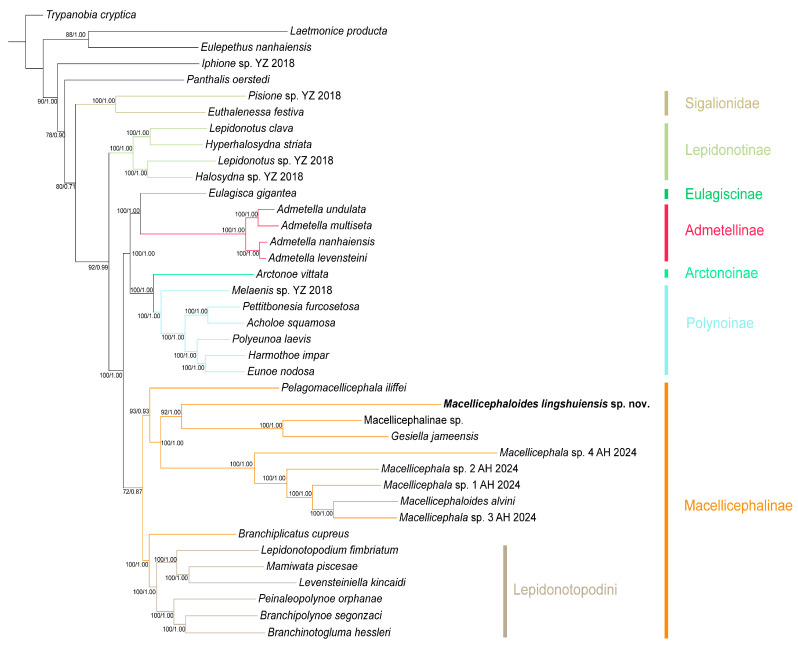 Figure 1
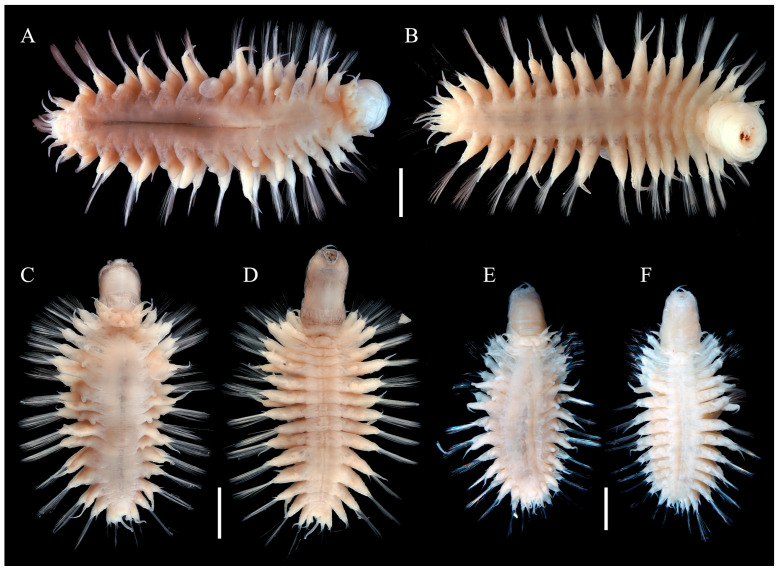 Figure 2
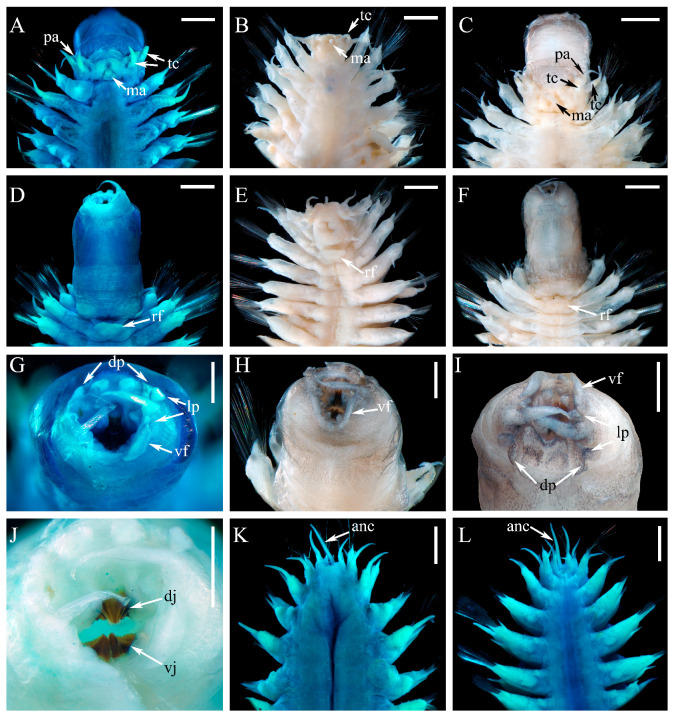 Figure 3
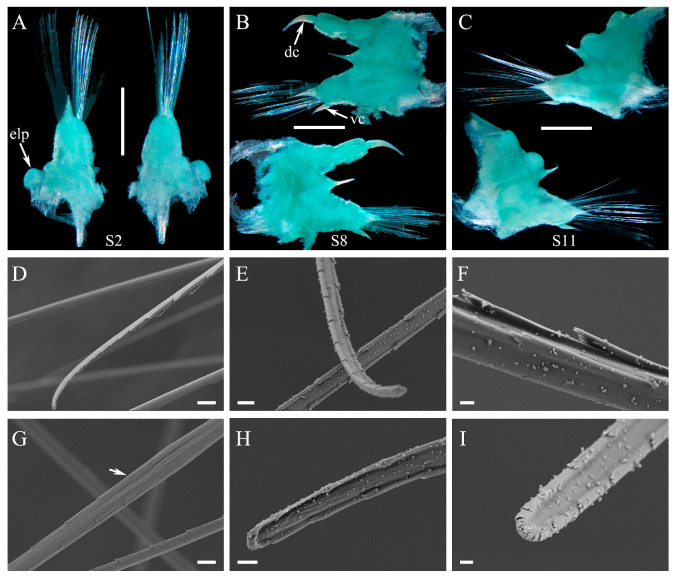 Figure 4
Peer Reviews
No public reviews on file for this paper yet. If you reviewed it on a platform where reviews are public (OpenReview, ICLR, NeurIPS, ICML), you can paste yours below so the community can read it here.
Videos
No videos yet. Explain this paper in a talk, walkthrough, or lecture? Add one.
Taxonomy
TopicsMarine Biology and Ecology Research · Subterranean biodiversity and taxonomy · Environmental DNA in Biodiversity Studies