Protective Effects of Quinic Acid Against Disuse-Induced Skeletal Muscle Atrophy via Regulation of Inflammation and Oxidative Stress
Mi-Bo Kim, Hyerin Lee, Junhui Kang, Bohkyung Kim, Jae-Kwan Hwang

TL;DR
Quinic acid helps prevent muscle loss from disuse by reducing inflammation and oxidative stress, and improving muscle function in mice.
Contribution
This study reveals quinic acid's novel ability to counteract disuse-induced muscle atrophy through multiple biological pathways.
Findings
Oral quinic acid restored muscle weight and function in immobilized mice.
Quinic acid reduced pro-inflammatory cytokines and E3 ubiquitin ligases in atrophic muscles.
Quinic acid reactivated key signaling pathways for protein synthesis and myogenesis.
Abstract
Disuse-induced muscle atrophy (DMA), commonly resulting from immobilization, is driven by chronic inflammation and oxidative stress, which disrupts the balance between protein synthesis and degradation. Quinic acid (QA), a natural compound with known antioxidant and anti-inflammatory properties, was investigated for its potential to counteract muscle atrophy. Using a DMA-induced immobilization model in male C57BL/6N (8 weeks) mice, we found that oral QA administration significantly restored the weight and cross-sectional area of atrophic muscles and improved muscle function, as measured by grip strength and treadmill performance. QA also reduced the expression of pro-inflammatory cytokines (Tnf, Il6, and Myostatin) and E3 ubiquitin ligases (Trim63 and Fbxo32), while increasing antioxidant enzyme levels and serum IL-15 in DMA. In tumor necrosis factor-α-stimulated L6 myotubes, QA…
Genes, proteins, chemicals, diseases, species, mutations and cell lines named across the full text — each resolved to its canonical identifier and authoritative record.
Click any figure to enlarge with its caption.
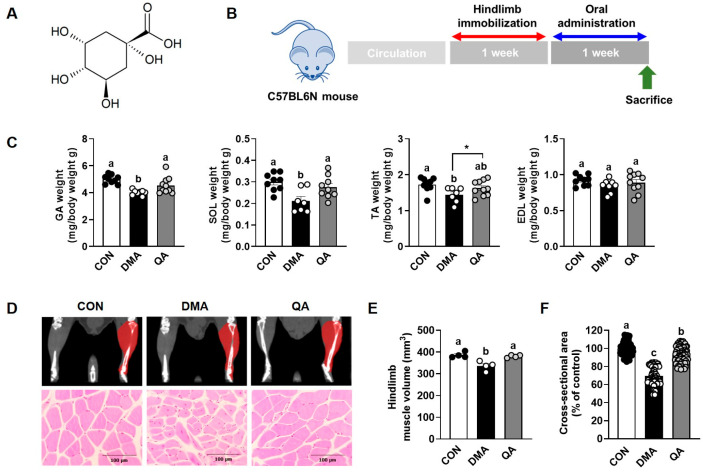 Figure 1
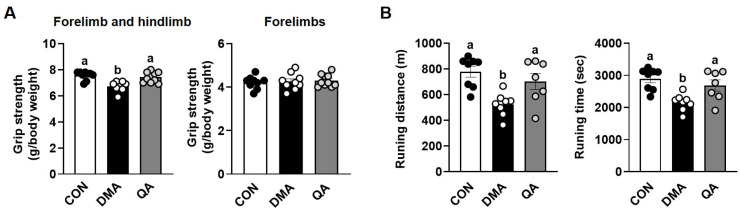 Figure 2
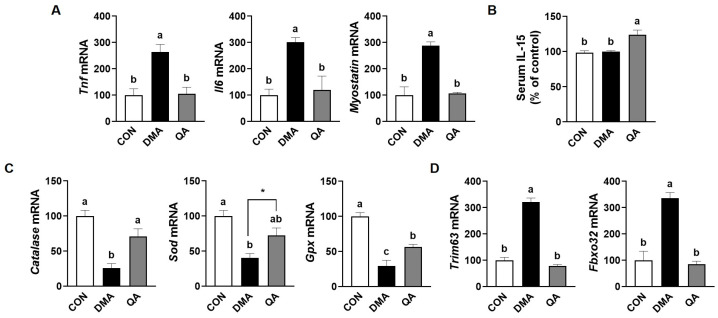 Figure 3
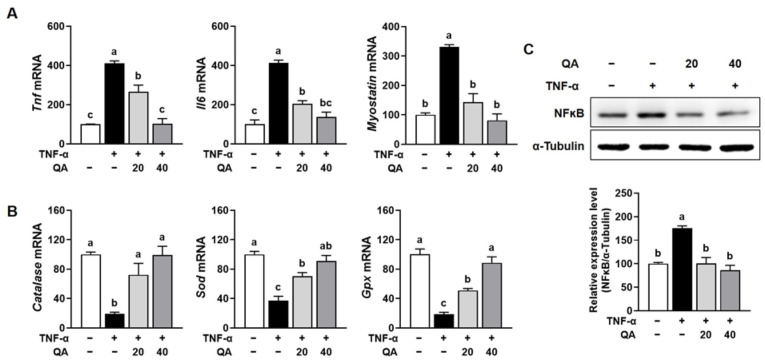 Figure 4
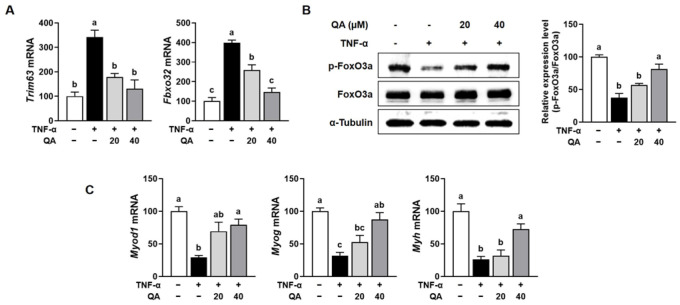 Figure 5
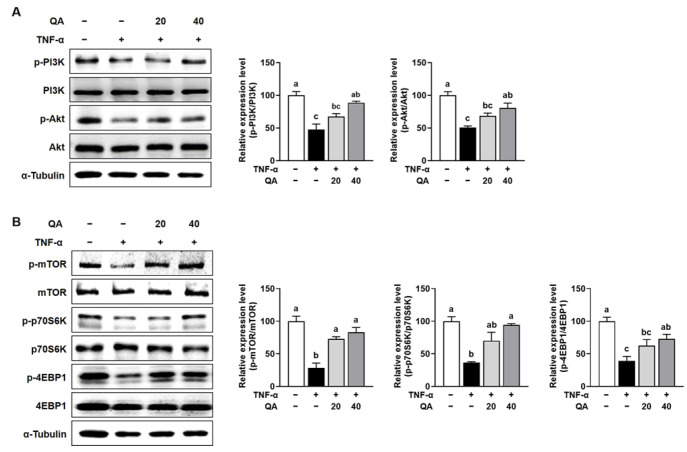 Figure 6
Peer Reviews
No public reviews on file for this paper yet. If you reviewed it on a platform where reviews are public (OpenReview, ICLR, NeurIPS, ICML), you can paste yours below so the community can read it here.
Videos
No videos yet. Explain this paper in a talk, walkthrough, or lecture? Add one.
Taxonomy
TopicsMuscle Physiology and Disorders · Exercise and Physiological Responses · Cardiovascular and exercise physiology