Genomic and Biological Insights of Bacteriophage ΦBc24 Targeting Bacillus cereus
Nam Khang Tran, Pham Thi Lanh, Trang Trinh Thu, Man Hong Phuoc, Nguyen Dinh Duy, Vu Thi Hien, Dong Van Quyen

TL;DR
Researchers discovered a new bacteriophage, ΦBc24, that effectively targets and kills Bacillus cereus, a foodborne pathogen, and could be used as a safe biocontrol agent.
Contribution
The study introduces ΦBc24, a novel lytic bacteriophage with high stability and a narrow host range, suitable for biocontrol of B. cereus.
Findings
ΦBc24 has a latent period of 10 min and a burst size of 40 PFU per infected cell.
The phage genome is 160,311 bp with 39.48% GC content and 269 ORFs, lacking virulence or resistance genes.
ΦBc24 belongs to the genus Caeruleovirus and is stable under various environmental conditions.
Abstract
Foodborne illnesses associated with Bacillus cereus represent a persistent public health concern. In this study, we described the isolation and characterization of a novel bacteriophage, ΦBc24, from mud samples, which showed lytic activity against foodborne pathogen B. cereus. Transmission electron microscopy revealed that ΦBc24 exhibited a myovirus morphotype. Biological assays demonstrated that its narrow host range was restricted to B. cereus strains and efficient lytic activity, characterized by a latent period of 10 min and a burst size of 40 PFU per infected cell. The phage exhibited high physicochemical stability, tolerating pH values of 2–12, temperatures of 4–50 °C, salinity up to 1 M NaCl, and ultraviolet exposure, while effectively suppressing host bacterial growth for up to six hours. Whole-genome sequencing showed that phage ΦBc24 possessed a double-stranded DNA genome of…
Genes, proteins, chemicals, diseases, species, mutations and cell lines named across the full text — each resolved to its canonical identifier and authoritative record.
Click any figure to enlarge with its caption.
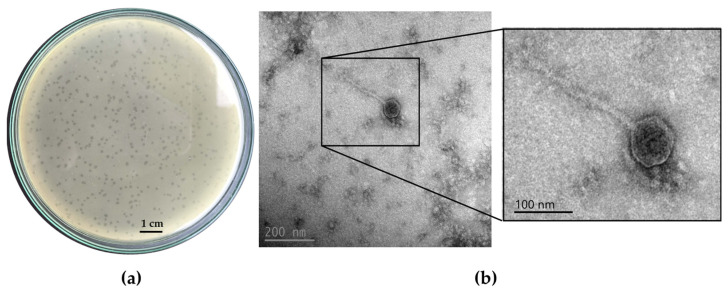 Figure 1
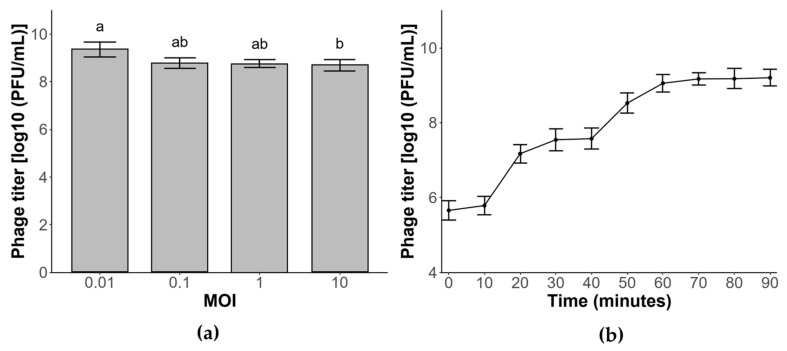 Figure 2
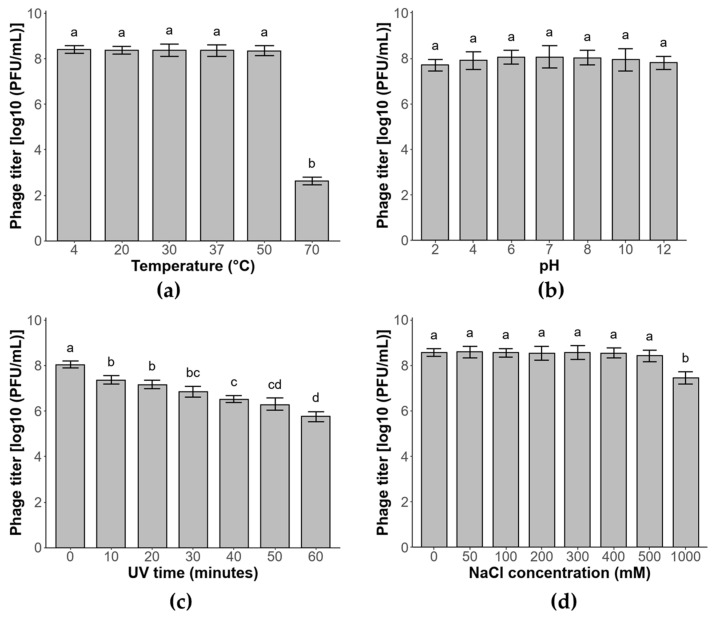 Figure 3
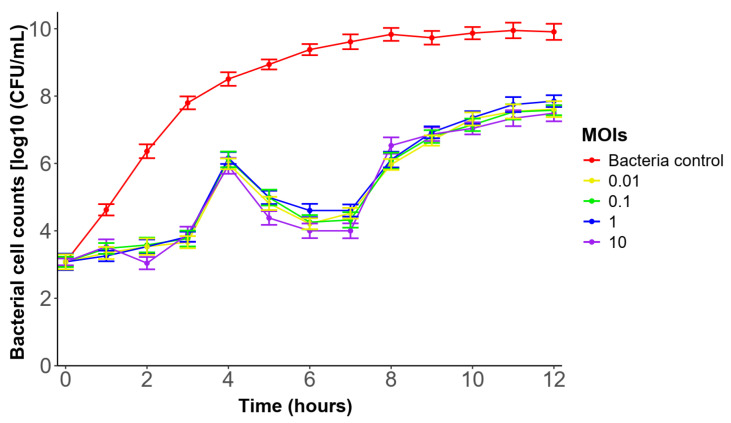 Figure 4
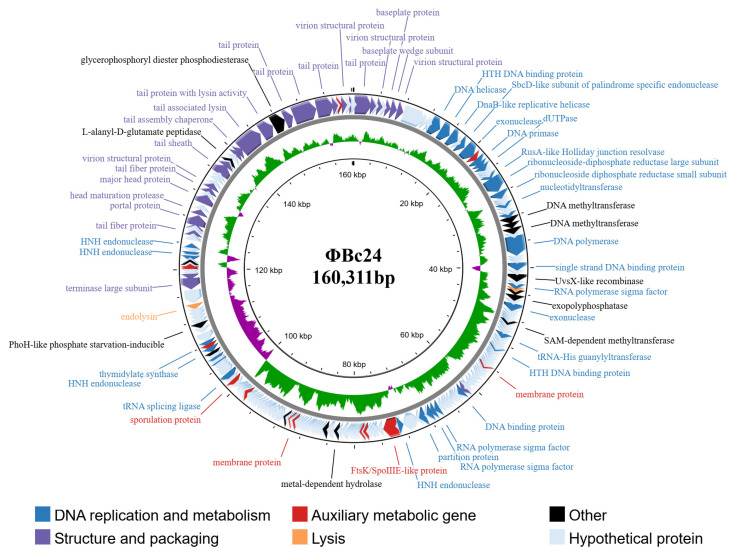 Figure 5
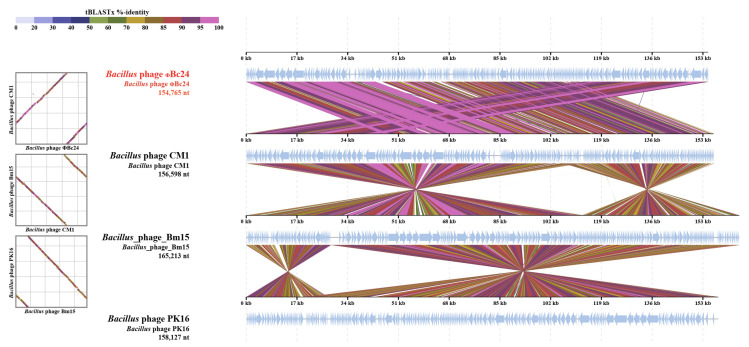 Figure 6
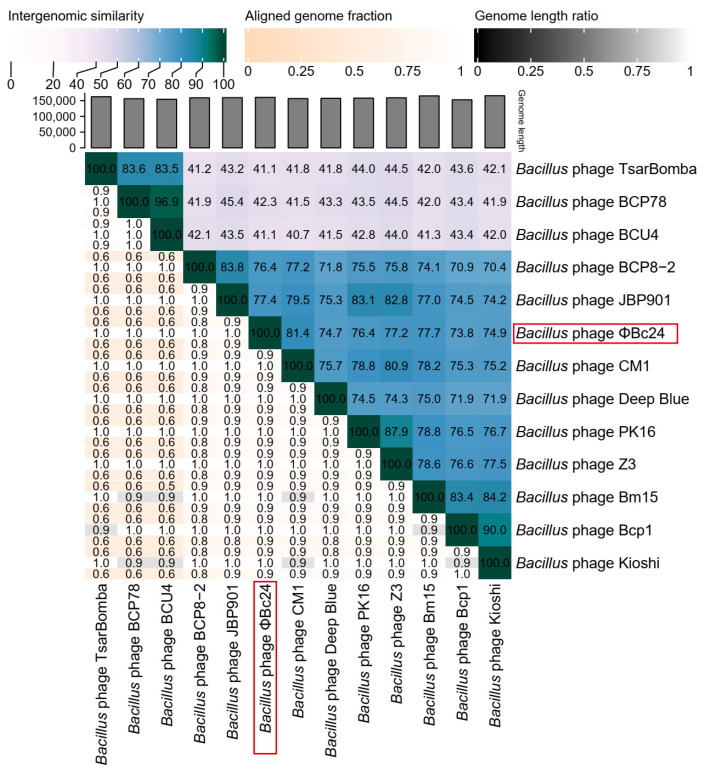 Figure 7
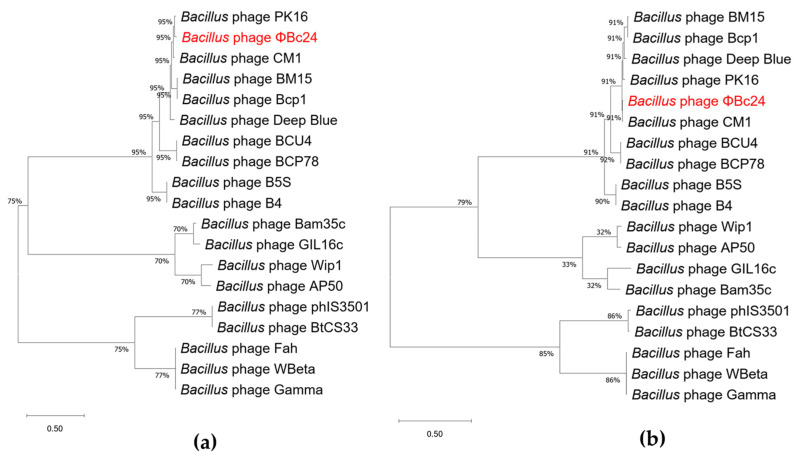 Figure 8
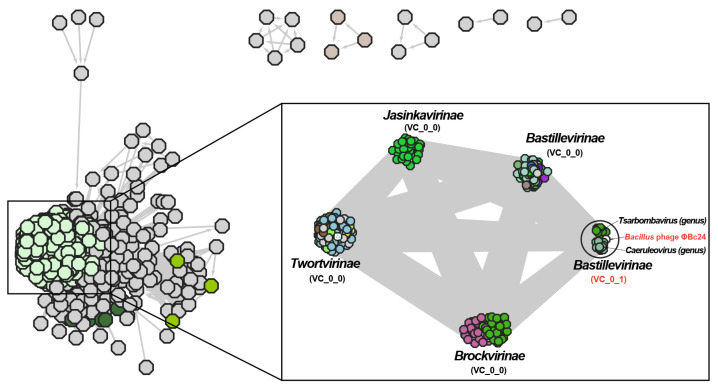 Figure 9
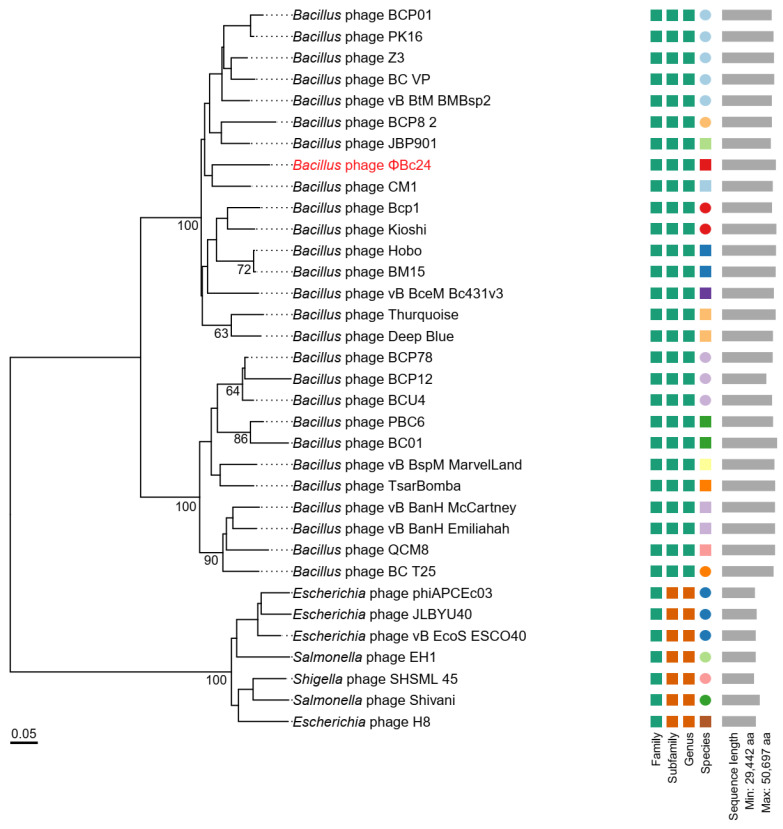 Figure 10
Peer Reviews
No public reviews on file for this paper yet. If you reviewed it on a platform where reviews are public (OpenReview, ICLR, NeurIPS, ICML), you can paste yours below so the community can read it here.
Videos
No videos yet. Explain this paper in a talk, walkthrough, or lecture? Add one.
Taxonomy
TopicsBacteriophages and microbial interactions · Bacillus and Francisella bacterial research · Bacterial Genetics and Biotechnology