Maternal and Fetal SERPINA3 Polymorphisms and Risk of Preeclampsia: A Dyad and Triad Based Case-Control Study
Hsi-Hsuan Yang, Claire Baldauf, Trevor A. Pickering, Håkon K. Gjessing, Sue Ann Ingles, Melissa Lee Wilson

TL;DR
This study investigates how genetic variations in the SERPINA3 gene in mothers and babies relate to pregnancy complications like preeclampsia and HELLP syndrome.
Contribution
The study identifies parent-of-origin effects of SERPINA3 polymorphisms in maternal hypertensive disorders and suggests maternal-fetal genomic incompatibility.
Findings
No significant association was found between SERPINA3 SNPs or haplotypes and preeclampsia or HELLP syndrome.
Child carriage of maternally inherited rs4934 alleles was linked to reduced risk of HDPs/sPE/HELLP.
Paternally inherited rs4934 alleles in children were associated with increased risk of HDPs/sPE/HELLP.
Abstract
Serine protease inhibitor A3 (SERPINA3), also called α-1-antichymotrypsin, is a serine protease involved in placental dysfunction. This study examines SERPINA3 polymorphisms and haplotypes for associations with maternal hypertensive disorders of pregnancy (HDPs) and preeclampsia with severe features (sPE) or Hemolysis, Elevated Liver Enzymes, and Low Platelet (HELLP) syndrome in mother–baby dyads (HDP) and mother–father–baby triads (sPE/HELLP). This retrospective case–control study examined two patient cohorts, HDPs and severe PE/HELLP syndrome. The HDP population included cases (n = 142) and controls (n = 168) of mother–baby dyads recruited from a large, urban, safety-net hospital in Los Angeles. The sPE/HELLP syndrome population included cases (n = 189) and controls (n = 28) of mother–father–baby triads recruited through HELLP syndrome research websites. Cases were verified by medical…
Genes, proteins, chemicals, diseases, species, mutations and cell lines named across the full text — each resolved to its canonical identifier and authoritative record.
Click any figure to enlarge with its caption.
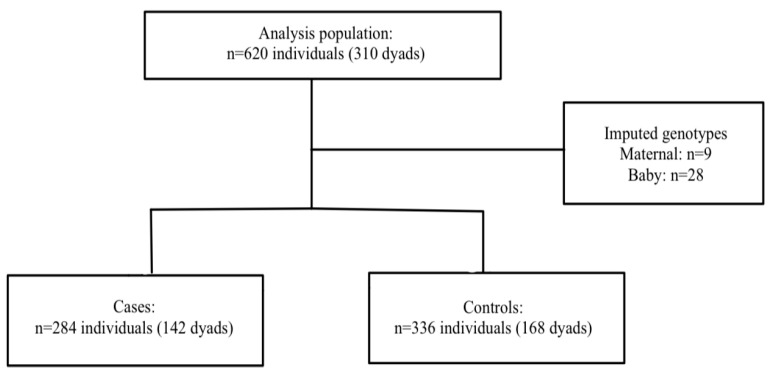 Figure 1
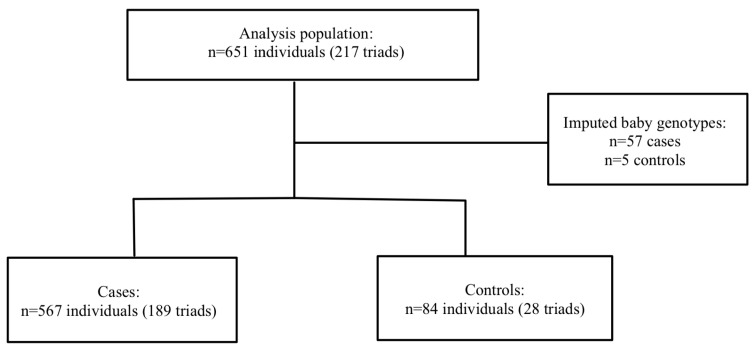 Figure 2
Peer Reviews
No public reviews on file for this paper yet. If you reviewed it on a platform where reviews are public (OpenReview, ICLR, NeurIPS, ICML), you can paste yours below so the community can read it here.
Videos
No videos yet. Explain this paper in a talk, walkthrough, or lecture? Add one.
Taxonomy
TopicsPregnancy and preeclampsia studies · Blood Coagulation and Thrombosis Mechanisms · Maternal and fetal healthcare