Descriptive Genomic Analysis of Ampullary Carcinoma Utilizing the AACR Project GENIE Dataset
Samantha Martin, Blake Recupido, Elijah Torbenson, Beau Hsia, Marco Braaten, Abubakar Tauseef

TL;DR
This study uses a large genomic database to describe the genetic mutations in ampullary carcinoma, a rare cancer, and identifies patterns that could help in developing targeted treatments.
Contribution
The study provides a detailed genomic analysis of ampullary carcinoma using the AACR Project GENIE dataset, revealing key mutations and their associations.
Findings
TP53, KRAS, and SMAD4 were the most frequently mutated genes in ampullary carcinoma.
KRAS and ERBB2 mutations showed significant mutual exclusivity, while certain mutations co-occurred frequently.
TP53 or KRAS mutations were associated with reduced survival rates in patients.
Abstract
Background: Ampullary cancer is a rare biliary tract cancer arising from one of the three epithelial tissues in the region. Leveraging a large patient-level genomic database, this study aims to identify, explore, and describe the genetic landscape of ampullary carcinoma and its implications. Methods: A retrospective analysis of ampullary cancer samples was conducted using the AACR Project GENIE database. Analysis of recurrent somatic mutations at large and between patient populations, and co-occurrence and mutual exclusivity of mutations was conducted, with a p-value < 0.05. Results: The most frequent mutations were identified as TP53 (53.2%), KRAS (46.6%), and SMAD4 (16.6%). Mutational differences were noted between sexes, White vs. Non-white groups, and histopathological subtypes. Significant mutual exclusivity was found between KRAS and ERBB2. Co-occurrence was observed in the ARID1A…
Genes, proteins, chemicals, diseases, species, mutations and cell lines named across the full text — each resolved to its canonical identifier and authoritative record.
Click any figure to enlarge with its caption.
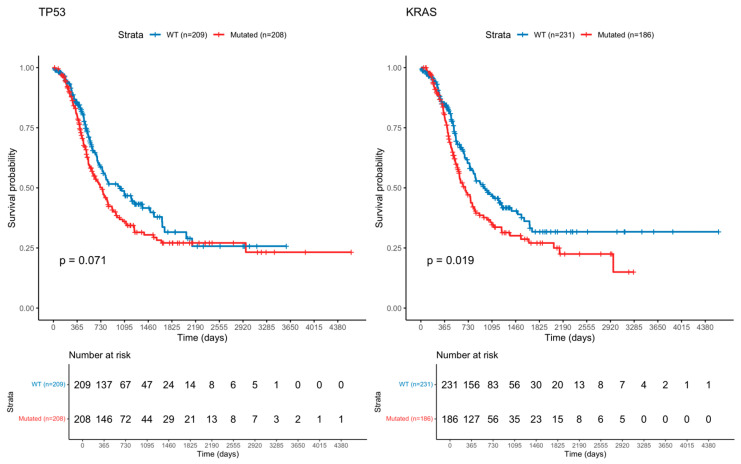 Figure 1
Peer Reviews
No public reviews on file for this paper yet. If you reviewed it on a platform where reviews are public (OpenReview, ICLR, NeurIPS, ICML), you can paste yours below so the community can read it here.
Videos
No videos yet. Explain this paper in a talk, walkthrough, or lecture? Add one.
Taxonomy
TopicsPancreatic and Hepatic Oncology Research · Cholangiocarcinoma and Gallbladder Cancer Studies · Gallbladder and Bile Duct Disorders