CNPY3 Promotes Human Breast Cancer Progression and Metastasis via Modulation of the Tumor Microenvironment
Xiaofeng Duan, Ran Zhao, Shaoli Sun, Beichu Guo, Zihai Li, Bei Liu

TL;DR
This study shows that CNPY3 promotes breast cancer growth and spread by affecting the tumor environment, suggesting it could be a new treatment target.
Contribution
This is the first study to demonstrate that CNPY3 deletion reduces breast cancer tumor growth and metastasis in experimental models.
Findings
CNPY3 and GRP94 are overexpressed in breast cancer tissues compared to normal tissue.
Deleting CNPY3 reduces tumor growth and metastasis in vitro and in vivo.
CNPY3 and GRP94 influence the unfolded protein response and immune-related gene pathways.
Abstract
Canopy FGF signaling regulator 3 (CNPY3) is a cochaperone of the molecular chaperone GRP94. CNPY3 is critical for the post-translational maturation of toll-like receptors and for regulating inflammasome signaling. However, the role of CNPY3 in cancer development and progression is still not fully understood. In this study, we aimed to investigate the role of CNPY3 in human breast cancer progression and metastasis. We used genomic and clinical information from multiple databases to profile CNPY3 and GRP94 in human cancers. We found that CNPY3 and GRP94 were elevated in human breast cancers compared to normal tissue. Higher expression of CNPY3 correlated with cancer progression and poor clinical outcomes in breast cancers. We confirmed these findings using a human breast cancer tissue array. We silenced CNPY3 in human breast cancer cells using a CRISPR/Cas9 system. For the first time, we…
Genes, proteins, chemicals, diseases, species, mutations and cell lines named across the full text — each resolved to its canonical identifier and authoritative record.
Click any figure to enlarge with its caption.
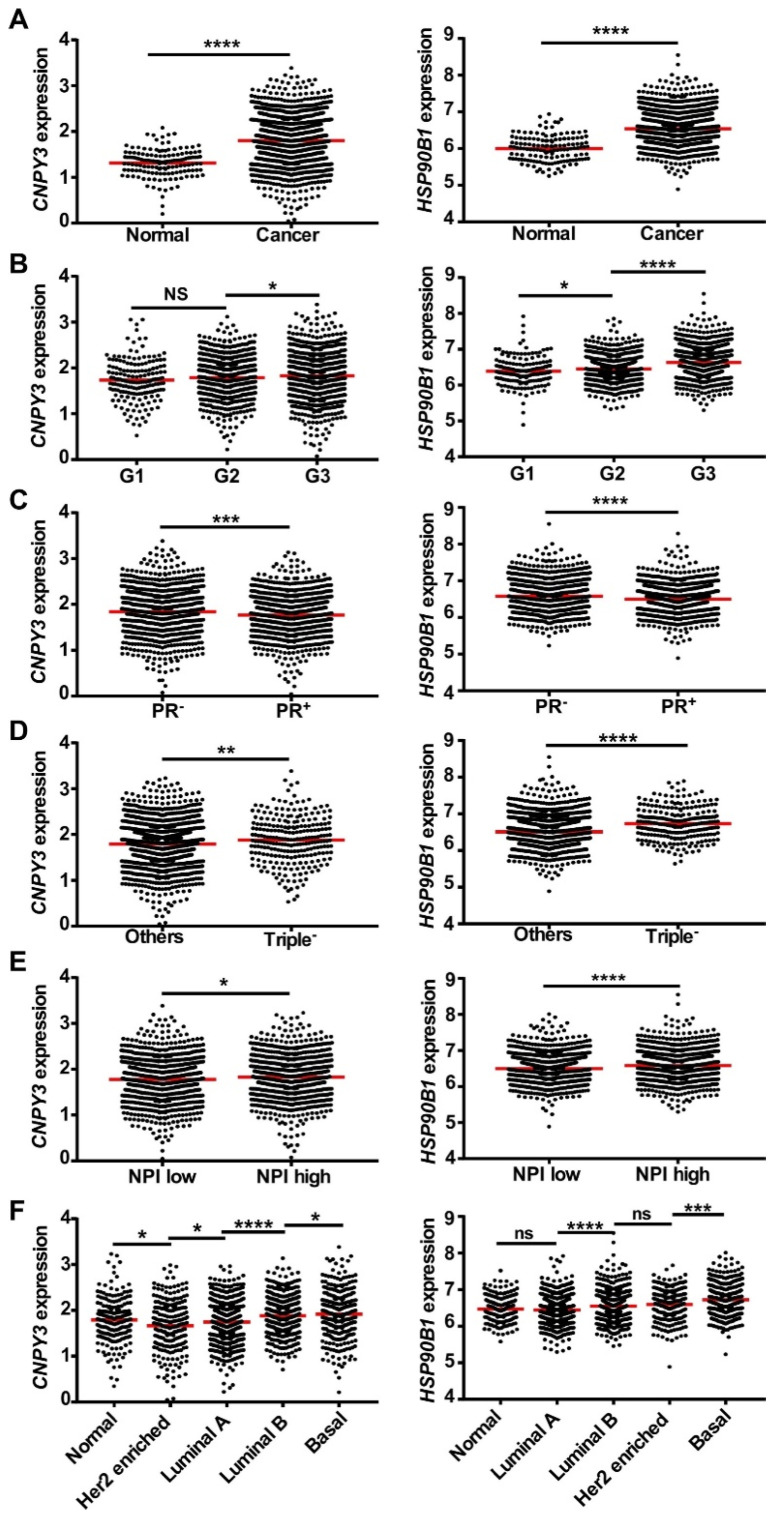 Figure 1
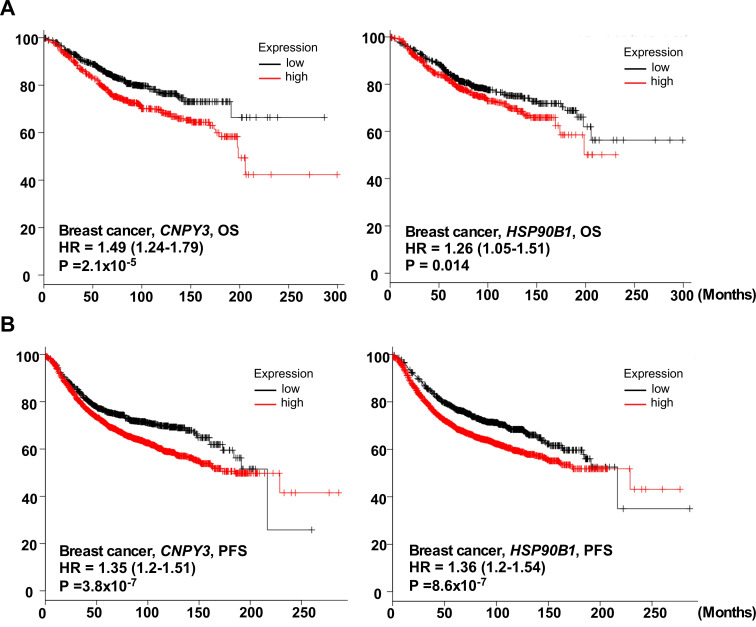 Figure 2
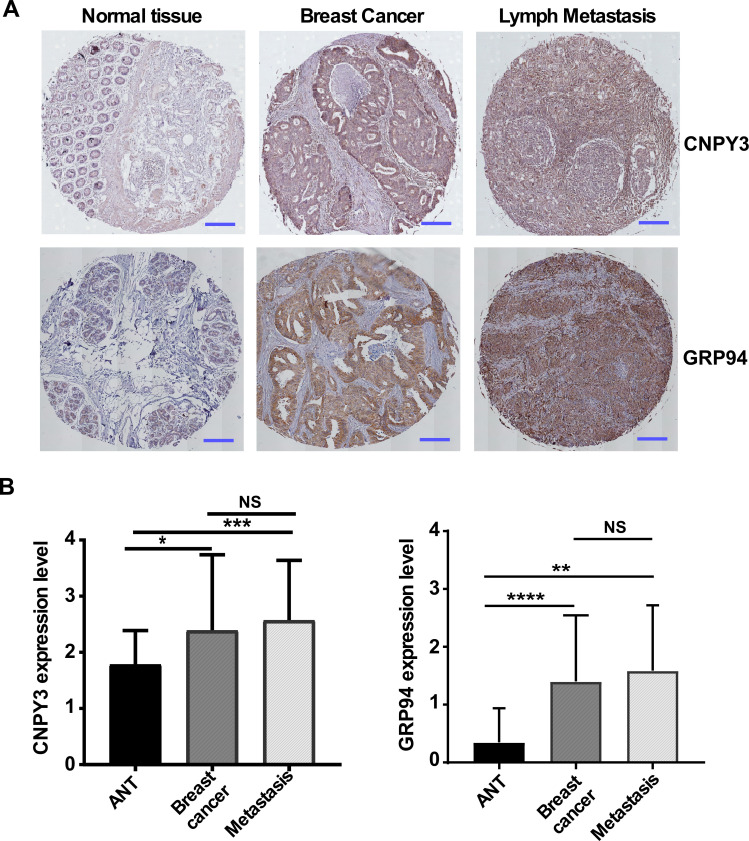 Figure 3
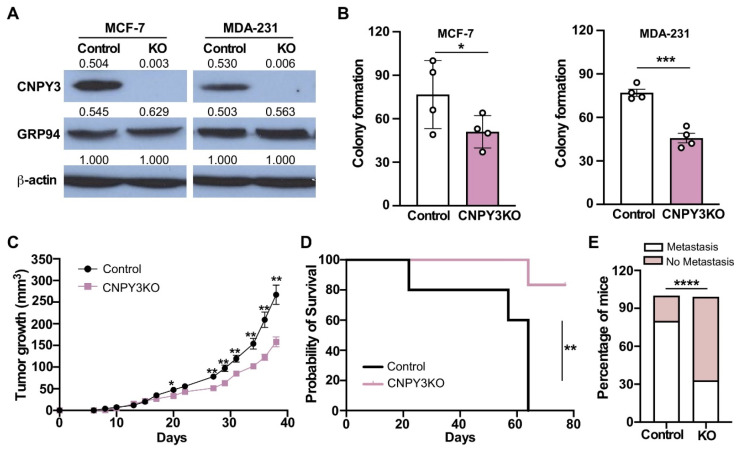 Figure 4
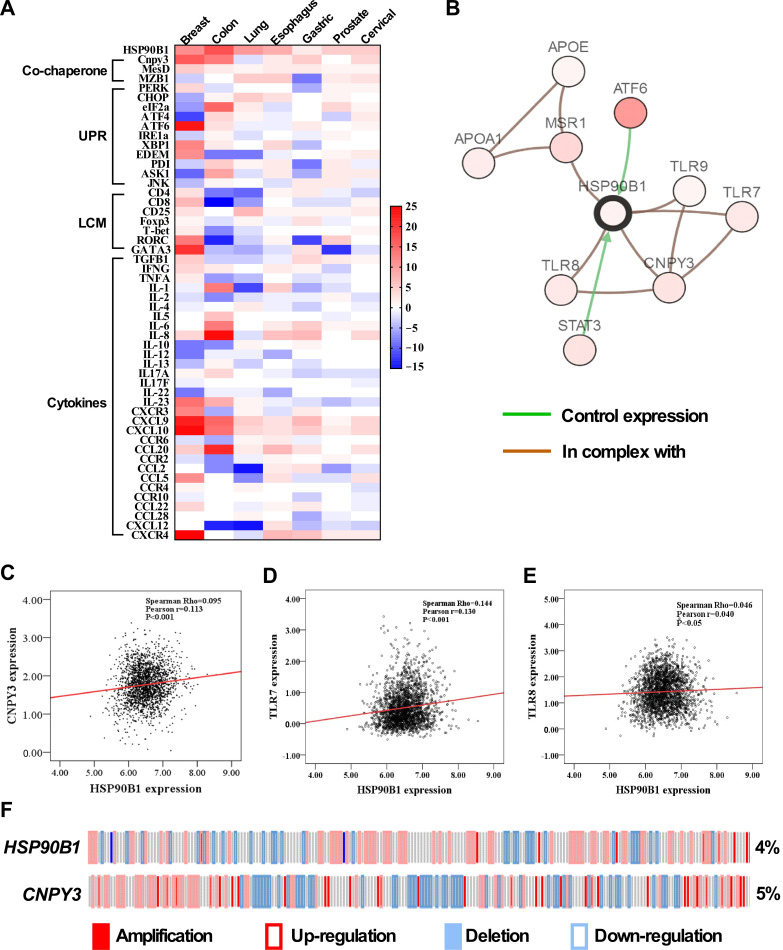 Figure 5
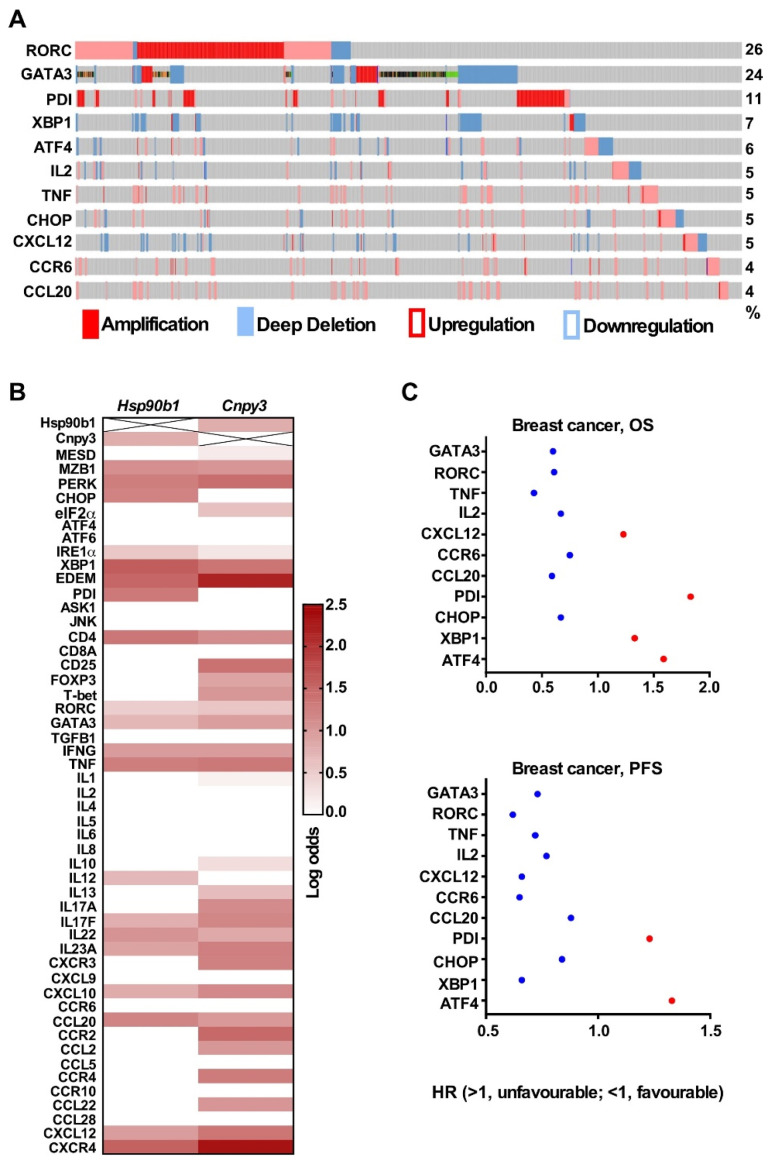 Figure 6
Peer Reviews
No public reviews on file for this paper yet. If you reviewed it on a platform where reviews are public (OpenReview, ICLR, NeurIPS, ICML), you can paste yours below so the community can read it here.
Videos
No videos yet. Explain this paper in a talk, walkthrough, or lecture? Add one.
Taxonomy
TopicsSignaling Pathways in Disease · Heat shock proteins research · Protein Tyrosine Phosphatases