Real-World Effectiveness of DIMS Spectacle Lenses for Myopia Control in a Turkish Pediatric Population: A Retrospective Study Using Age-Specific Physiological Growth Curves
Nilay Akagun, Ugur Emrah Altiparmak

TL;DR
This study shows that DIMS lenses help control myopia in Turkish children, with baseline eye length and age predicting treatment success.
Contribution
The study introduces age-specific physiological growth curves to assess DIMS lens effectiveness in a real-world pediatric population.
Findings
DIMS lenses reduced axial elongation and myopia progression in 85.2% of eyes based on SER success.
Baseline axial length and age were significant predictors of treatment outcomes.
Children aged 10 and older had better AL-based responses compared to younger children.
Abstract
Background/Objectives: This study aimed to evaluate the one-year real-world effectiveness of Defocus Incorporated Multiple Segments (DIMS) spectacle lenses in controlling myopia progression in a Turkish pediatric cohort and to identify predictors of treatment response using age-specific physiological growth curves. Methods: This retrospective single-center study included 54 patients (108 eyes) aged 6–16 years with myopia who wore DIMS spectacle lenses full time for 12 months. The primary outcomes were spherical equivalent refraction (SER) success and axial length (AL)-based treatment response. Treatment success was defined as an SER progression of ≤0.50 dioptres per year and AL elongation within age-specific physiological limits. Subgroup analyses were performed according to age, gender, and the baseline AL group. Results: After 12 months, the mean AL elongation was 0.14 ± 0.31 mm, and…
Genes, proteins, chemicals, diseases, species, mutations and cell lines named across the full text — each resolved to its canonical identifier and authoritative record.
Click any figure to enlarge with its caption.
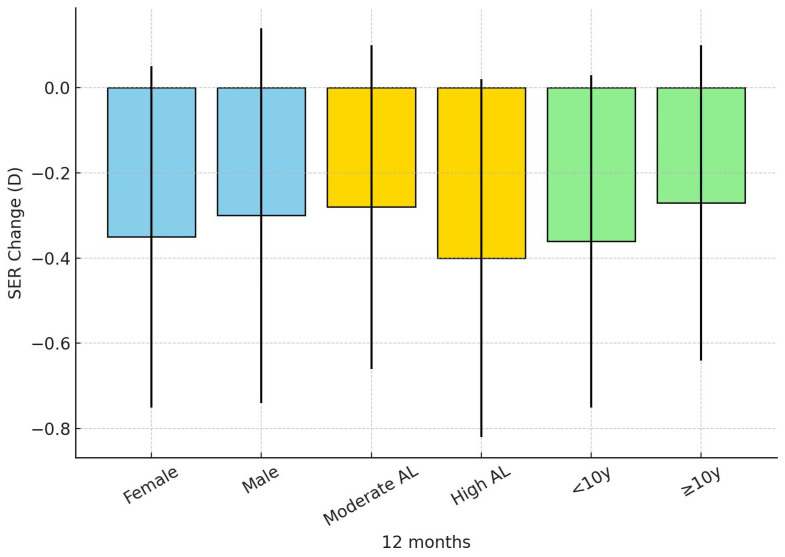 Figure 1
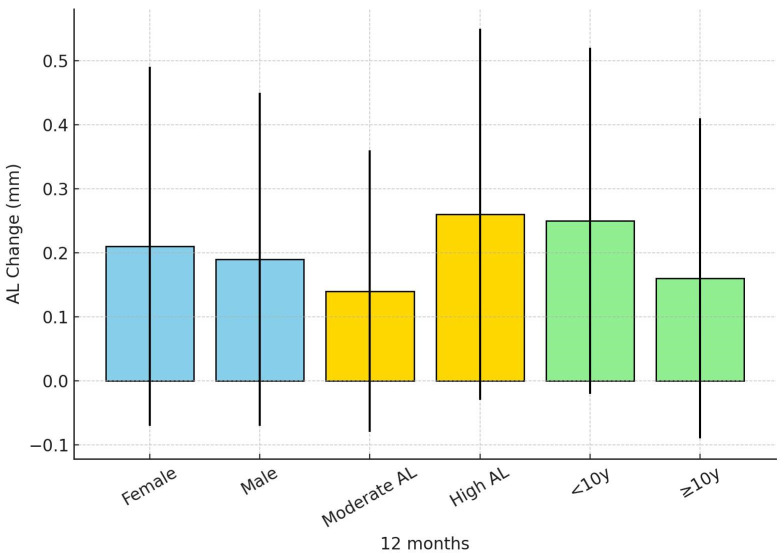 Figure 2
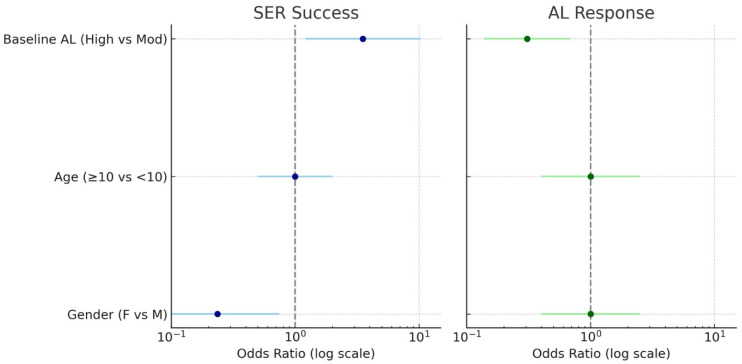 Figure 3
Peer Reviews
No public reviews on file for this paper yet. If you reviewed it on a platform where reviews are public (OpenReview, ICLR, NeurIPS, ICML), you can paste yours below so the community can read it here.
Videos
No videos yet. Explain this paper in a talk, walkthrough, or lecture? Add one.
Taxonomy
TopicsOphthalmology and Visual Impairment Studies · Corneal surgery and disorders · Ocular Surface and Contact Lens