Relationship Between Virulence Factor Activities, Cytotoxicity of Candida albicans Strains Isolated from Oral Cavity, and Cytokine Production by Oral Keratinocytes Exposed to Those Strains
Kanako Yano, Hiromi Nishi, Hideo Shigeishi, Yoshino Kaneyasu, Yoshie Niitani, Honami Kitasaki, Hiroyuki Kawaguchi, Megumi Takamoto, Fumie Shiba, Toshinobu Takemoto, Kouji Ohta

TL;DR
This study explores how different strains of Candida albicans affect oral cells and cytokine production, finding strong links between cytotoxicity and specific immune responses.
Contribution
The study identifies specific correlations between C. albicans cytotoxicity and cytokine production by oral keratinocytes, revealing new insights into immune responses.
Findings
Cytotoxicity of C. albicans strains positively correlates with IL-1β and IL-8 production by oral keratinocytes.
No significant correlations were found between biofilm formation, phospholipase production, and cytokine levels.
IL-8 shows positive correlations with CXCL1 and GM-CSF, suggesting possible shared signaling pathways.
Abstract
Objectives: Oral candidiasis is commonly caused by Candida albicans, which possesses virulence factors and shows cytotoxic activity that affects oral keratinocytes. On the other hand, oral keratinocytes are known to induce immune responses against C. albicans infection. The aim of the present study was to investigate the relationships of various cytokines produced from oral keratinocytes with virulence factor activities and cytotoxicity of C. albicans strains. Methods: Following the determination of the amounts of cytokines (IL-1β, IL-8, TNF-α, CCL20, CXCL1, GM-CSF) produced by oral keratinocytes when exposed to 87 different C. albicans strains, relationships of the amounts of those cytokines from oral keratinocytes with biofilm formation, phospholipase production, and C. albicans cytotoxicity were examined using Spearman correlation analysis. Results: Positive correlations of the…
Genes, proteins, chemicals, diseases, species, mutations and cell lines named across the full text — each resolved to its canonical identifier and authoritative record.
Click any figure to enlarge with its caption.
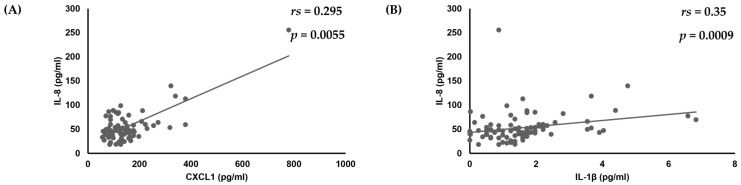 Figure 1
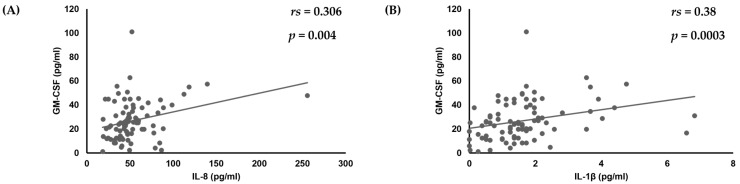 Figure 2
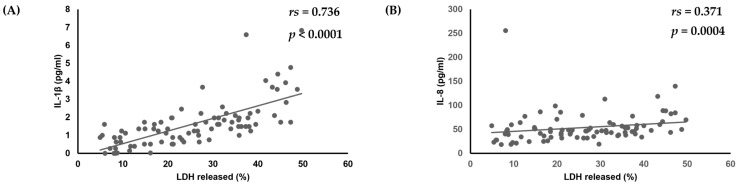 Figure 3
Peer Reviews
No public reviews on file for this paper yet. If you reviewed it on a platform where reviews are public (OpenReview, ICLR, NeurIPS, ICML), you can paste yours below so the community can read it here.
Videos
No videos yet. Explain this paper in a talk, walkthrough, or lecture? Add one.
Taxonomy
TopicsAntifungal resistance and susceptibility · Oral microbiology and periodontitis research · Fungal Infections and Studies