Radiosensitization Effect of PARP Inhibitor Talazoparib Involves Decreasing Mitochondrial Membrane Potential and Induction of Cellular Senescence
Barkha Saraswat, Ankitha Vadi Velu, Zhongming Gao, Zongxiang Zhang, Haoyang Zhu, Ying Tong, Mitsuko Masutani

TL;DR
This study shows that the PARP inhibitor talazoparib, when combined with radiation, increases cancer cell sensitivity by reducing mitochondrial function and inducing cell aging.
Contribution
The novel finding is that talazoparib's radiosensitization effect involves p21-dependent cellular senescence and mitochondrial disruption.
Findings
Talazoparib showed radiosensitization effects at the lowest concentration among tested PARP inhibitors.
Combining talazoparib with γ-irradiation induced cellular senescence and reduced mitochondrial membrane potential.
p21 gene knockdown attenuated both mitochondrial and senescence effects, indicating p21's role in radiosensitization.
Abstract
Poly (ADP-ribose) polymerase (PARP) inhibitors (PARPis) with radiation therapy can enhance the sensitivity of cancer cells by inhibiting DNA repair pathways. To determine the most suitable PARP inhibitor for radiosensitization in cancer cells, we compared various types of clinically used PARPis in lung cancer A549 cells. We found that most PARP inhibitors showed radiosensitization effects on A549 cells. ER10 values for talazoparib, olaparib rucaparib, ABT888 and niraparib were 1.5, 1.8, 2.8, 1.4, and 1.4, respectively. Talazoparib showed a radiosensitization effect at its lowest concentration. Talazoparib is a potent PARP inhibitor and has been used in clinical settings for several types of cancer as an anti-cancer agent. We thus focused on how talazoparib causes radiosensitization in lung cancer A549 cells. As a result of the combination of talazoparib and γ-irradiation, we observed an…
Genes, proteins, chemicals, diseases, species, mutations and cell lines named across the full text — each resolved to its canonical identifier and authoritative record.
Click any figure to enlarge with its caption.
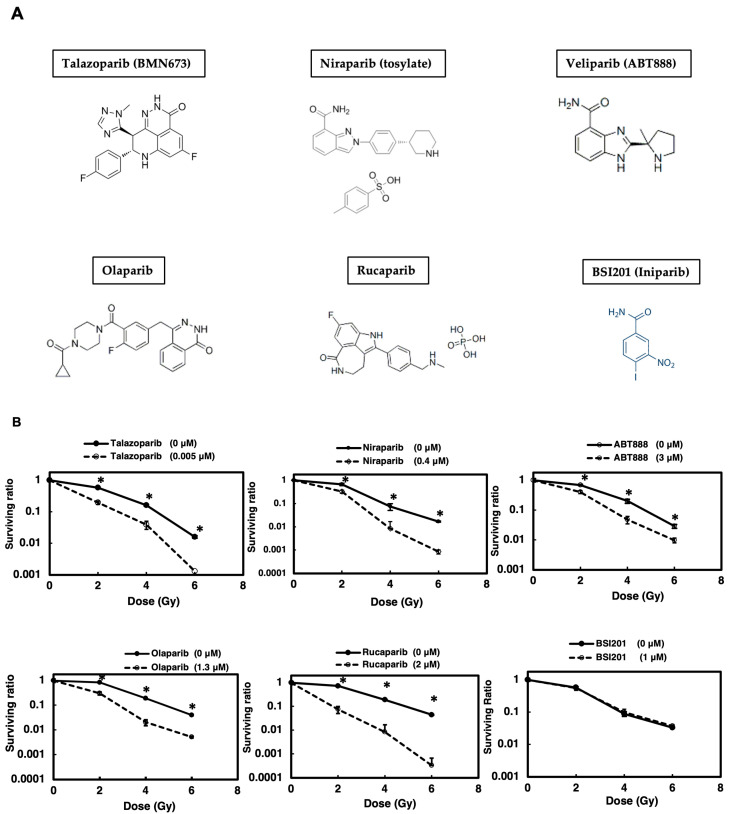 Figure 1
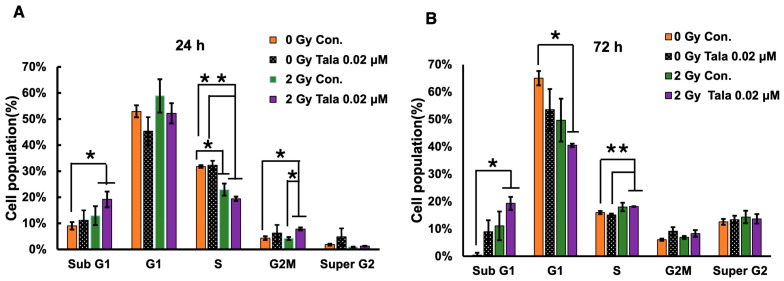 Figure 2
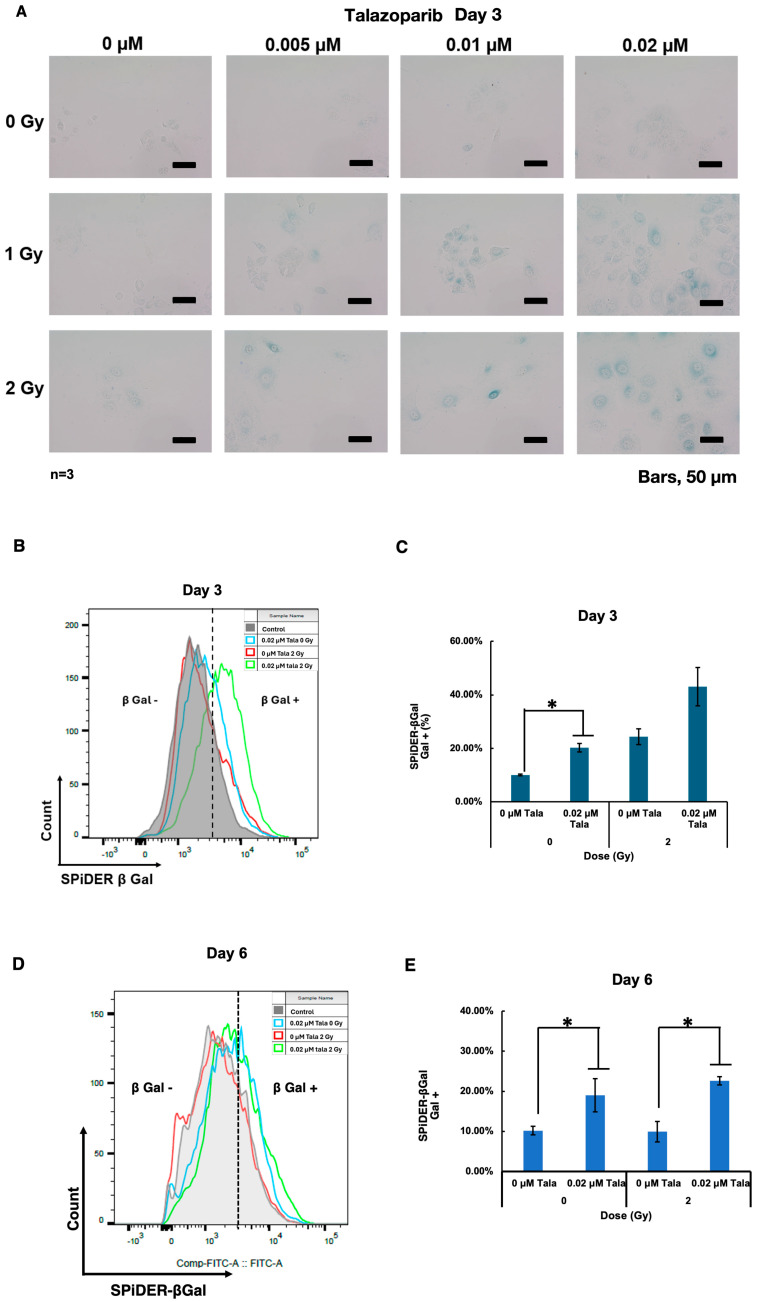 Figure 3
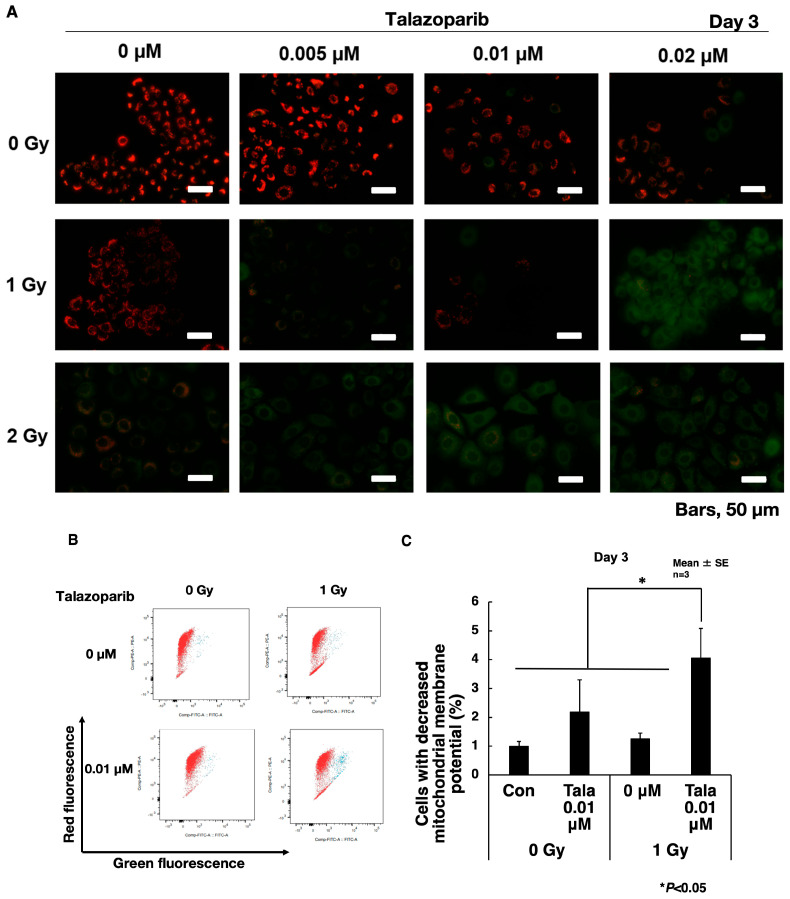 Figure 4
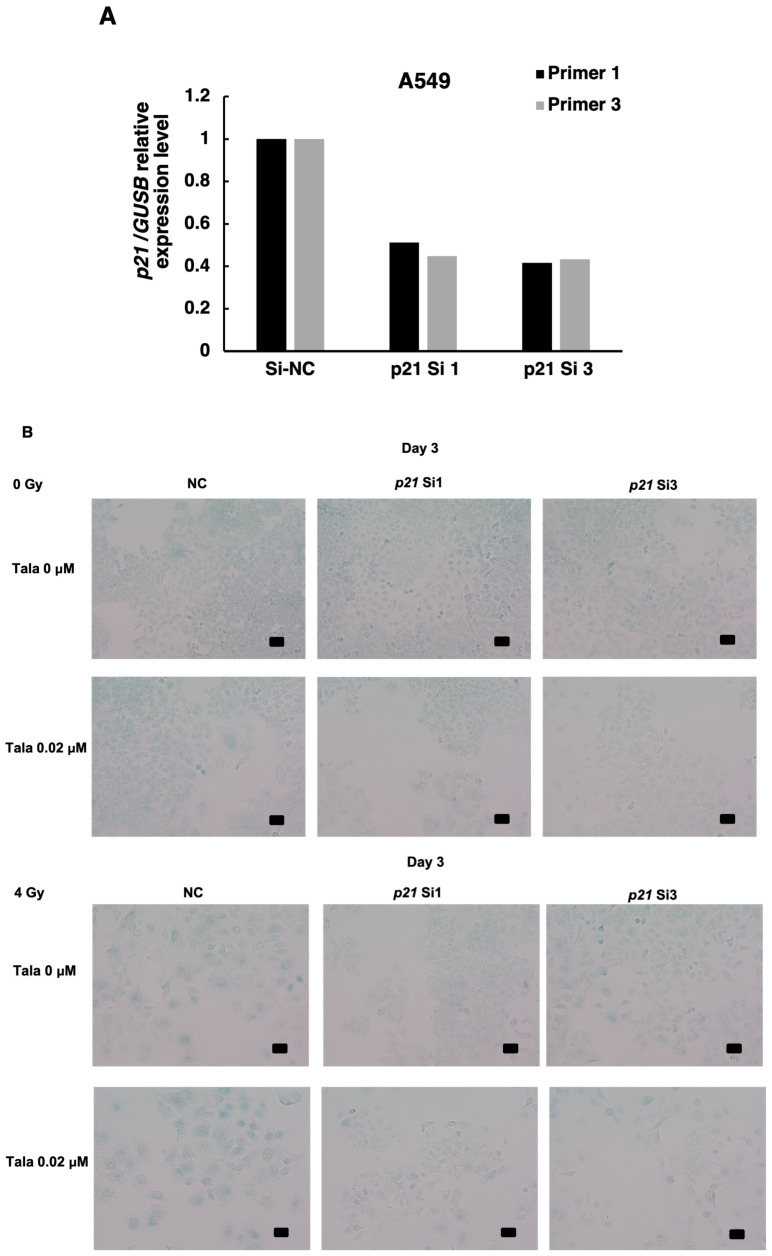 Figure 5
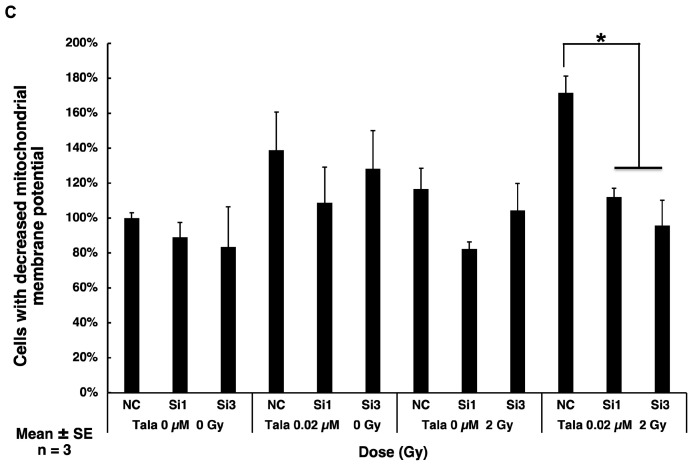 Figure 6
Peer Reviews
No public reviews on file for this paper yet. If you reviewed it on a platform where reviews are public (OpenReview, ICLR, NeurIPS, ICML), you can paste yours below so the community can read it here.
Videos
No videos yet. Explain this paper in a talk, walkthrough, or lecture? Add one.
Taxonomy
TopicsPARP inhibition in cancer therapy · Telomeres, Telomerase, and Senescence · DNA Repair Mechanisms