Diagnostic Performance of Autofluorescence for Oral Lesions: A Comparison Between a Postgraduate and an Expert Clinician
Alessandro Antonelli, Cristina D’Antonio, Anna Martina Battaglia, Riccardo Finamore, Antonio Madonna, Vincenzo Greco, Vincenzo Cosentino, Selene Barone, Flavia Biamonte, Amerigo Giudice, Francesco Bennardo

TL;DR
This study compares how a postgraduate dentist and an expert clinician use autofluorescence to detect oral lesions, finding that it improves sensitivity but lowers specificity, especially for less experienced users.
Contribution
The study evaluates the impact of autofluorescence on diagnostic performance differences between a novice and an expert in oral lesion detection.
Findings
Autofluorescence increased sensitivity for both clinicians, with postgraduate dentists showing a larger improvement.
Specificity and positive predictive value decreased when using autofluorescence, particularly for the postgraduate dentist.
Autofluorescence should be used as a complementary tool alongside clinical expertise and histopathological confirmation.
Abstract
Background/Objectives: Autofluorescence (AF) is a widely used adjunctive tool in the detection of oral potentially malignant disorders (OPMDs) and malignant lesions, but its performance can be influenced by clinicians’ experiences. This study aimed to examine how AF influences diagnostic decision-making and performances of a novice clinician compared with those of an experienced examiner. Methods: A total of 80 patients with oral lesions participated in this cross-sectional study. Each underwent a standard oral examination (OE) followed by an assessment with the VELscope® System Vx (LED Medical Diagnostics Inc., Burnaby, BC, Canada), independently conducted by an expert clinician (E) and a postgraduate dentist (PD), both blinded to each other’s results. Biopsy and histopathological analysis provided the reference diagnosis. After every examination, lesions were categorized as either…
Genes, proteins, chemicals, diseases, species, mutations and cell lines named across the full text — each resolved to its canonical identifier and authoritative record.
Click any figure to enlarge with its caption.
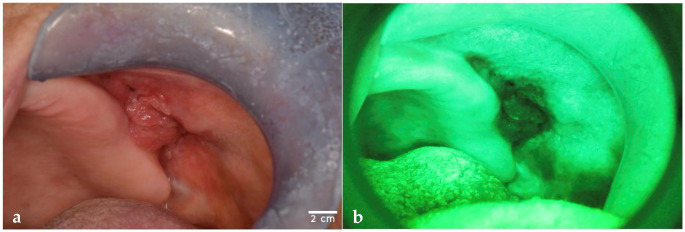 Figure 1
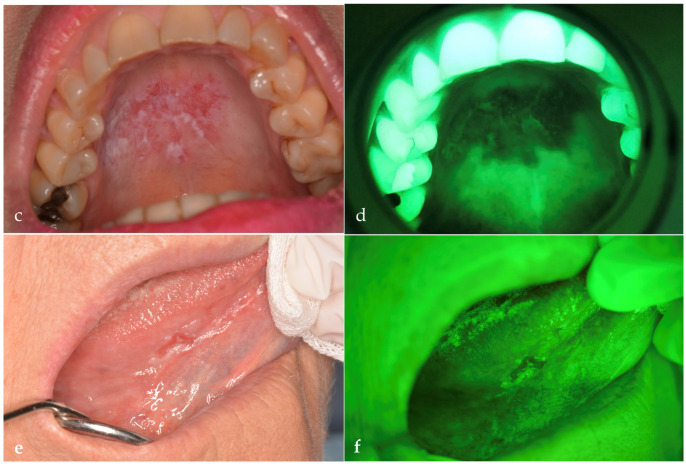 Figure 2
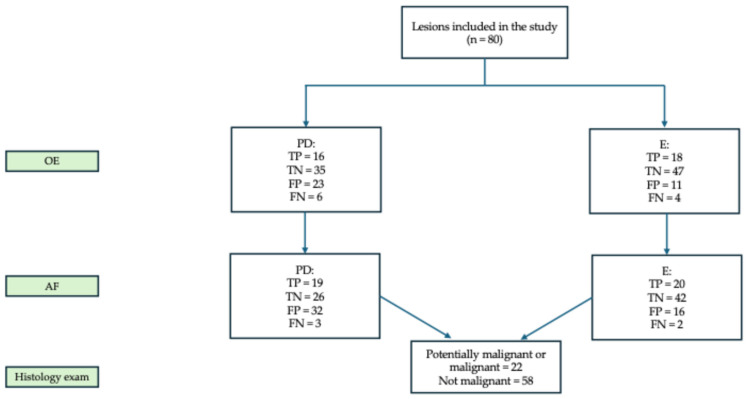 Figure 3
Peer Reviews
No public reviews on file for this paper yet. If you reviewed it on a platform where reviews are public (OpenReview, ICLR, NeurIPS, ICML), you can paste yours below so the community can read it here.
Videos
No videos yet. Explain this paper in a talk, walkthrough, or lecture? Add one.
Taxonomy
TopicsOral Health Pathology and Treatment · Photodynamic Therapy Research Studies · Laser Applications in Dentistry and Medicine