Co-grazing of sheep and goats may not be an issue from a parasitological perspective
I. A. Kyriánová, I. Knížková, M. Ptáček, J. Nápravníková, O. Kopecký, T. Husák, J. Vadlejch

TL;DR
This study found that co-grazing sheep and goats does not lead to similar parasite levels, with each species showing distinct infection patterns and intensities.
Contribution
The study provides new evidence on species-specific parasite dynamics in co-grazed sheep and goats in Central Europe.
Findings
Goats had higher egg shedding than sheep, with peak counts of 1240 EPG in June versus 620 EPG in February for sheep.
Haemonchus contortus was dominant in goats year-round, while Trichostrongylus/Teladorsagia spp. showed seasonal fluctuations in sheep.
Differences in infection intensity between species were statistically significant (U = 24 697.5, p < 0.001).
Abstract
Gastrointestinal nematode (GIN) infections have a significant impact on the health and productivity of small ruminants, while data on mixed-species grazing systems in Central Europe are scarce. This study aimed to compare GIN species richness and infection intensity in co-grazed dairy sheep and goats under a conventional grazing system in the Czech Republic. Over a 12-month period, 210 goat and 196 sheep faecal samples were analyzed using the McMaster method, followed by larval culture. Both hosts harboured Haemonchus contortus, Trichostrongylus/Teladorsagia spp., and Oesophagostomum columbianum. Goats exhibited consistently higher egg shedding, with a mean peak egg count of 1240 EPG in June, whereas sheep reached a markedly lower peak of 620 EPG in February. In goats, H. contortus predominated year-round, while in sheep, Trichostrongylus/Teladorsagia spp. showed pronounced seasonal…
Genes, proteins, chemicals, diseases, species, mutations and cell lines named across the full text — each resolved to its canonical identifier and authoritative record.
Click any figure to enlarge with its caption.
 Figure 1
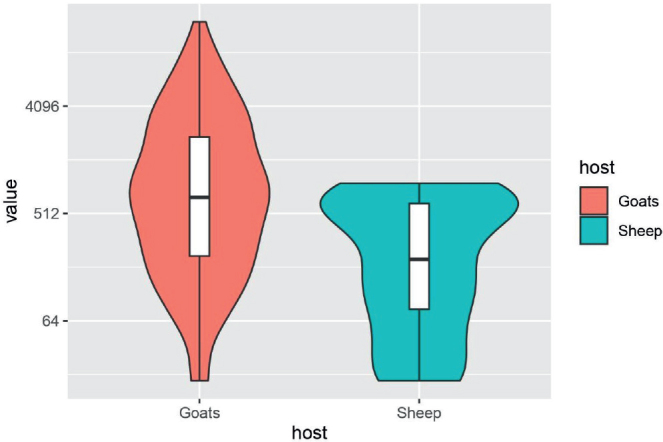 Figure 2
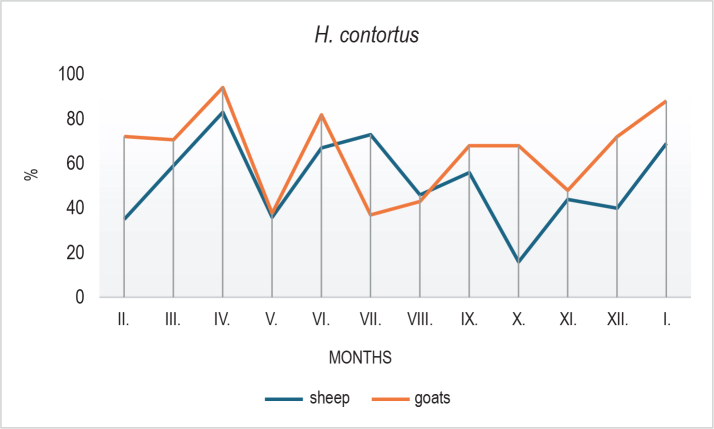 Figure 3
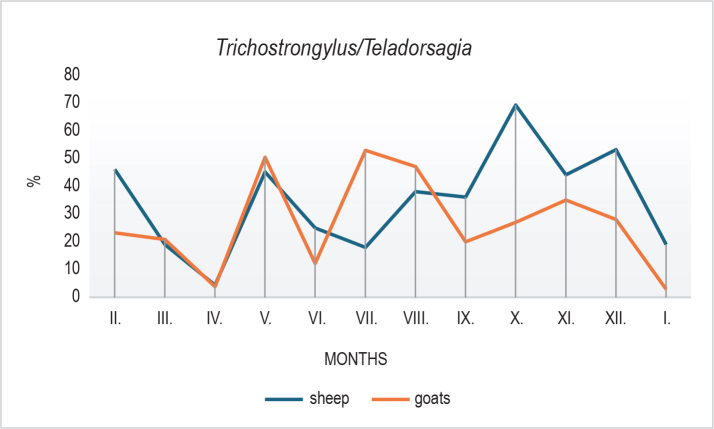 Figure 4
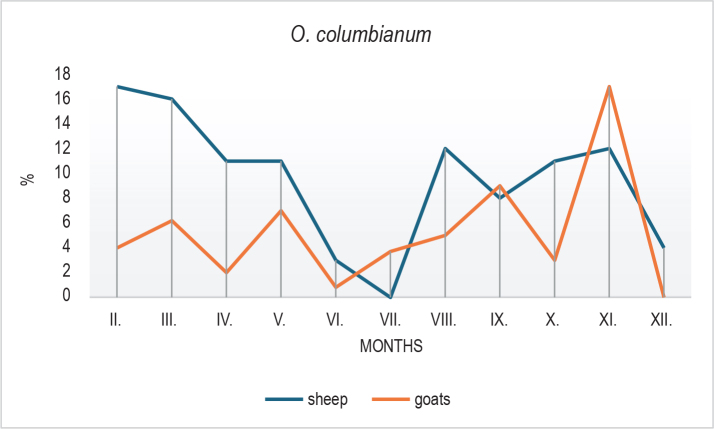 Figure 5
Peer Reviews
No public reviews on file for this paper yet. If you reviewed it on a platform where reviews are public (OpenReview, ICLR, NeurIPS, ICML), you can paste yours below so the community can read it here.
Videos
No videos yet. Explain this paper in a talk, walkthrough, or lecture? Add one.
Taxonomy
TopicsHelminth infection and control · Parasites and Host Interactions · Mollusks and Parasites Studies