Hematological, coprological and tracheoscopy results in pheasants (Phasianus colchicus) experimentally infected with Syngamus trachea
V. Vrabec, A. Königová, Z. Vasilková, E. Sesztáková, F. Humeník, P. Lazár, L. Molnár

TL;DR
This study found that young pheasants are more affected by a parasitic infection than adults, with changes in blood parameters and worm counts.
Contribution
The study provides new baseline hematological data for pheasants infected with Syngamus trachea, highlighting age-related susceptibility.
Findings
Young pheasants showed significant decreases in RBC, Hb, and eosinophils after infection.
Higher parasitic burden correlated with higher EPG values and adult worm counts in young pheasants.
Noninfected pheasants had higher Hb and RBC levels than infected ones.
Abstract
This study was conducted to determine hematological changes in two different age groups of pheasants (Phasianus colchicus) experimentally infected with 3 and 5 earthworms, 200 embryonated eggs of Syngamus trachea, and control groups. Comparing the hematological parameters, EPG values, and tracheoscopy findings revealed differences related to the age of the experimental birds. The most significant changes in RBC, Hb, and eosinophils (p <0,05) were found in a group of young pheasants fed with five earthworms, followed by three earthworms, and finally with 200 embryonated S. trachea eggs. In a group of adult pheasants, a decline in RBC and Hb was observed in groups fed 3 or 5 earthworms. The group fed with 200 embryonated eggs showed no significant difference. The hematological results revealed that the mean values of Hb and RBC were higher (P ≤ 0.05) in noninfected birds compared to…
Genes, proteins, chemicals, diseases, species, mutations and cell lines named across the full text — each resolved to its canonical identifier and authoritative record.
Click any figure to enlarge with its caption.
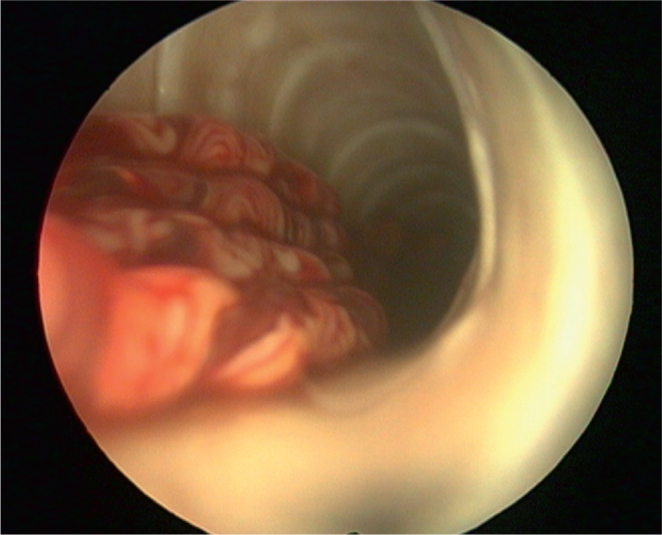 Figure 1
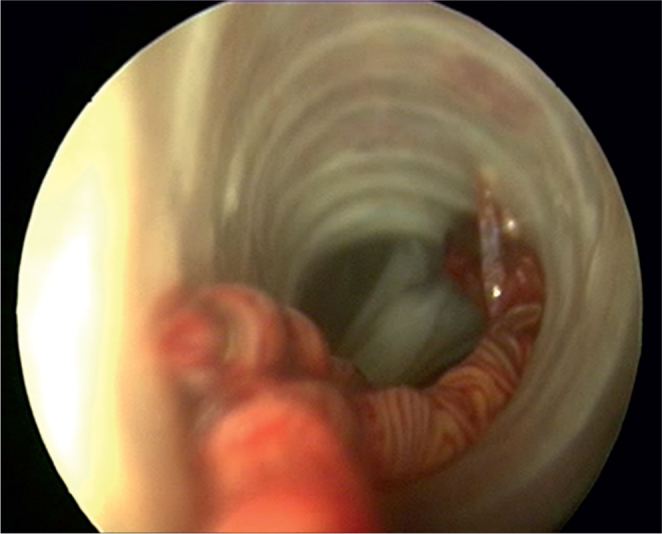 Figure 2
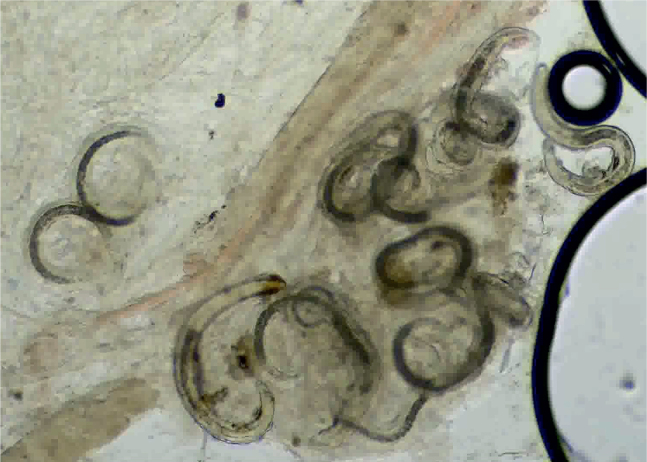 Figure 3
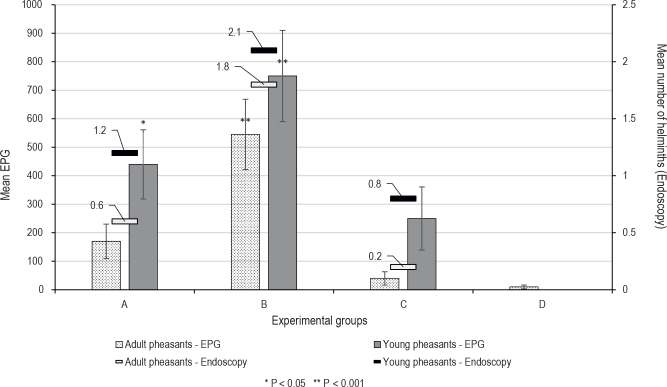 Figure 4
Peer Reviews
No public reviews on file for this paper yet. If you reviewed it on a platform where reviews are public (OpenReview, ICLR, NeurIPS, ICML), you can paste yours below so the community can read it here.
Videos
No videos yet. Explain this paper in a talk, walkthrough, or lecture? Add one.
Taxonomy
TopicsBird parasitology and diseases · Coccidia and coccidiosis research · Animal Nutrition and Physiology