The high larval burden of Trichinella britovi in wild boar in Serbia
M. Dmitric, N. Vaskovic, V. Kurćubić, K. Matović, S. ŽIvković, N. Karabasil

TL;DR
A wild boar in Serbia had an extremely high level of Trichinella britovi larvae, highlighting a potential health risk from untested game meat.
Contribution
This study reports the highest Trichinella britovi larval burden ever recorded in Serbia.
Findings
A wild boar diaphragm had 767 larvae per gram of muscle tissue.
Trichinella britovi was confirmed as the species through PCR analysis.
The high larval burden indicates a significant public health risk from unexamined game meat.
Abstract
During a routine analysis of a wild boar diaphragm, a significant infestation with Trichinella spp. was found, larvae were identified, with a larval burden of 767 larvae per gram (LPG) of muscle tissue. To our knowledge, this is the largest infection detected to date in Serbia. By employing a polymerase chain reaction (PCR), the Trichinella britovi was the only species identified. The high LPG levels found in this study suggest that game meat has not been examined for the presence of Trichinella spp. pose a significant risk to human health and could potentially lead to fatal outcomes. Furthermore, this finding confirms the importance of wild boars as a source of infection of T. britovi in Serbia.
Genes, proteins, chemicals, diseases, species, mutations and cell lines named across the full text — each resolved to its canonical identifier and authoritative record.
Click any figure to enlarge with its caption.
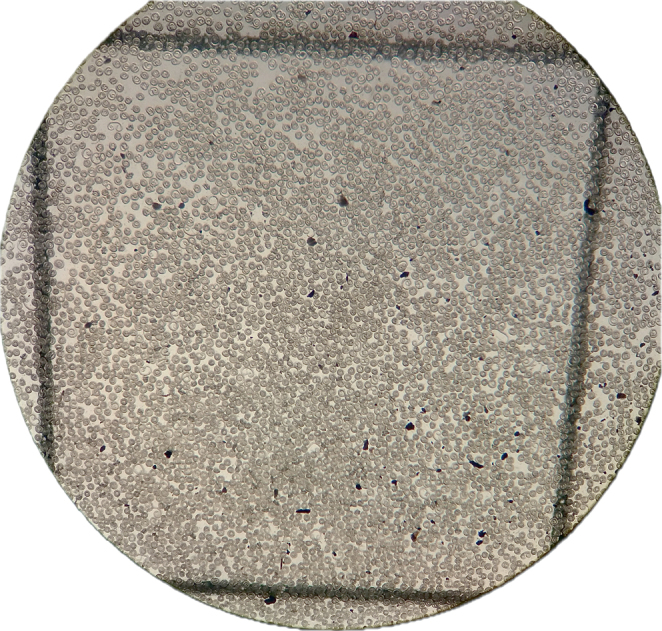 Figure 1
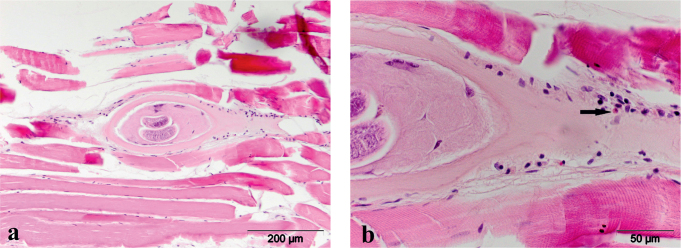 Figure 2
Peer Reviews
No public reviews on file for this paper yet. If you reviewed it on a platform where reviews are public (OpenReview, ICLR, NeurIPS, ICML), you can paste yours below so the community can read it here.
Videos
No videos yet. Explain this paper in a talk, walkthrough, or lecture? Add one.
Taxonomy
TopicsParasitic Diseases Research and Treatment · Forensic Entomology and Diptera Studies · Mollusks and Parasites Studies