A Multicenter Retrospective Study of Avelumab First-Line Maintenance and Subsequent Therapies for Locally Advanced and Metastatic Urothelial Carcinoma: Subgroup Analysis of First-Line Dose-Dense Methotrexate, Vinblastine, Doxorubicin, and Cisplatin, and Gemcitabine Plus Cisplatin in the Japan AVElumab MAintenance and Continuous Treatment Study (JAVEMACS)
Masaomi Ikeda, Kiyohide Fujimoto, Noriyoshi Miura, Rikiya Taoka, Kiyoaki Nishihara, Daiki Ikarashi, Sei Naito, Fumitaka Shimizu, Atsuko Fujihara, Michihiro Shono, Tohru Nakagawa, Eiji Kikuchi

TL;DR
This study shows that avelumab maintenance therapy after chemotherapy improves survival for Japanese patients with advanced bladder cancer.
Contribution
The study provides real-world evidence of avelumab's effectiveness in Japanese patients with urothelial carcinoma following different chemotherapy regimens.
Findings
Median progression-free survival was 12.0 months for ddMVAC and 7.4 months for GC groups.
Enfortumab vedotin was the most common second-line treatment after avelumab in both subgroups.
Avelumab maintenance showed consistent overall survival across treatment subgroups.
Abstract
Avelumab maintenance therapy is approved in Japan for patients with advanced urothelial carcinoma (aUC) who have not seen their cancer progress after receiving platinum-based chemotherapy (PBC). This study provides important information about how effective avelumab is for these patients. It shows that survival rates for patients who received either dose-dense methotrexate, vinblastine, doxorubicin, and cisplatin (ddMVAC) or gemcitabine plus cisplatin (GC) are similar to those in the overall group, even though there are differences among the subgroups. The findings emphasize the need to choose the best first-line (1L) PBC and to start avelumab treatment promptly. The study suggests that using ddMVAC or GC followed by avelumab and then enfortumab vedotin (EV) can lead to better long-term health outcomes for patients. Avelumab maintenance therapy is approved in Japan for patients with aUC…
Genes, proteins, chemicals, diseases, species, mutations and cell lines named across the full text — each resolved to its canonical identifier and authoritative record.
Click any figure to enlarge with its caption.
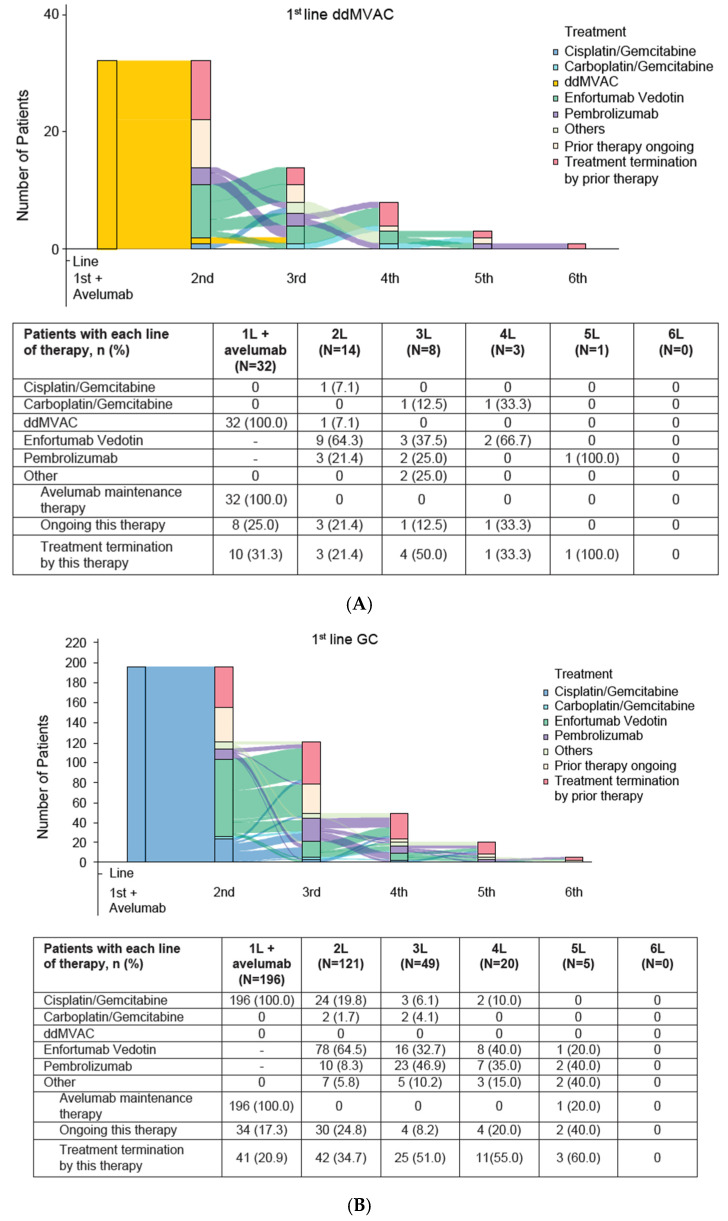 Figure 1
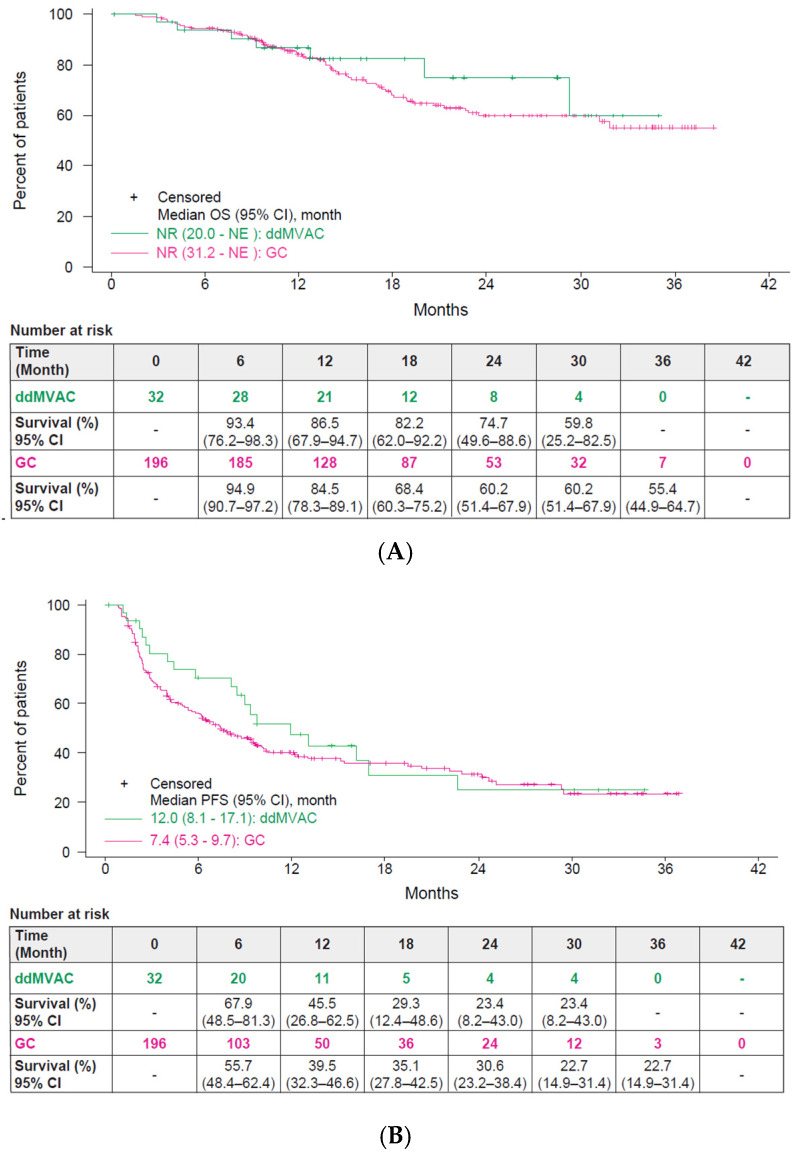 Figure 2
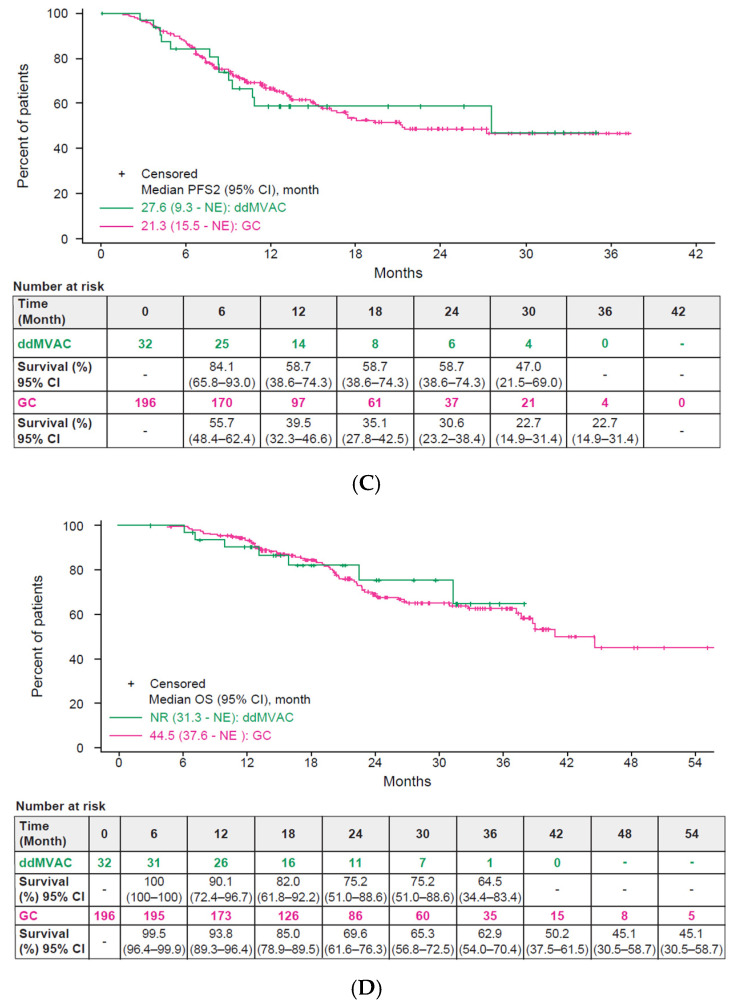 Figure 3
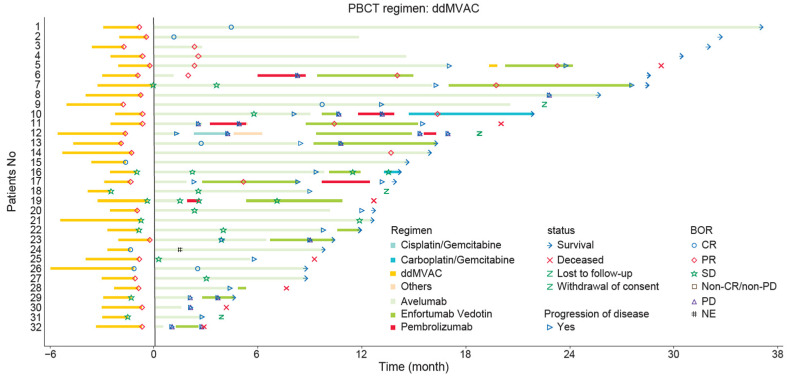 Figure 4
Peer Reviews
No public reviews on file for this paper yet. If you reviewed it on a platform where reviews are public (OpenReview, ICLR, NeurIPS, ICML), you can paste yours below so the community can read it here.
Videos
No videos yet. Explain this paper in a talk, walkthrough, or lecture? Add one.
Taxonomy
TopicsBladder and Urothelial Cancer Treatments · Ferroptosis and cancer prognosis · Renal cell carcinoma treatment