Estimation of Kidney Volumes in Autosomal Dominant Polycystic Kidney Disease: A Comparison Between Manual Segmentation and Ellipsoid Formula
Nicola Maggialetti, Claudia Dipalma, Eva Colucci, Ilaria Villanova, Giovanni Lorusso, Maria Grazia Arcidiacono, Giovanni Piscopo, Amato Antonio Stabile Ianora

TL;DR
This study compares two methods for estimating kidney volumes in a genetic kidney disease and finds the ellipsoid formula to be as accurate but faster than manual segmentation.
Contribution
Demonstrates the ellipsoid formula as a reliable and faster alternative to manual segmentation for kidney volume estimation in ADPKD.
Findings
Both methods showed excellent interobserver agreement with ICC ≥ 0.977.
The ellipsoid formula was significantly faster for all radiologists without compromising accuracy.
Bland–Altman analysis confirmed strong agreement between methods for the senior radiologist.
Abstract
Objectives: Evaluate the agreement and interobserver variability between manual segmentation and the ellipsoid formula in estimating single kidney volume (SKV) in patients with autosomal dominant polycystic kidney disease (ADPKD). Methods: In this retrospective study, 130 unenhanced CT scans of ADPKD kidneys were analyzed. Three radiologists (one senior, two juniors) measured SKV using manual segmentation and the ellipsoid formula. Statistical analyses included intraclass correlation coefficient (ICC), Wilcoxon signed-rank test, Bland–Altman analysis, and paired t-tests to compare measurement values and computation times. Results: Both methods showed excellent interobserver agreement (ICC ≥ 0.977). No significant difference was observed in volume estimates between the two techniques (Wilcoxon p = 0.295). Bland–Altman analysis confirmed strong agreement between methods for the senior…
Genes, proteins, chemicals, diseases, species, mutations and cell lines named across the full text — each resolved to its canonical identifier and authoritative record.
Click any figure to enlarge with its caption.
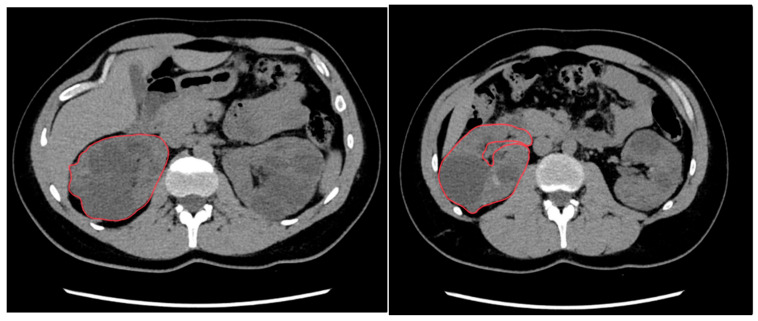 Figure 1
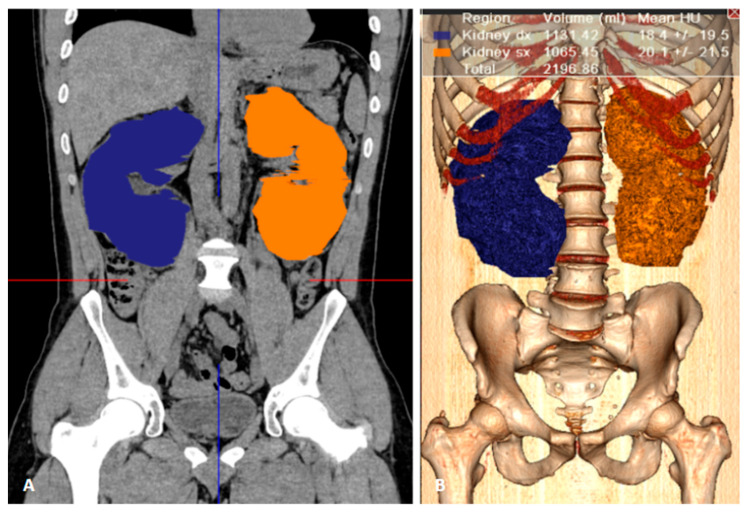 Figure 2
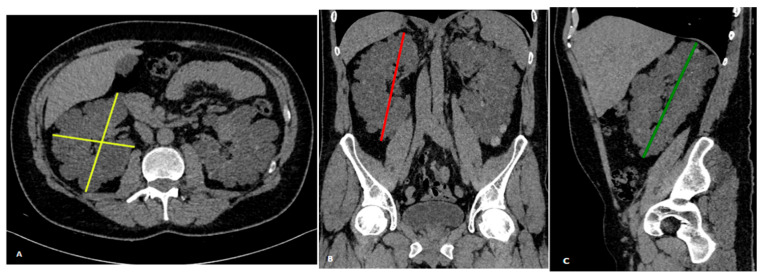 Figure 3
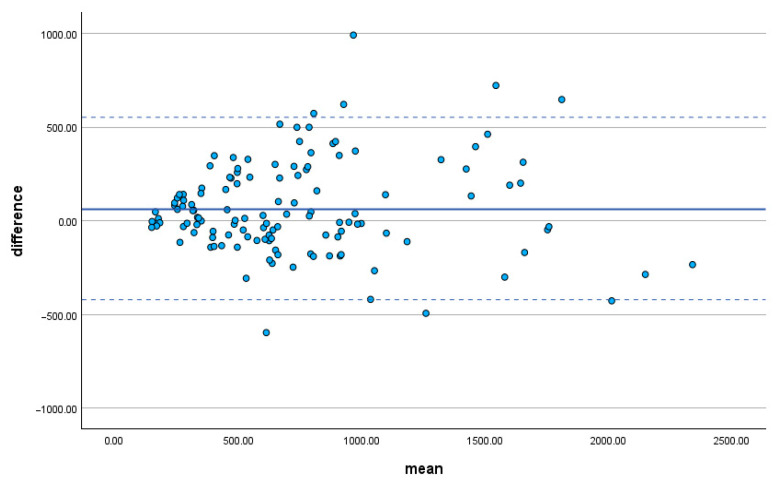 Figure 4
Peer Reviews
No public reviews on file for this paper yet. If you reviewed it on a platform where reviews are public (OpenReview, ICLR, NeurIPS, ICML), you can paste yours below so the community can read it here.
Videos
No videos yet. Explain this paper in a talk, walkthrough, or lecture? Add one.
Taxonomy
TopicsGenetic and Kidney Cyst Diseases · Renal and related cancers · Fetal and Pediatric Neurological Disorders