Giant Asymptomatic Submandibular Sialolith: A Case Report Accompanied by Systematic Review
Renato Gomes Azevedo, Luan Felipe Toro, Vinícius Franzão Ganzaroli, Vinícius José Ifanger, Nathan Ayres de Faria, Rodrigo Ubiali de Rezende, Julia da Conceição Francisquini, Gestter Willian Lattari Tessarin

TL;DR
This paper reports a rare case of a large, painless salivary stone in a duct and reviews similar cases to understand diagnosis and treatment.
Contribution
The paper presents a rare case of an asymptomatic giant sialolith and systematically reviews similar cases to highlight clinical insights.
Findings
Computed tomography and ultrasonography are commonly used to diagnose giant sialoliths.
Sialolithotomy is the primary treatment for giant sialoliths in the submandibular gland.
Asymptomatic giant sialoliths are rare and often found incidentally during imaging.
Abstract
Background/Objectives: Salivary stones, also known as sialoliths, are calcified structures that develop within the salivary glands and/or their ducts. They occur in approximately 1 per 10,000 to 30,000 individuals per year, primarily affecting adults between 30 and 50 years of age. Although several hypotheses have been proposed, the exact mechanisms of formation and their predisposing factors are yet to be confirmed. The submandibular gland is the most commonly affected site, accounting for nearly 80% of cases, while giant and asymptomatic sialoliths are rare clinical findings in dental practice. This study is divided into two components: first, a case report of a giant, asymptomatic sialolith located in Wharton’s duct; second, a systematic review of the literature to explore the clinical procedures, diagnoses, outcomes, and other relevant aspects of this pathology. Methods: The case…
Genes, proteins, chemicals, diseases, species, mutations and cell lines named across the full text — each resolved to its canonical identifier and authoritative record.
Click any figure to enlarge with its caption.
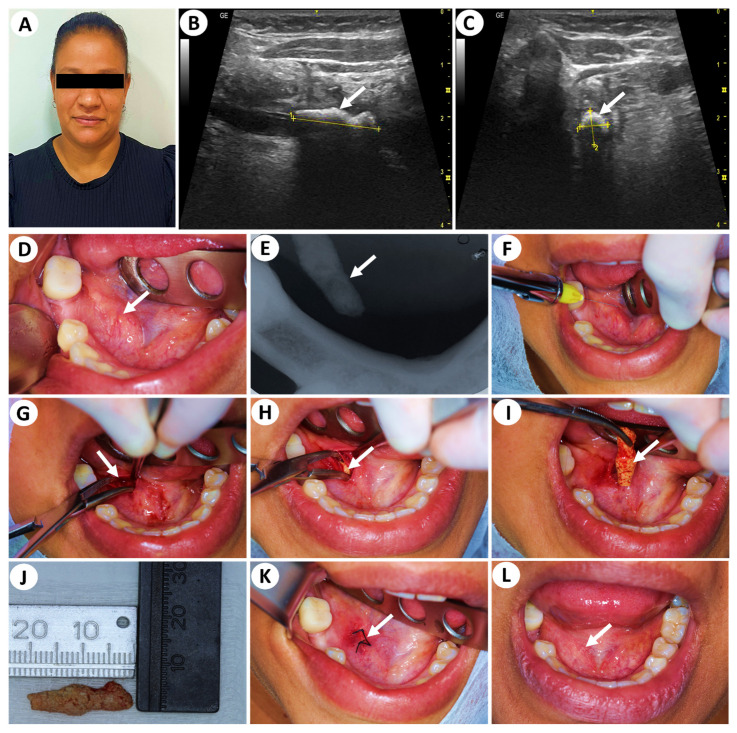 Figure 1
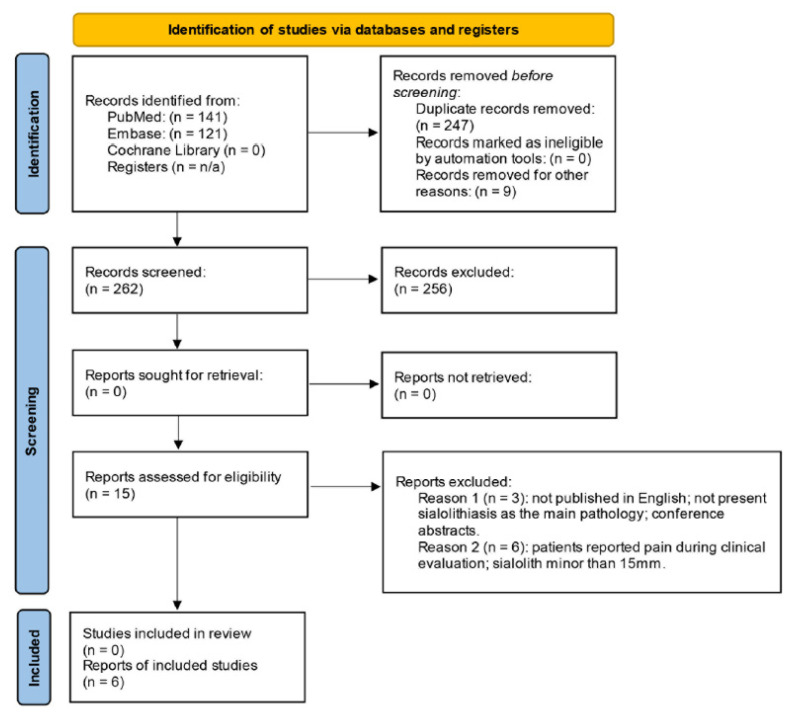 Figure 2
Peer Reviews
No public reviews on file for this paper yet. If you reviewed it on a platform where reviews are public (OpenReview, ICLR, NeurIPS, ICML), you can paste yours below so the community can read it here.
Videos
No videos yet. Explain this paper in a talk, walkthrough, or lecture? Add one.
Taxonomy
TopicsSalivary Gland Tumors Diagnosis and Treatment · Oropharyngeal Anatomy and Pathologies · Oral and Maxillofacial Pathology