Efficacy of Anti-VEGF and Anti-EGFRs in Microsatellite Instable (MSI-H) Metastatic Colorectal Cancer in a Turkish Oncology Group (TOG) Cohort Study
İlknur Deliktaş Onur, Mutlu Doğan, Mehmet Akif Öztürk, Taha Koray Sahin, Murat Kiracı, Ahmet Melih Arslan, Eda Karapelit, Bahar Beliz Karaoğlan, Nargiz Majidova, Elif Şahin, Sabin Göktaş, Abdullah Sakin, Ali Oğul, Emine Türkmen, Kadriye Başkurt, Zeynep Yüksel Yaşar, Yakup Ergün

TL;DR
This study examines treatment outcomes in a specific type of colorectal cancer, finding that certain factors like BRAF mutations and surgery may influence survival, though anti-VEGF and anti-EGFR therapies showed no significant difference.
Contribution
The study provides insights into prognostic factors and treatment efficacy in a rare subset of metastatic colorectal cancer patients with microsatellite instability.
Findings
No statistically significant difference in progression-free survival between anti-VEGF and anti-EGFR therapies.
BRAF mutation, maximal cytoreduction, and subsequent immunotherapy were associated with better prognosis.
Median overall survival was 44 months in the studied cohort.
Abstract
Colorectal cancer is a widespread health problem at present. Despite recent advances in metastatic colorectal cancer, median survival remains low. Microsatellite instability-high (MSI-H) colorectal cancer accounts for approximately 5% of all metastatic colorectal cancer patients and has a different tumor biology than other colorectal cancer patients. In our study, we evaluated the efficacy of commonly used targeted therapies in this subgroup of metastatic colorectal cancer patients. While we did not find a statistically significant difference between targeted therapies, we found that progression-free survival was numerically higher with bevacizumab. Furthermore, we found that BRAF mutation, maximal cytoreduction, and the use of second-line and subsequent immunotherapy were associated with prognosis. Background: Mismatch repair-deficient (dMMR)/microsatellite instability-high (MSI-H)…
Genes, proteins, chemicals, diseases, species, mutations and cell lines named across the full text — each resolved to its canonical identifier and authoritative record.
Click any figure to enlarge with its caption.
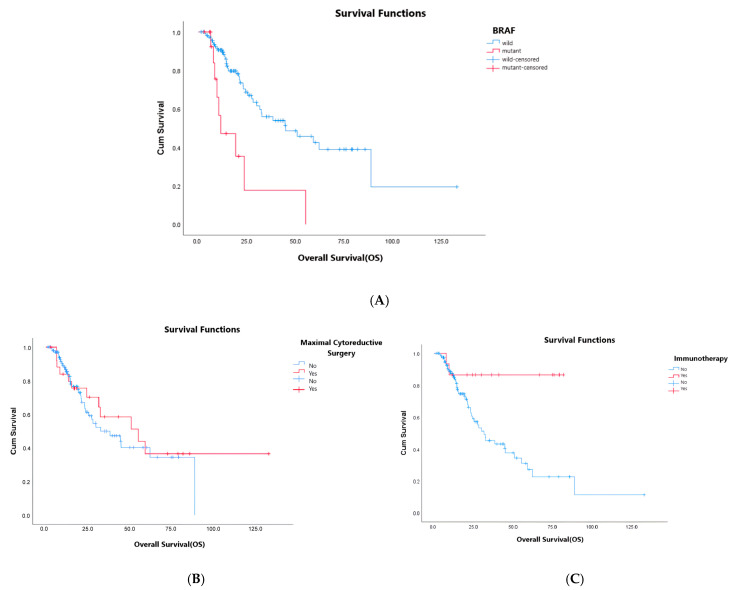 Figure 1
Peer Reviews
No public reviews on file for this paper yet. If you reviewed it on a platform where reviews are public (OpenReview, ICLR, NeurIPS, ICML), you can paste yours below so the community can read it here.
Videos
No videos yet. Explain this paper in a talk, walkthrough, or lecture? Add one.
Taxonomy
TopicsColorectal Cancer Treatments and Studies · Genetic factors in colorectal cancer · Cancer Genomics and Diagnostics