Clinical Characteristics and Prognosis of Esophageal Squamous Cell Carcinoma in Patients Under 60 Years of Age
Dae-Gon Ryu, Cheol-Woong Choi, Su-Jin Kim, Su-Bum Park, Jin-Ook Jang, Woo-Jin Kim, Cheol-Min Lee, Soo-Bin Synn, Eun-Jung Choi, Bong-Soo Son, Sun-Hwi Hwang, Si-Hak Lee, Jae-Hun Chung

TL;DR
Younger patients with esophageal cancer often have worse habits like heavy drinking and smoking, and their cancer is often more advanced at diagnosis, but they don't live longer than older patients.
Contribution
The study reveals that younger ESCC patients have distinct risk factors and disease stages but similar survival rates compared to older patients.
Findings
Younger ESCC patients are more likely to have a history of heavy alcohol consumption and smoking.
Younger patients tend to present with more advanced-stage ESCC at diagnosis.
Overall survival rates are similar between younger and older ESCC patients despite younger patients having better health status.
Abstract
Esophageal squamous cell carcinoma (ESCC) usually occurs in older adults, but it can also affect younger individuals. However, little is known about whether younger patients show different clinical characteristics or outcomes compared with older ones. In this study, we analyzed 516 patients diagnosed with ESCC and compared those younger than 60 years with those aged 60 years or older. We found that younger patients were more likely to have a history of heavy alcohol consumption and smoking and tended to present with more advanced-stage disease at diagnosis. Being younger did not translate into a better prognosis—the overall survival was similar between the two age groups. These findings suggest that age alone may not determine prognosis in ESCC and that careful evaluation and timely treatment are equally important for both younger and older patients. Background: Esophageal squamous…
Genes, proteins, chemicals, diseases, species, mutations and cell lines named across the full text — each resolved to its canonical identifier and authoritative record.
Click any figure to enlarge with its caption.
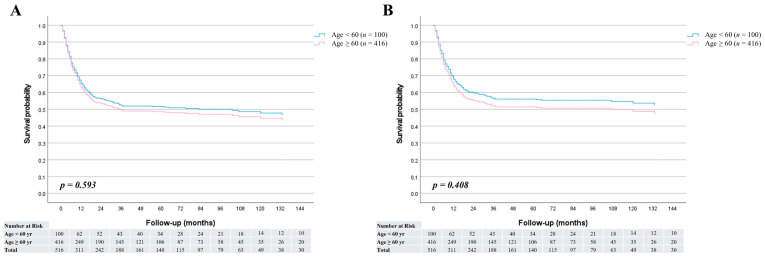 Figure 1
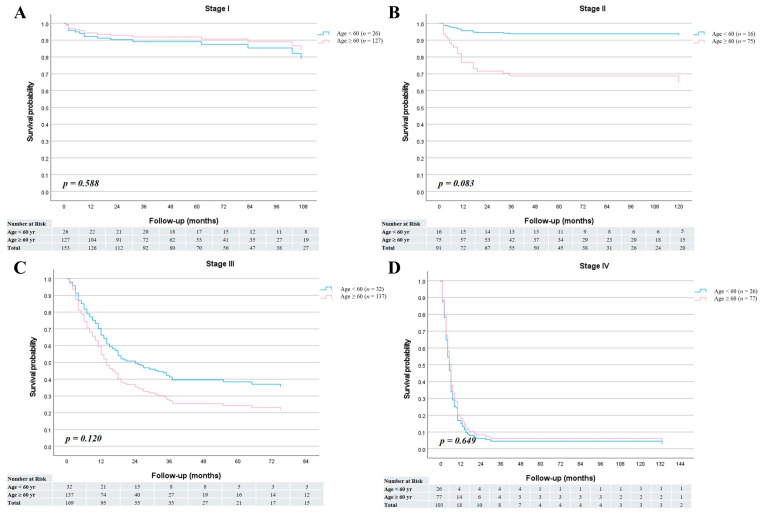 Figure 2
Peer Reviews
No public reviews on file for this paper yet. If you reviewed it on a platform where reviews are public (OpenReview, ICLR, NeurIPS, ICML), you can paste yours below so the community can read it here.
Videos
No videos yet. Explain this paper in a talk, walkthrough, or lecture? Add one.
Taxonomy
TopicsEsophageal Cancer Research and Treatment · Head and Neck Cancer Studies · Colorectal and Anal Carcinomas