Pathogenic FANCC Variants Are Associated with Accessory Breasts in a Sub-Saharan African Multiplex Family
Abass Shaibu Danbaki, Christian Opoku Asamoah, Gideon Okyere Mensah, Bruce Tsri, Tamara D. Busch, Fareed Kow Nanse Arthur, Ishmael Kyei, Lawrence Kobina Blay, Samuel Mensah, Adebowale A. Adeyemo, Azeez Butali, Peter Donkor, Lord Jephthah Joojo Gowans

TL;DR
This study identifies genetic variants in FANCC linked to accessory breasts in a Sub-Saharan African family, offering new insights into the condition's genetic basis.
Contribution
The study reports novel pathogenic FANCC variants associated with familial accessory breasts in a Sub-Saharan African population.
Findings
Pathogenic FANCC variants c.360del and c.355_358del were identified as likely causes of familial accessory breasts.
Twelve candidate genes, including PRSS50 and FANCC, were found to be potentially involved in accessory breast formation and comorbidities.
Secondary findings in TTR and RYR1 suggest additional genetic contributions to comorbid conditions.
Abstract
Accessory breasts denote the formation of extra breast tissue along the milk line, and are known to be more prevalent among Black and Asian populations, affecting both genders. This first-ever study aimed to determine the genetic aetiology of accessory breasts in a multiplex family, where all female siblings present with bilateral accessory breasts. The study also ascertained secondary findings (SFs) responsible for comorbidities. Clinical data and saliva samples were obtained from all family members. Ultrasound and histopathology confirmed the diagnosis. Whole-exome sequencing was conducted on DNA samples obtained from the saliva, with variant calling conducted utilising the Sentieon workflow. Variant classification was based on American College of Medical Genetics and Genomics guidelines. After segregation analysis, 12 candidate genes emerged. Among these, PRSS50 and FANCC emerged as…
Genes, proteins, chemicals, diseases, species, mutations and cell lines named across the full text — each resolved to its canonical identifier and authoritative record.
Click any figure to enlarge with its caption.
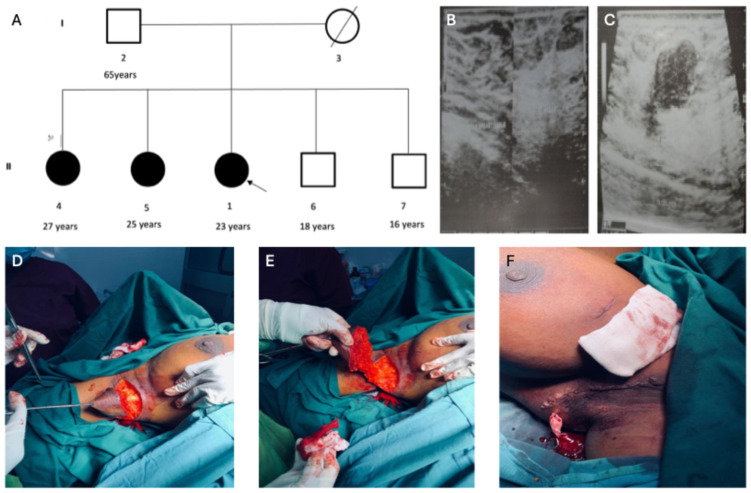 Figure 1
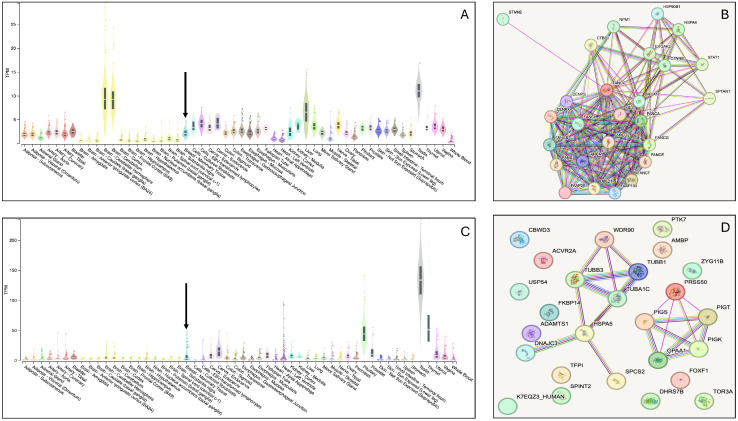 Figure 2
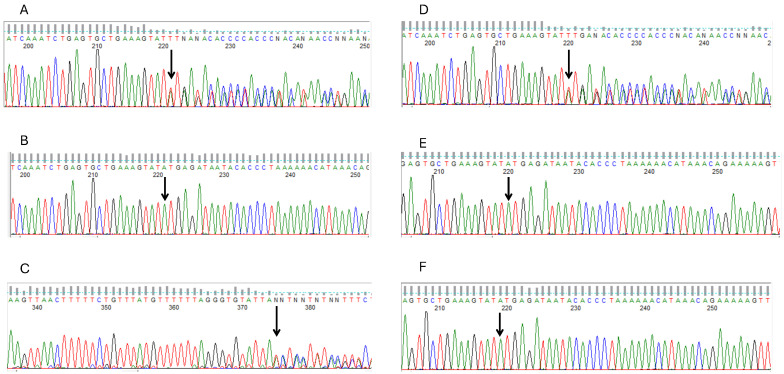 Figure 3
Peer Reviews
No public reviews on file for this paper yet. If you reviewed it on a platform where reviews are public (OpenReview, ICLR, NeurIPS, ICML), you can paste yours below so the community can read it here.
Videos
No videos yet. Explain this paper in a talk, walkthrough, or lecture? Add one.
Taxonomy
TopicsGenomic variations and chromosomal abnormalities · Prenatal Screening and Diagnostics · Head and Neck Anomalies