Assessment of the Functional Quality of Extra Virgin Olive Oil: Green Extraction of Phenolic Compounds Using Ethyl Lactate
Chrysostomos Tsitsipas, Athanasios Gerasopoulos, Nikolaos Nenadis, Dimitrios Gerasopoulos

TL;DR
This study compares ethyl lactate to methanol for extracting healthful phenolic compounds from extra virgin olive oil, finding ethyl lactate to be a green and effective alternative.
Contribution
The paper introduces ethyl lactate as a green solvent for phenolic extraction from olive oil, validated through analytical and industrial assessments.
Findings
Ethyl lactate extracted higher total phenolic content than methanol in most cases.
Phenolic extraction efficiency increased with lower water content in solvent mixtures.
Ethyl lactate and methanol produced similar HPLC profiles after acid hydrolysis.
Abstract
Phenolic compounds are regarded as one of the components responsible for olive oil’s functional properties and health benefits. These chemicals act as antioxidants and anti-inflammatories, and prevent chronic diseases. The Folin–Ciocalteu reagent or HPLC procedures are commonly used to determine the concentration of total phenolic compounds in olive oil. The use of ethyl lactate or lactic acid ethyl ester (LAEE) instead of methanol (MeOH) was examined in terms of green chemistry. Six extra virgin olive oils (EVOOs) with phenolic content ranging from 20 to 350 mg/L, were first extracted with 1:4, 2:3, 3:2, 4:1, and 5:0 MeOH or LAEE/water, (v/v), to determine total phenolic content (TPC) and antiradical activity (%RSA) using the Folin–Ciocalteu reagent and DPPH assay, respectively. The concentration of extracted phenolics or extracts’ RSA increased as the water content in the organic…
Genes, proteins, chemicals, diseases, species, mutations and cell lines named across the full text — each resolved to its canonical identifier and authoritative record.
Click any figure to enlarge with its caption.
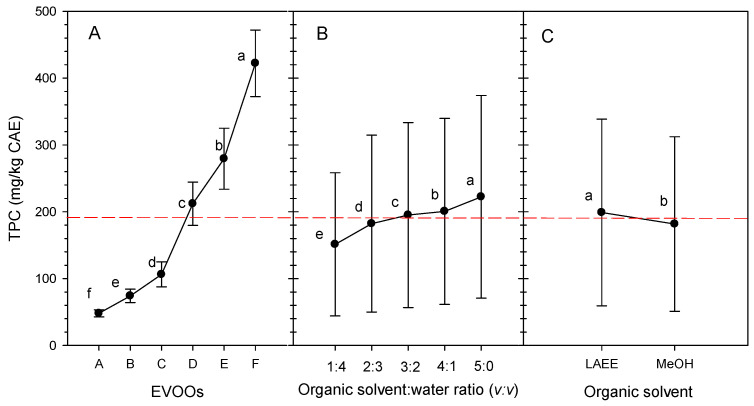 Figure 1
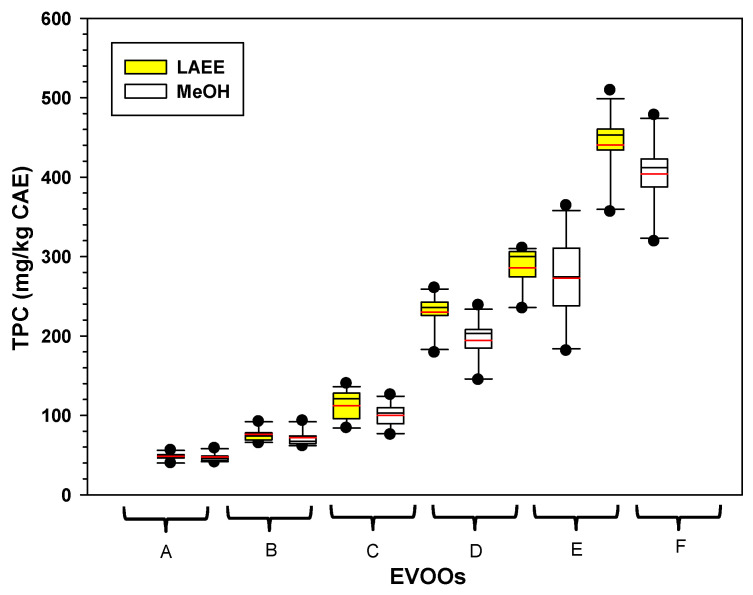 Figure 2
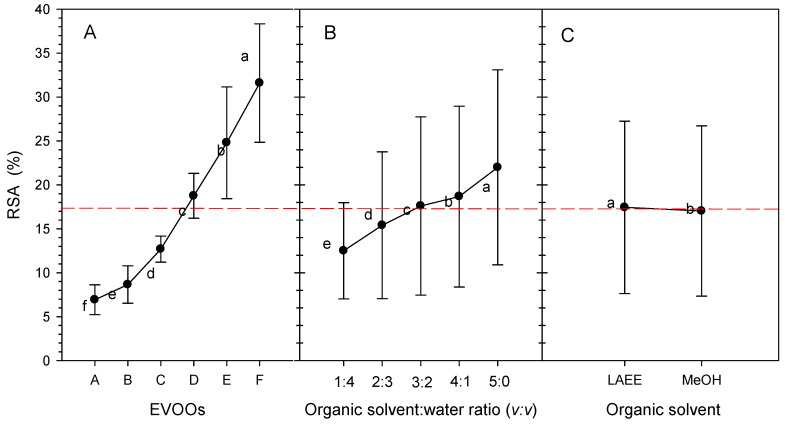 Figure 3
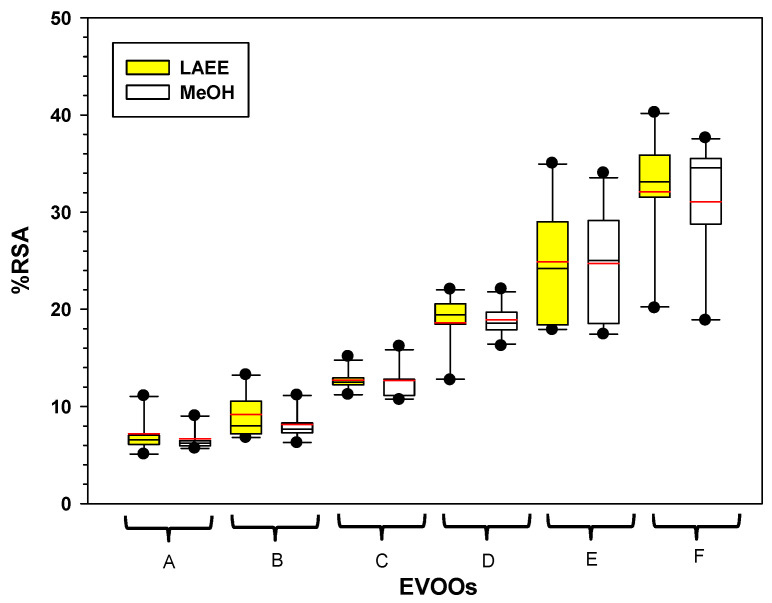 Figure 4
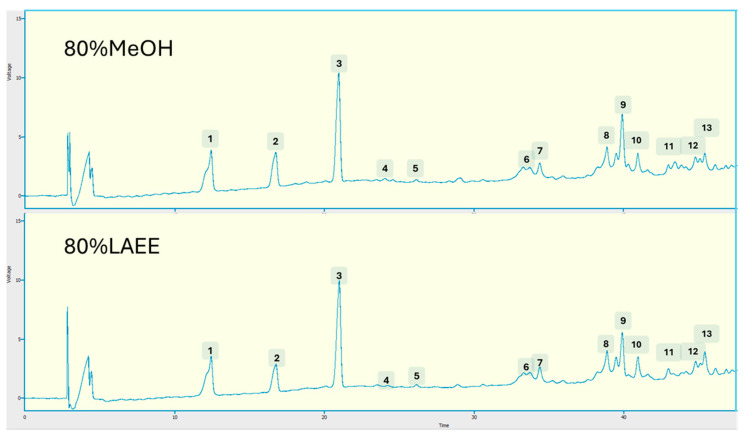 Figure 5
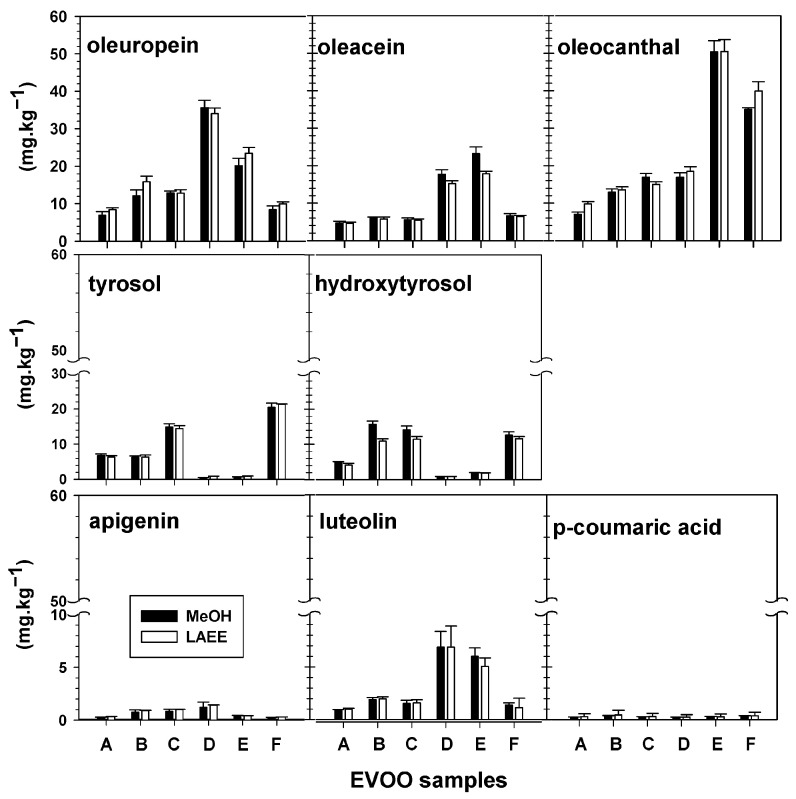 Figure 6
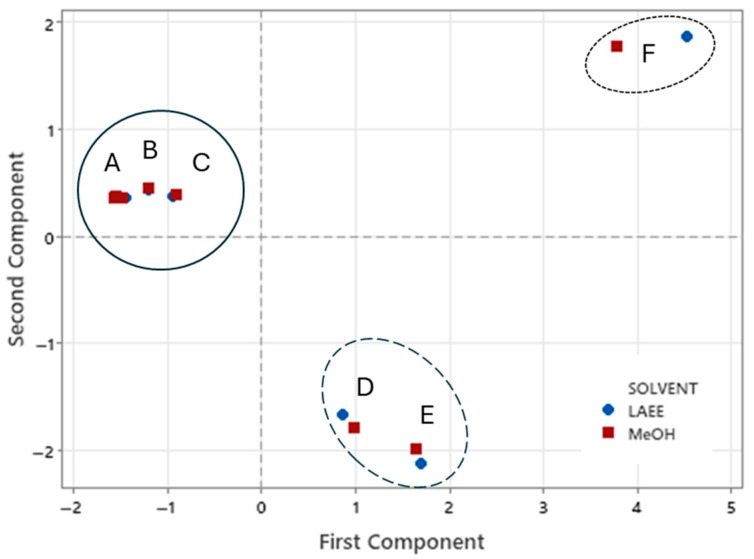 Figure 7
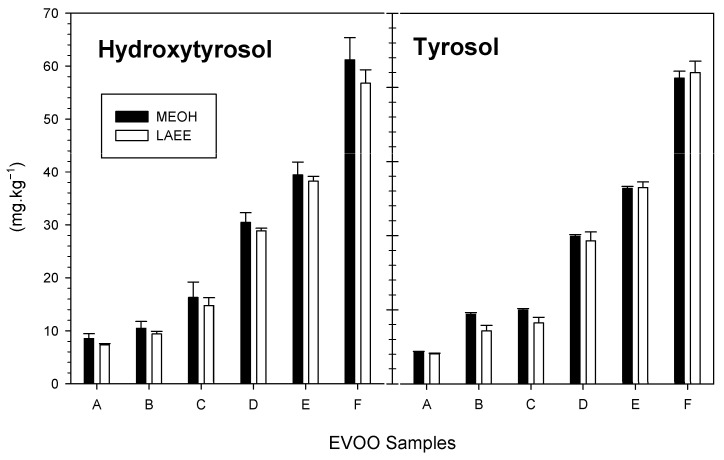 Figure 8
Peer Reviews
No public reviews on file for this paper yet. If you reviewed it on a platform where reviews are public (OpenReview, ICLR, NeurIPS, ICML), you can paste yours below so the community can read it here.
Videos
No videos yet. Explain this paper in a talk, walkthrough, or lecture? Add one.
Taxonomy
TopicsEdible Oils Quality and Analysis · Phytochemicals and Antioxidant Activities · Essential Oils and Antimicrobial Activity