Diagnostic Accuracy of Electrodiagnostic Comparative Latency Studies of Carpal Tunnel Syndrome: Single Test and Concordance Between Multiple Tests
Ahmad R. Abuzinadah

TL;DR
This study evaluates how accurate single and combined electrodiagnostic tests are for diagnosing carpal tunnel syndrome, finding that combining two abnormal tests improves accuracy in most patients.
Contribution
The study introduces a systematic evaluation of concordance between multiple electrodiagnostic tests for diagnosing carpal tunnel syndrome.
Findings
Concordance between two abnormal COLSs improves diagnostic precision for carpal tunnel syndrome in non-DM patients and DM patients under 60.
PPV reaches 100% in non-DM patients with symptom durations over 6 months when using two abnormal COLSs.
Diagnostic accuracy of COLSs is low in DM patients aged ≥60 years.
Abstract
Background: The optimal number of electrodiagnostic tests required to confirm carpal tunnel syndrome (CTS) has not been systematically evaluated. While single comparative latency study (COLS) is commonly used, it remains unclear whether diagnostic accuracy improves when concordance between multiple COLSs is required. Methods: We retrospectively reviewed the electrodiagnostic data of patients referred to our center with upper limb symptoms. Diagnostic accuracy was assessed for individual COLSs—median–ulnar mixed palmar latency difference (palmdiff), median–ulnar ring finger latency difference (ringdiff), and median–radial thumb latency difference (thumbdiff)—and for concordance between two COLSs. Sensitivity, specificity, positive predictive value (PPV), and negative predictive value (NPV) were calculated within diabetes mellitus (DM) and non-DM groups. Results: We included 538 patients,…
Genes, proteins, chemicals, diseases, species, mutations and cell lines named across the full text — each resolved to its canonical identifier and authoritative record.
Click any figure to enlarge with its caption.
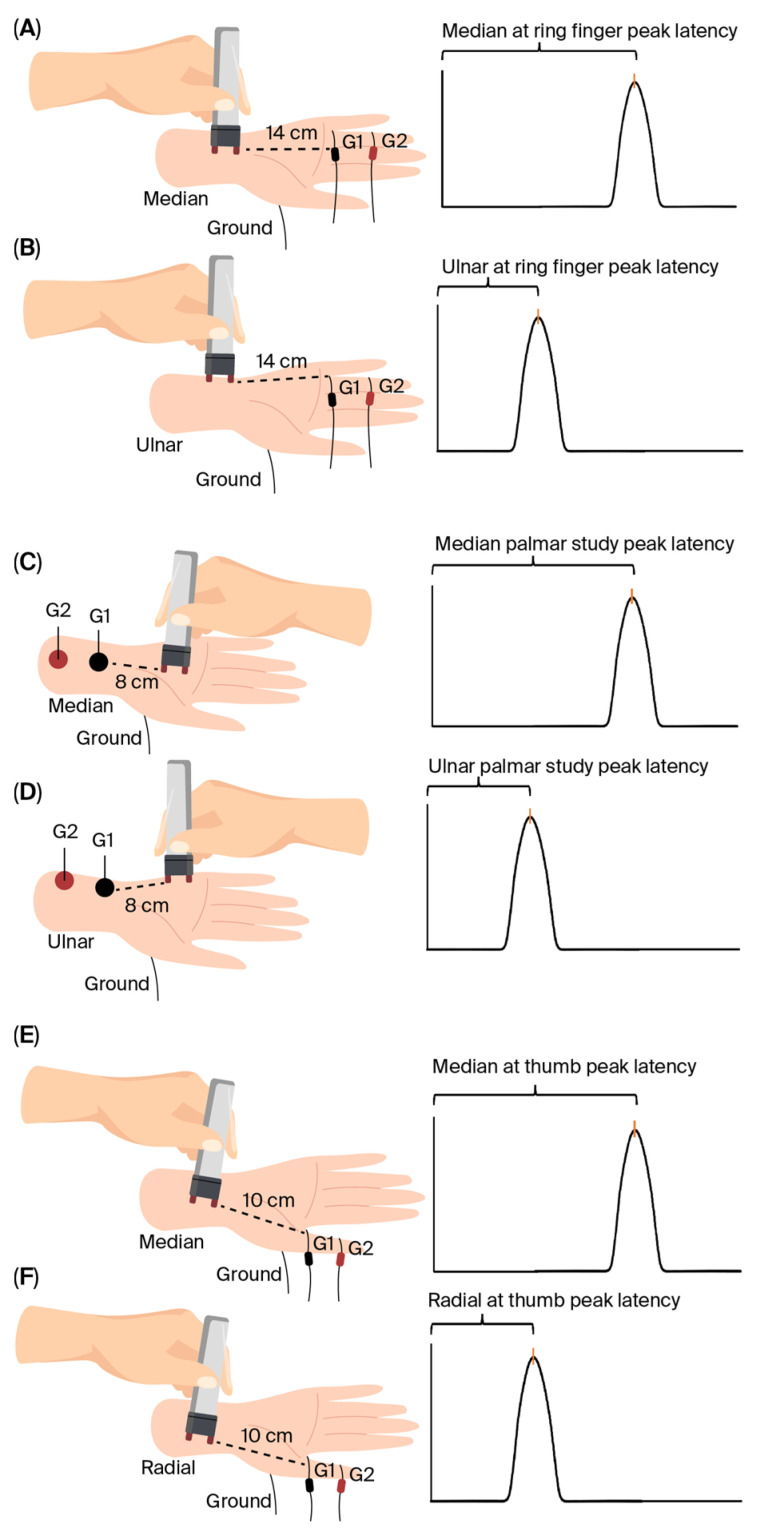 Figure 1
Peer Reviews
No public reviews on file for this paper yet. If you reviewed it on a platform where reviews are public (OpenReview, ICLR, NeurIPS, ICML), you can paste yours below so the community can read it here.
Videos
No videos yet. Explain this paper in a talk, walkthrough, or lecture? Add one.
Taxonomy
TopicsPeripheral Nerve Disorders · Orthopedic Surgery and Rehabilitation · Motor Control and Adaptation