Emotional Functioning as a Dimension of Quality of Life in Breast Cancer Survivors: A Systematic Review and Meta-Analysis
Iryna Makhnevych, Mussab Ibrahim Mohamed Fadl Elseed, Ibrahim Mohamed Ahmed Musa, Yauhen Statsenko

TL;DR
This study finds that emotional functioning in breast cancer survivors improves initially after surgery but declines over time, with different patterns based on age and type of surgery.
Contribution
The study identifies an inverted-U trajectory of emotional functioning and shows how surgical modality and age moderate these patterns.
Findings
Emotional functioning improves initially after surgery but declines by 60 months, following an inverted-U trajectory.
Breast-conserving surgery and mastectomy show similar inverted-U patterns, while mastectomy with reconstruction maintains stable emotional functioning.
Younger and middle-aged survivors experience early gains in emotional functioning followed by decline.
Abstract
In this systematic review and meta-analysis, we examined the long-term trajectories of Emotional Functioning (EF)—a core dimension of quality of life (QoL)—in breast cancer (BC) survivors following surgery. We synthesized data from 40 studies published between 2000 and 2024, comprising 116 observations of EF measured by the EORTC QLQ-C30. The analysis revealed a significant inverted-U trajectory in EF, showing an initial improvement during the first 24–30 months after surgery, followed by a gradual decline toward baseline levels by 60 months. Surgical modality significantly shaped these trajectories: breast-conserving surgery (BCS) and mastectomy (MA) produced similar inverted-U patterns, whereas mastectomy with immediate reconstruction (Mx + IR) sustained stable EF over time. Age further influenced trajectories, with younger and middle-aged survivors experiencing early gains but…
Genes, proteins, chemicals, diseases, species, mutations and cell lines named across the full text — each resolved to its canonical identifier and authoritative record.
Click any figure to enlarge with its caption.
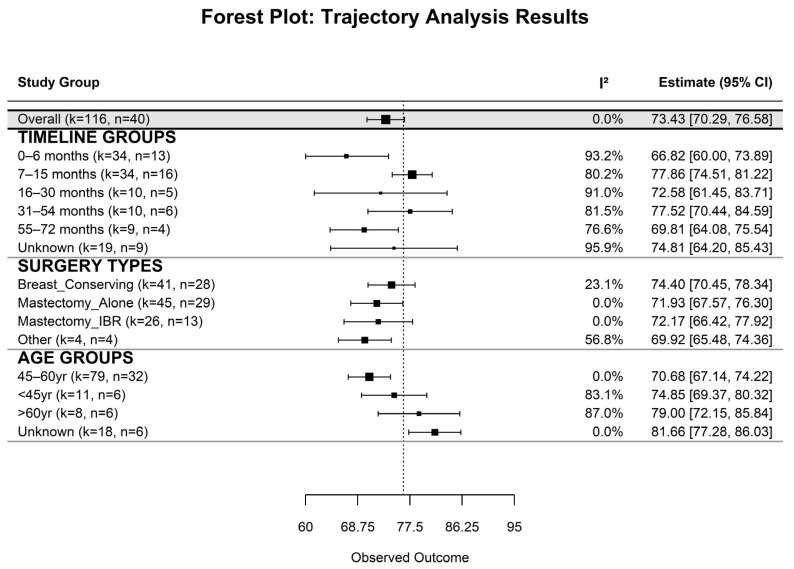 Figure 1
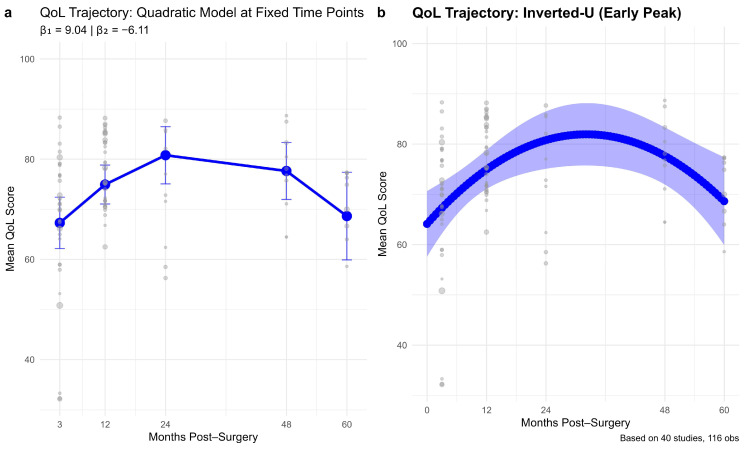 Figure 2
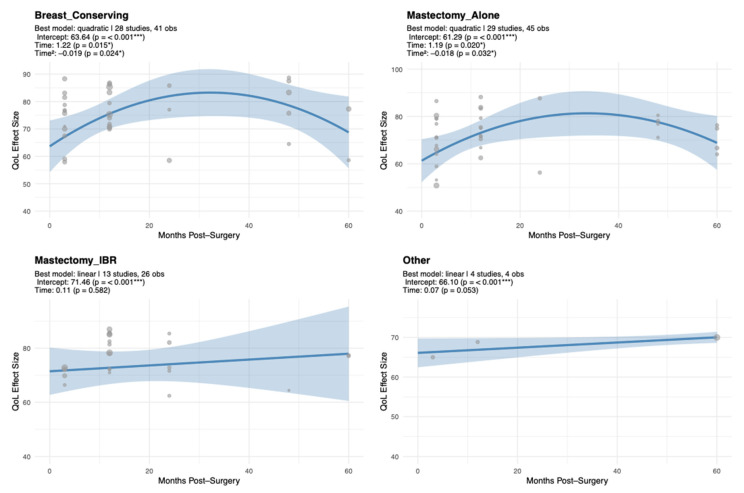 Figure 3
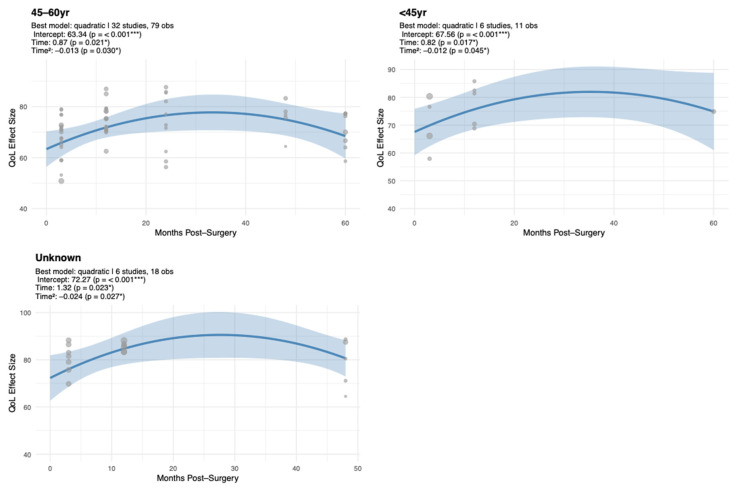 Figure 4
 Figure 5
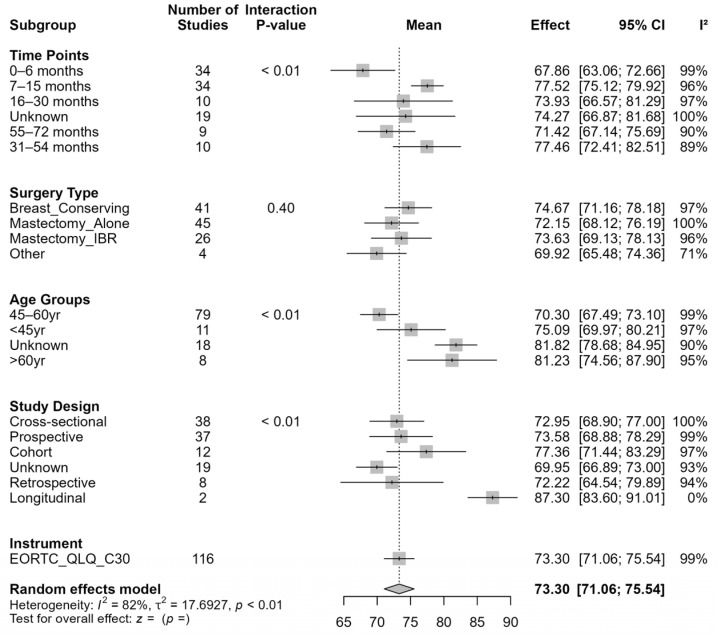 Figure 6
Peer Reviews
No public reviews on file for this paper yet. If you reviewed it on a platform where reviews are public (OpenReview, ICLR, NeurIPS, ICML), you can paste yours below so the community can read it here.
Videos
No videos yet. Explain this paper in a talk, walkthrough, or lecture? Add one.
Taxonomy
TopicsCancer survivorship and care · Cancer, Stress, Anesthesia, and Immune Response · Advanced Breast Cancer Therapies