Analysis of Clinical Characteristics of Refractory Food Protein-Induced Allergic Proctocolitis
Juan Zhang, Hui Wu, Jun Li, Xun Liu, Xueying Shi, Hua Zhang, Zailing Li

TL;DR
This study finds that children with late-onset refractory food allergies face more growth issues and need more steroids than those with early-onset cases.
Contribution
The study identifies distinct clinical differences between early- and non-early-onset refractory FPIAP cases.
Findings
Non-early-onset FPIAP cases had higher rates of growth retardation and corticosteroid use.
Early-onset FPIAP patients had better hemoglobin levels and less need for corticosteroids.
Many refractory FPIAP patients developed long-term dietary intolerances to common foods.
Abstract
What are the main findings? Refractory food protein-induced allergic proctocolitis (FPIAP) is associated with prolonged symptoms, growth retardation, and dietary intolerance.Non-early-onset FPIAP cases showed significantly more growth issues, lower hemoglobin levels, and higher corticosteroid use than early-onset cases. Refractory food protein-induced allergic proctocolitis (FPIAP) is associated with prolonged symptoms, growth retardation, and dietary intolerance. Non-early-onset FPIAP cases showed significantly more growth issues, lower hemoglobin levels, and higher corticosteroid use than early-onset cases. What is the implication of the main finding? Early identification of FPIAP onset may help reduce the risk of growth delays and the need for corticosteroids.Individualized treatment strategies are needed to improve long-term outcomes and food tolerance in children with refractory…
Genes, proteins, chemicals, diseases, species, mutations and cell lines named across the full text — each resolved to its canonical identifier and authoritative record.
Click any figure to enlarge with its caption.
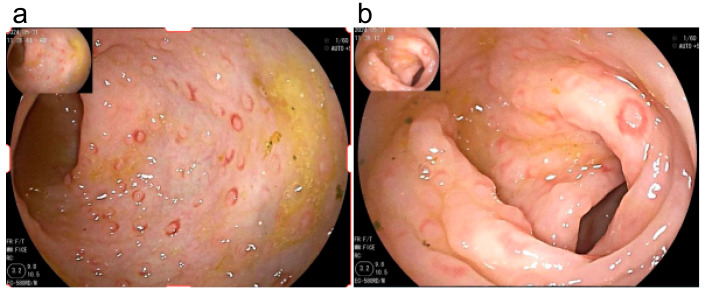 Figure 1
Peer Reviews
No public reviews on file for this paper yet. If you reviewed it on a platform where reviews are public (OpenReview, ICLR, NeurIPS, ICML), you can paste yours below so the community can read it here.
Videos
No videos yet. Explain this paper in a talk, walkthrough, or lecture? Add one.
Taxonomy
TopicsCeliac Disease Research and Management · Microscopic Colitis · Food Allergy and Anaphylaxis Research