Euclidean-Lorentzian Dichotomy and Algebraic Causality in Finite Ring Continuum
Yosef Akhtman

TL;DR
This paper explores how concepts from special relativity, like causality and Lorentz symmetry, can emerge from finite-field arithmetic in a mathematical framework called the Finite Ring Continuum.
Contribution
The paper introduces a Euclidean-Lorentzian dichotomy in finite rings and shows how causality and Lorentz symmetry arise algebraically.
Findings
A genuine Lorentzian quadratic form cannot be realized in a single space-like prime shell Fp.
A finite-field Lorentz transformation is derived that preserves the Minkowski form and generates a finite orthogonal group.
Causality is shown to have an algebraic origin, with Euclidean invariants in Fp and causal structure in Fp².
Abstract
We present a concise and self-contained extension of the Finite Ring Continuum (FRC) program, showing that symmetry-complete prime shells Fp with p=4t+1 exhibit a fundamental Euclidean-Lorentzian dichotomy. A genuine Lorentzian quadratic form cannot be realized within a single space-like prime shell Fp, since to split time from space one requires a time coefficient c2 in the nonsquare class of Fp×, but then c∉Fp. An explicit finite-field Lorentz transformation is subsequently derived that preserves the Minkowski form and generates a finite orthogonal group O(Qν,Fp2) of split type (Witt index 1). These results demonstrate that the essential algebraic features of special relativity—the invariant interval and Lorentz symmetry—emerge naturally within finite-field arithmetic, thereby establishing an intrinsic relativistic algebra within FRC. Finally, this dichotomy implies the algebraic…
Genes, proteins, chemicals, diseases, species, mutations and cell lines named across the full text — each resolved to its canonical identifier and authoritative record.
Click any figure to enlarge with its caption.
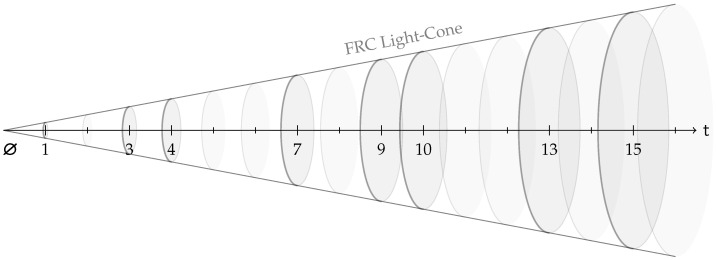 Figure 1
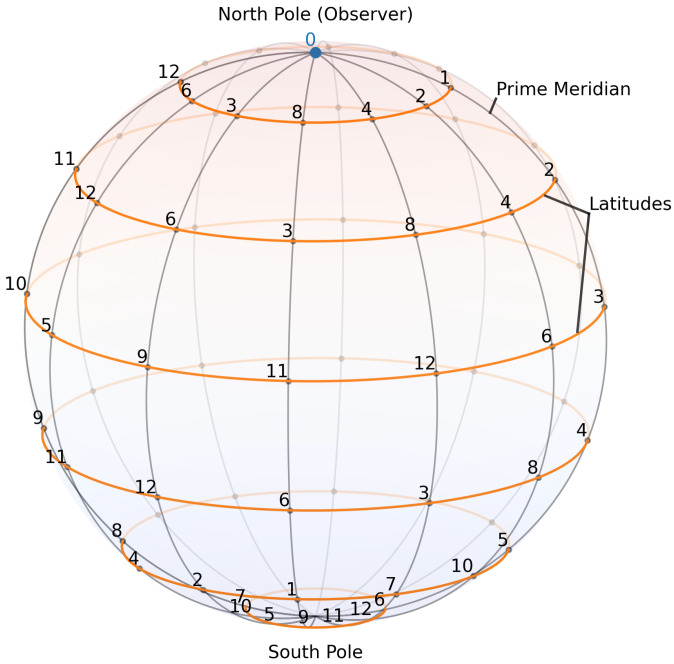 Figure 2
Peer Reviews
No public reviews on file for this paper yet. If you reviewed it on a platform where reviews are public (OpenReview, ICLR, NeurIPS, ICML), you can paste yours below so the community can read it here.
Videos
No videos yet. Explain this paper in a talk, walkthrough, or lecture? Add one.
Taxonomy
TopicsAlgebraic and Geometric Analysis · Advanced Topics in Algebra · Nonlinear Waves and Solitons