Radical Prostatectomy Following Holmium Laser Enucleation of the Prostate (HoLEP): A Systematic Review of Perioperative, Oncological, and Functional Outcomes
Stamatios Katsimperis, Lazaros Tzelves, Titos Markopoulos, Themistoklis Bellos, Konstantinos Douroumis, Nikolaos Kostakopoulos, Andreas Skolarikos

TL;DR
This review examines the outcomes of radical prostatectomy after HoLEP, finding it feasible and safe with comparable cancer control and functional recovery when done by experienced surgeons.
Contribution
The study provides a systematic review of the surgical, oncological, and functional outcomes of radical prostatectomy following HoLEP.
Findings
Radical prostatectomy after HoLEP is technically more demanding but safe with experienced surgeons.
Oncological outcomes and long-term functional recovery are comparable to primary prostatectomy.
Early continence recovery may be delayed, but functional outcomes are generally equivalent at 12 months.
Abstract
Holmium laser enucleation of the prostate (HoLEP) has become a gold-standard treatment for benign prostatic hyperplasia, and an increasing number of these patients are later diagnosed with prostate cancer requiring radical prostatectomy. However, prior HoLEP alters prostatic anatomy, raising concerns about surgical safety and functional recovery. This systematic review summarizes the available evidence on radical prostatectomy after HoLEP, evaluating perioperative, oncological, and functional outcomes across eight studies involving 202 patients. The findings demonstrate that the procedure is technically more demanding and often associated with longer operative times and the need for bladder-neck reconstruction, but major complications remain rare. Oncological control and long-term functional outcomes are comparable to primary prostatectomy, although early continence recovery may be…
Genes, proteins, chemicals, diseases, species, mutations and cell lines named across the full text — each resolved to its canonical identifier and authoritative record.
Click any figure to enlarge with its caption.
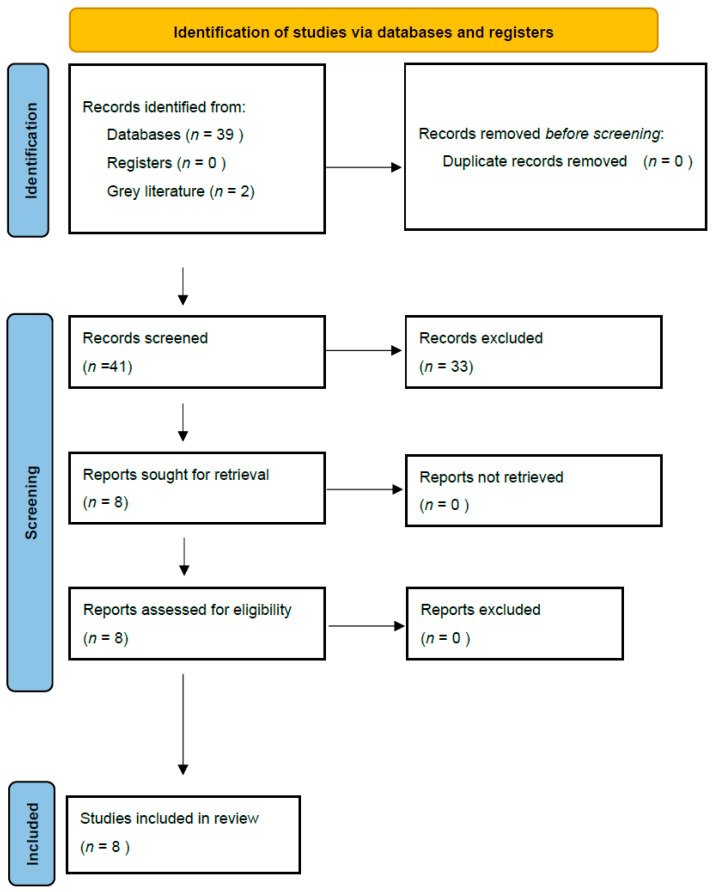 Figure 1
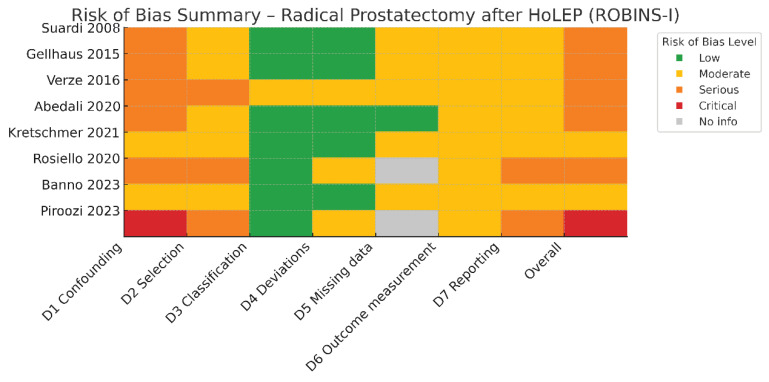 Figure 2
Peer Reviews
No public reviews on file for this paper yet. If you reviewed it on a platform where reviews are public (OpenReview, ICLR, NeurIPS, ICML), you can paste yours below so the community can read it here.
Videos
No videos yet. Explain this paper in a talk, walkthrough, or lecture? Add one.
Taxonomy
TopicsUrinary Bladder and Prostate Research · Prostate Cancer Diagnosis and Treatment · Prostate Cancer Treatment and Research