Revealing the Impact of Pasteurization and Derivatization Chemistry on the Fatty Acid Profile of Dairy Cream: A Comparative Approach
Aleksandra Bogumiła Florkiewicz, Gaja Gużewska, Izabela Arendowska, Agnieszka Ludwiczak, Joanna Rudnicka, Małgorzata Szultka-Młyńska, Tomasz Ligor, Paweł Piotr Pomastowski

TL;DR
This study examines how pasteurization and different chemical methods affect the fatty acid content in dairy cream, finding that processing significantly changes the fatty acid profile.
Contribution
The study introduces a comparative analysis of acid and alkali derivatization methods for fatty acid quantification in dairy cream.
Findings
Acid-catalyzed derivatization yielded significantly higher fatty acid concentrations compared to alkali-catalyzed methods.
Pasteurization reduced overall fatty acid content, particularly saturated and polyunsaturated fatty acids, due to thermal degradation.
Fatty acids with unusual chain lengths increased after pasteurization, likely due to release from complex lipids.
Abstract
Milk and dairy products are a vital source of nutrients. This study aimed to evaluate the impact of pasteurization and the choice of derivatization method on the fatty acid (FA) profile in cream, a milk fat-rich product. Sixty cream samples (pre- and post-pasteurization) were analyzed. Two derivatization procedures were used: acid-catalyzed (1% H2SO4 in methanol following hexane extraction) and alkali-catalyzed (0.2 M KOH in methanol). FA methyl esters (FAMEs) were quantified using GC–FID. A total of 34 FAs were detected. The acid derivatization method was significantly more efficient for quantification, yielding higher overall FA concentrations (e.g., 302.26 μg/mL vs. 62.66 μg/mL pre-pasteurization). Pasteurization significantly altered the FA profile by reducing the overall content of FAs (especially SFAs and PUFAs), suggesting thermal degradation. Conversely, concentrations of FAs…
Genes, proteins, chemicals, diseases, species, mutations and cell lines named across the full text — each resolved to its canonical identifier and authoritative record.
Click any figure to enlarge with its caption.
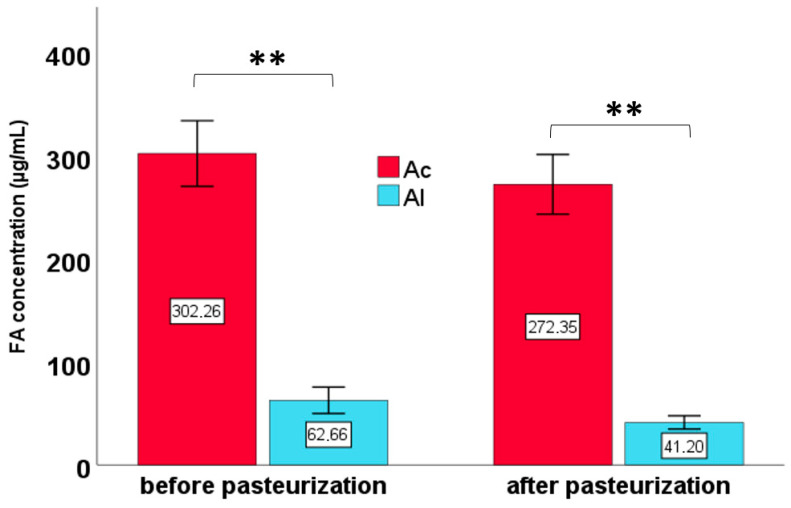 Figure 1
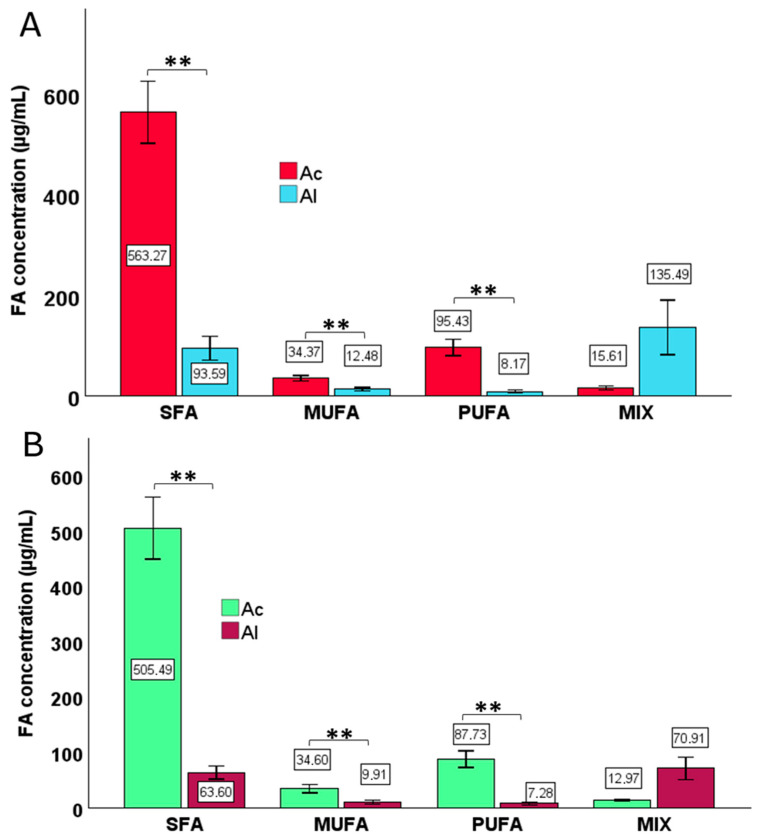 Figure 2
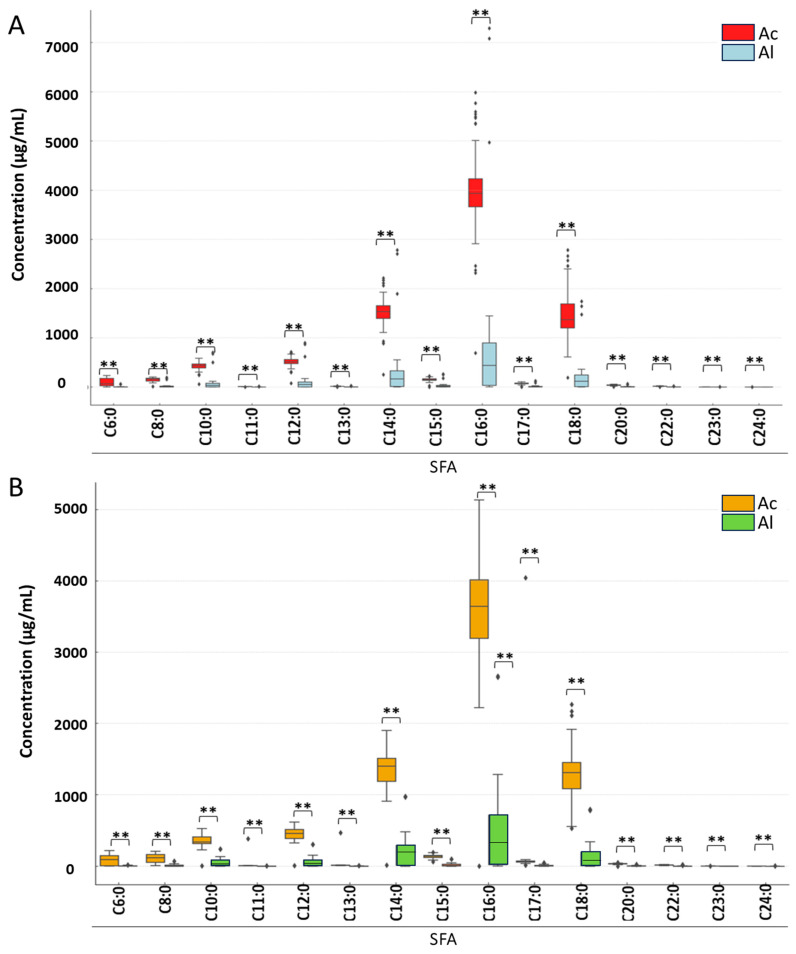 Figure 3
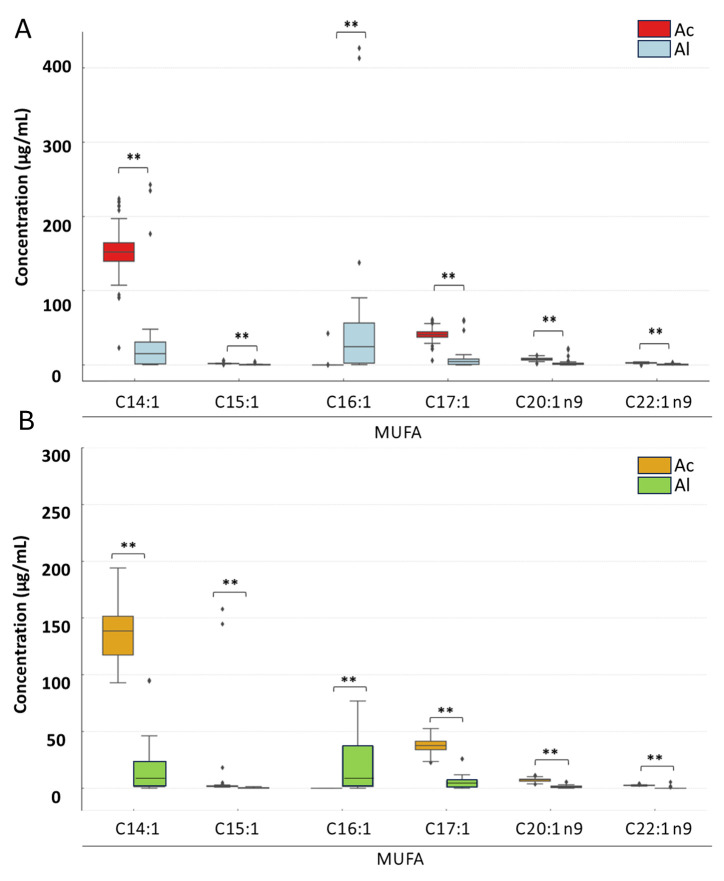 Figure 4
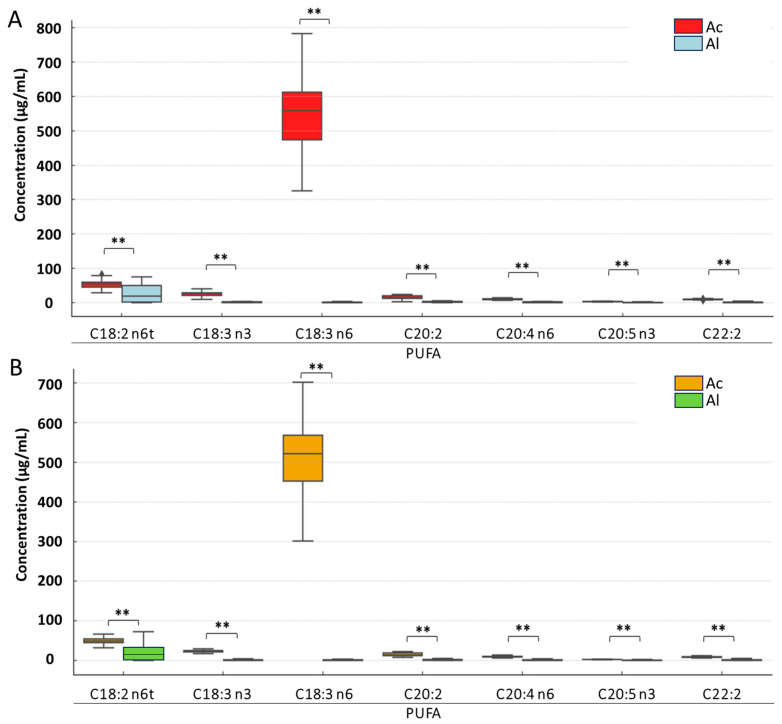 Figure 5
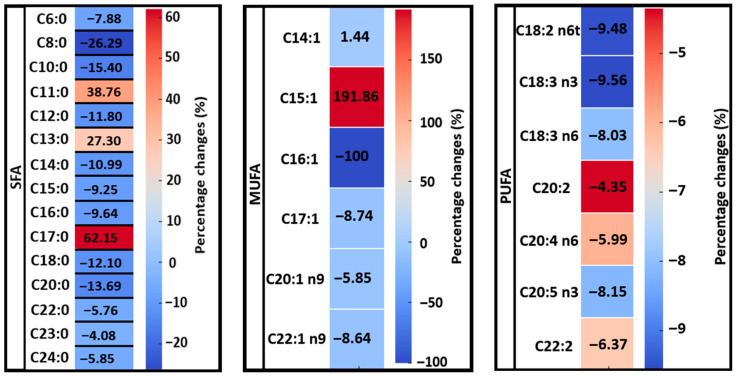 Figure 6
Peer Reviews
No public reviews on file for this paper yet. If you reviewed it on a platform where reviews are public (OpenReview, ICLR, NeurIPS, ICML), you can paste yours below so the community can read it here.
Videos
No videos yet. Explain this paper in a talk, walkthrough, or lecture? Add one.
Taxonomy
TopicsFatty Acid Research and Health · Edible Oils Quality and Analysis · Proteins in Food Systems