Animal Models of Narcolepsy: From Orexin Deficiency to Immune Mechanisms and Regenerative Therapies
Oscar Arias-Carrión, Emmanuel Ortega-Robles

TL;DR
This review explores how animal models have advanced understanding of narcolepsy, from orexin deficiency to immune and regenerative therapies, and outlines future directions for better models and cures.
Contribution
The paper proposes a unified roadmap integrating immune, cellular, and computational approaches to improve narcolepsy models and therapies.
Findings
Early models showed orexin loss causes narcolepsy type 1, but fail to fully replicate human symptoms.
Immune-driven and regenerative models offer new insights and therapeutic strategies for narcolepsy.
Combining multi-omics and novel models could lead to long-term cures beyond symptom management.
Abstract
Animal models have been pivotal in uncovering the orexin (hypocretin) system as the fulcrum of sleep–wake regulation and in shaping therapeutic discovery for narcolepsy. Early canine and murine models established that orexin loss underlies narcolepsy type 1, while conditional and receptor-specific manipulations refined mechanistic insight. However, current paradigms capture only fragments of the human phenotype, often exaggerating cataplexy and under-representing narcolepsy type 2. Here, we follow the evolution of narcolepsy modelling from classical knockout and receptor-deficient systems to immune-driven and cell-replacement models, identifying critical translational gaps and proposing strategies to bridge them. We highlight how immune-competent mouse lines, astrocyte-to-neuron reprogramming, and patient-derived hypothalamic organoids bridge pathogenic insight with therapeutic…
Genes, proteins, chemicals, diseases, species, mutations and cell lines named across the full text — each resolved to its canonical identifier and authoritative record.
Click any figure to enlarge with its caption.
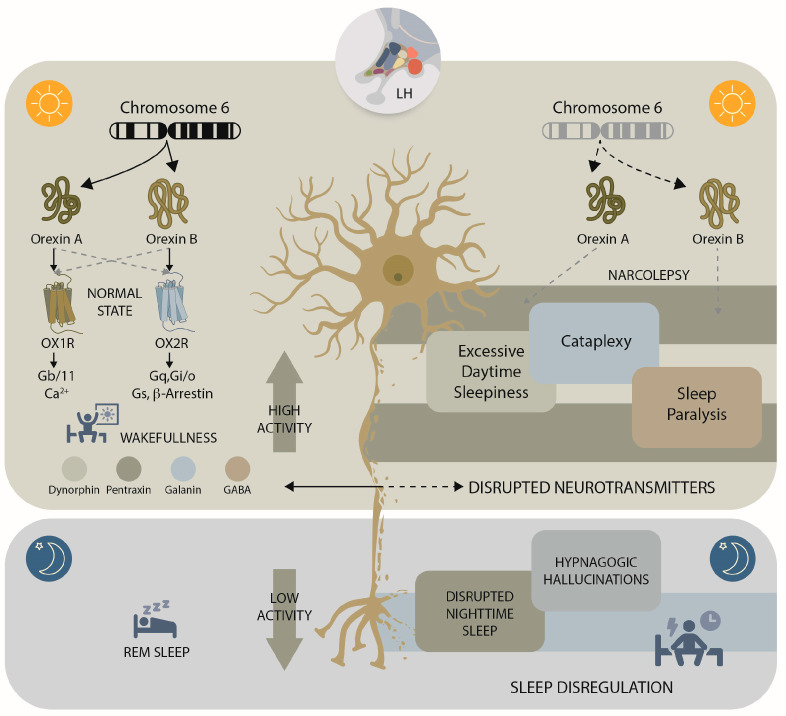 Figure 1
Peer Reviews
No public reviews on file for this paper yet. If you reviewed it on a platform where reviews are public (OpenReview, ICLR, NeurIPS, ICML), you can paste yours below so the community can read it here.
Videos
No videos yet. Explain this paper in a talk, walkthrough, or lecture? Add one.
Taxonomy
TopicsSleep and Wakefulness Research · Sleep and related disorders · Regulation of Appetite and Obesity