Soluble Urokinase Plasminogen Activator Receptor (suPAR) Predicts 28-Day and 90-Day Mortality in Emergency Department Patients with Chest Pain, Dyspnoea, or Abdominal Pain
Francesco Gavelli, Francesca Maria Giolitti, Matteo Vidali, Marta Montersino, Matteo Bertoli, Luca Molinari, Marco Baldrighi, Michela Beltrame, Pier Paolo Sainaghi, Mattia Bellan, Filippo Patrucco, Gian Carlo Avanzi, Luigi Mario Castello

TL;DR
The study finds that high levels of a protein called suPAR in emergency patients can predict their risk of dying within 28 or 90 days.
Contribution
suPAR is shown as an independent predictor of mortality in ED patients with chest pain, dyspnoea, or abdominal pain.
Findings
suPAR levels were significantly higher in patients with dyspnoea compared to chest or abdominal pain patients.
suPAR levels were higher in patients who died within 28 days compared to survivors.
suPAR was the only independent predictor of 28-day mortality with an odds ratio of 1.31.
Abstract
Background: Early stratification of patients at emergency department (ED) admission is crucial. The soluble urokinase plasminogen activator receptor (suPAR) has emerged as a promising biomarker to identify the worsening of different clinical conditions. We aimed at evaluating whether baseline suPAR values predict 28-day and 90-day mortality in patients presenting to the ED with different conditions. Methods: In this prospective observational study, we enrolled patients with dyspnoea (D), chest pain (CP), and abdominal pain (AP). suPAR levels, together with clinical and laboratory data, were recorded at ED admission. The data collected included 28-day and 90-day mortality data, as well as 28-day and 90-day hospital readmission; and their correlation with suPAR values was assessed. Results: We enrolled 298 consecutive patients (CP 23.8%, D 31.9%, AP 44.3%). suPAR was significantly higher…
Genes, proteins, chemicals, diseases, species, mutations and cell lines named across the full text — each resolved to its canonical identifier and authoritative record.
Click any figure to enlarge with its caption.
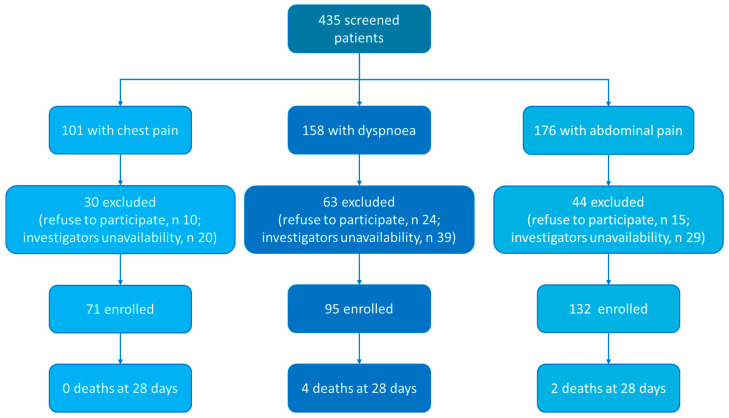 Figure 1
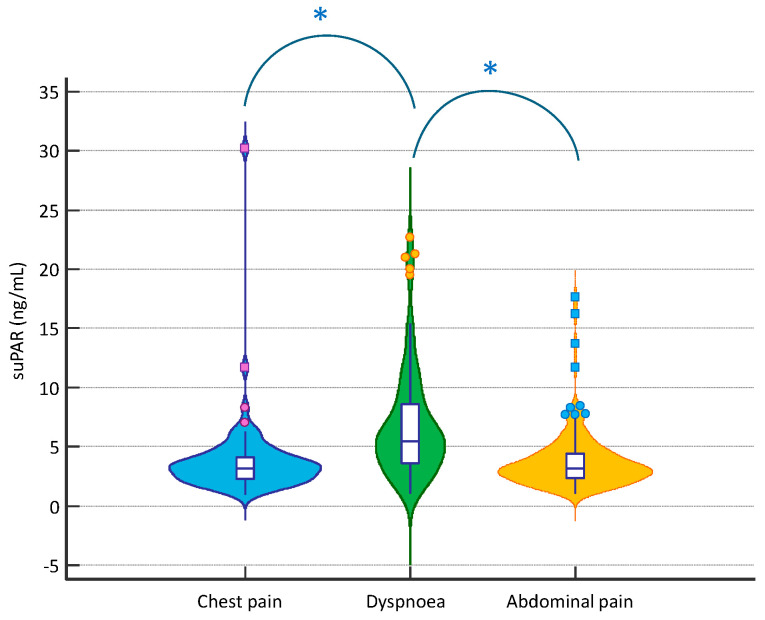 Figure 2
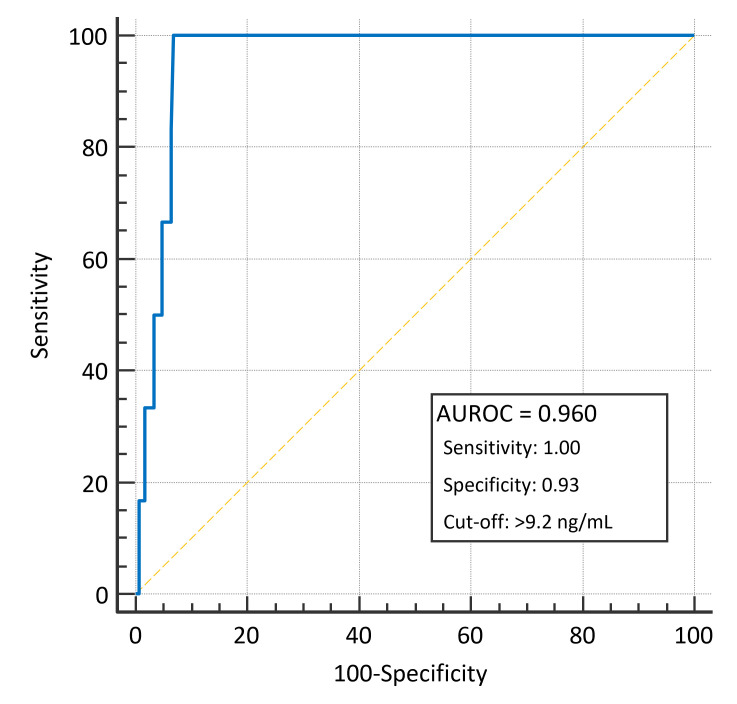 Figure 3
Peer Reviews
No public reviews on file for this paper yet. If you reviewed it on a platform where reviews are public (OpenReview, ICLR, NeurIPS, ICML), you can paste yours below so the community can read it here.
Videos
No videos yet. Explain this paper in a talk, walkthrough, or lecture? Add one.
Taxonomy
TopicsProtease and Inhibitor Mechanisms · Sepsis Diagnosis and Treatment · S100 Proteins and Annexins