The Use and Effectiveness of Different Emergency Contraception Methods Among Adolescent Girls and Young Women in a Greek Clinic: A Cross-Sectional, Comparative, Observational Study
Athanasia Chatzilazarou, Christina Pagkaki, Anastasia Bothou, Vasiliki Kourti, Dimitrios Lamprinos, Nektaria Kritsotaki, Efthymios Oikonomou, Nikolaos Machairiotis, Angeliki Gerede, Nikoletta Koutlaki, Panagiotis Tsikouras

TL;DR
This study examines how religious and cultural factors influence the use of emergency contraception among young women in Greece.
Contribution
The study provides insights into how religious beliefs affect the choice and timing of emergency contraception methods among adolescents and young women.
Findings
Christians were more likely to use EC due to missed contraceptive doses or progesterone-only pill failure.
Levonorgestrel was the most common EC method used by both Christian and Muslim participants.
IUD use for EC was reported only among Christian participants, suggesting cultural or religious influences.
Abstract
Background: Emergency contraception (EC), also known as postcoital contraception, is a method used to prevent an unintended pregnancy following unprotected or inadequately protected sexual intercourse. The available options include emergency contraceptive pills or the insertion of an intrauterine device (IUD). Emergency contraception pills contain either levonorgestrel (a single 1.5 mg dose, effective within 72 h) or ulipristal acetate (a single 30 mg dose, effective within 120 h), both of which are most effective when taken as soon as possible after unprotected intercourse. Another highly effective option is the insertion of a copper or levonorgestrel-releasing intrauterine device, although IUDs are not registered for EC use in all countries. The aims of this cross-sectional, comparative, observational study were to collect data on the emergency contraception methods used by adolescent…
Genes, proteins, chemicals, diseases, species, mutations and cell lines named across the full text — each resolved to its canonical identifier and authoritative record.
Click any figure to enlarge with its caption.
 Figure 1
 Figure 2
 Figure 3
 Figure 4
 Figure 5
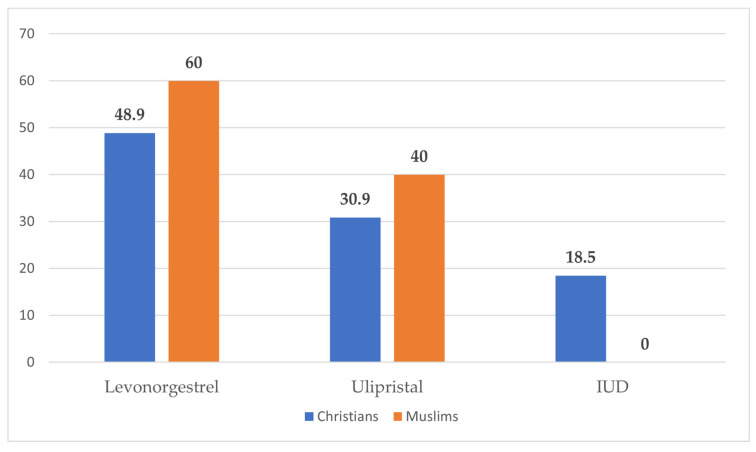 Figure 6
Peer Reviews
No public reviews on file for this paper yet. If you reviewed it on a platform where reviews are public (OpenReview, ICLR, NeurIPS, ICML), you can paste yours below so the community can read it here.
Videos
No videos yet. Explain this paper in a talk, walkthrough, or lecture? Add one.
Taxonomy
TopicsReproductive Health and Contraception · Global Maternal and Child Health · Adolescent Sexual and Reproductive Health