Personalized Low-Invasive Approach to Chronic Endometritis Evaluation in Premenopausal Women: Machine Learning-Based Modeling
Kseniia D. Ievleva, Alina V. Atalyan, Timur G. Baintuev, Iana G. Nadeliaeva, Ludmila M. Lazareva, Eldar M. Sharifulin, Margarita R. Akhmedzyanova, Leonid F. Sholokhov, Irina N. Danusevich, Larisa V. Suturina

TL;DR
This study uses machine learning to create models that predict chronic endometritis in premenopausal women using low-invasive markers, aiming to improve diagnosis and treatment.
Contribution
The novel contribution is the development of machine learning-based models for CE prediction using low-invasive clinical and laboratory features.
Findings
Five CE prediction models were developed with AUCs ranging from 0.673 to 0.769.
Models 2 and 5 showed the best recall and precision, requiring only 5–7 risk markers.
Serum adiponectin and SHBG were identified as key predictors of CE risk.
Abstract
Background/Objectives: Chronic endometritis (CE) is a well-known risk factor for recurrent implantation failure. However, the traditional approach to CE diagnosis has several drawbacks. On the other hand, there is a lot of evidence that some clinical, instrumental, and/or laboratory parameters of patients are associated with CE. The aim of this study is to build a CE prediction model using machine learning tools based on low-invasive pathological features. Methods: The data of 108 women (44 with and 64 without CE) from a multicenter perspective cross-sectional study was included in this study. Basic characteristics, reproductive history, laboratory and ultrasound indicators, and immunohistochemistry results were collected. Binary feature selection was performed using forward stepwise selection with logistic regression as the evaluation criterion. For each feature configuration, a…
Genes, proteins, chemicals, diseases, species, mutations and cell lines named across the full text — each resolved to its canonical identifier and authoritative record.
Click any figure to enlarge with its caption.
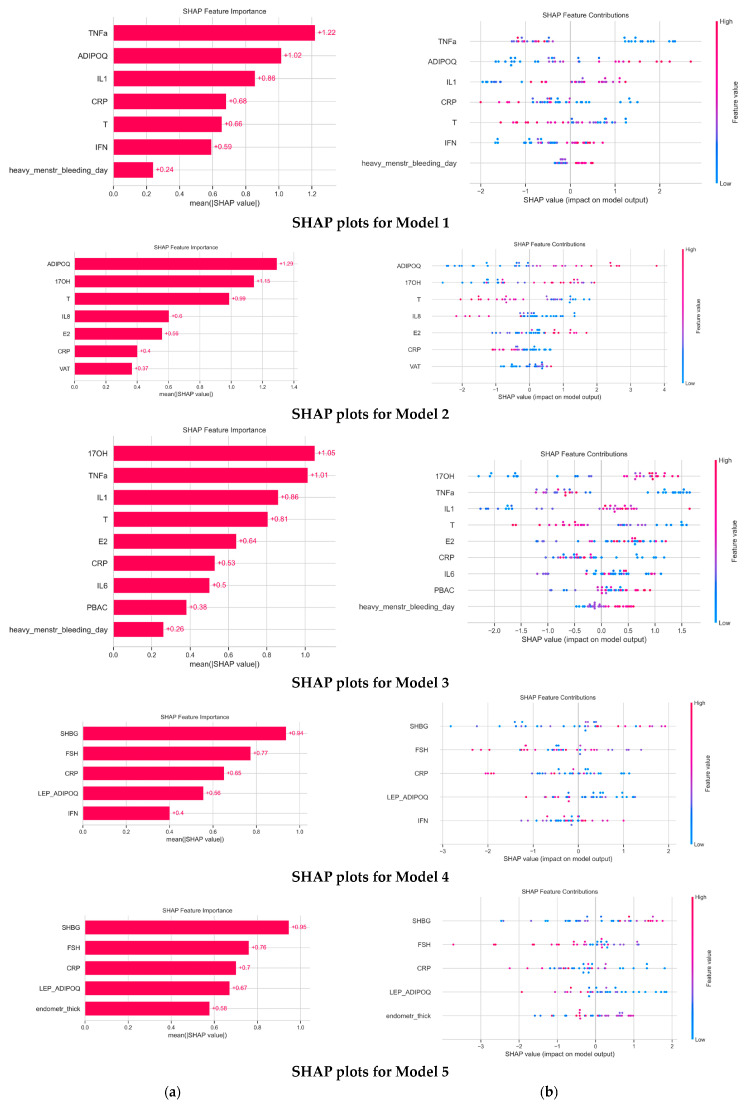 Figure 1
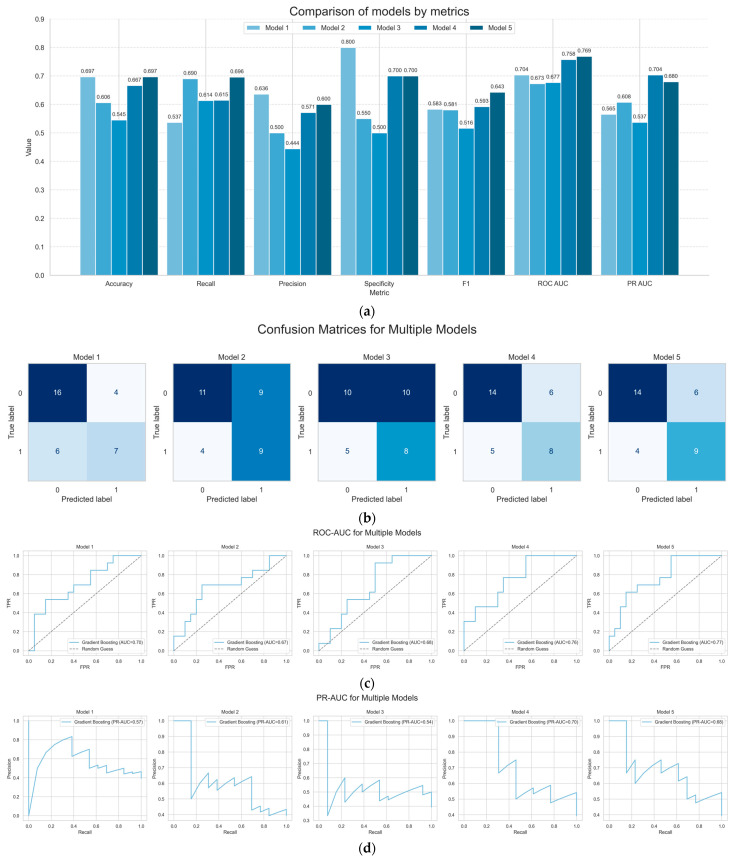 Figure 2
Peer Reviews
No public reviews on file for this paper yet. If you reviewed it on a platform where reviews are public (OpenReview, ICLR, NeurIPS, ICML), you can paste yours below so the community can read it here.
Videos
No videos yet. Explain this paper in a talk, walkthrough, or lecture? Add one.
Taxonomy
TopicsReproductive System and Pregnancy · Pregnancy and Medication Impact · Endometriosis Research and Treatment